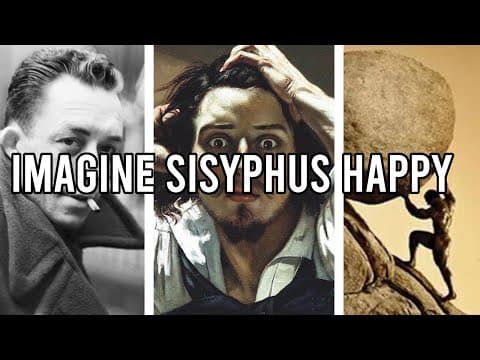
Albert Camus' philosophy of absurdism challenges the search for meaning in life, suggesting that instead of seeking answers, we should embrace the absurdity of existence. By recognizing the lack of inherent meaning, we can achieve freedom from societal constraints and live fully in the present.
The question of the meaning of life has perplexed humanity for centuries. Albert Camus, a prominent philosopher, confronts this question head-on, asserting that life inherently lacks meaning. However, rather than succumbing to despair, Camus encourages us to embrace this absurdity. This blog post delves into Camus' philosophy of absurdism, exploring its implications and how it can guide us in navigating a seemingly meaningless world.
At the core of Camus' philosophy is the concept of the absurd. But what exactly does he mean by absurdity? Camus argues that absurdity arises from the clash between humanity's relentless search for meaning and the universe's indifference to that quest. Throughout history, people have sought meaning in various forms—be it through religion, morality, or enlightenment—but have consistently found themselves disappointed.
Camus posits that the absurd is not solely a characteristic of humanity or the universe but rather a product of their interaction. The absurd emerges when we continue to ask "why" in a world that offers no satisfactory answers. This tension between our desire for meaning and the universe's refusal to provide it is what Camus refers to as the absurd.
Camus observes that humanity often reacts to the absurd in three primary ways:
Philosophical Suicide: Many individuals choose to escape the absurd by embracing faith or ideologies that provide meaning. This leap of faith, while comforting, is seen by Camus as a form of philosophical suicide, as it requires abandoning reason and accepting unfounded beliefs.
Despair: Another response is to succumb to despair, questioning the value of life itself. Camus addresses this in his work "The Myth of Sisyphus," where he contemplates the idea of ending one's life in the face of meaninglessness. However, he ultimately dismisses this option as a failure to confront the absurd.
Acceptance and Rebellion: Camus advocates for a third path—accepting the absurd and rebelling against it. Instead of seeking meaning, we should acknowledge the lack of it and continue to live fully. This rebellion is not about finding answers but about embracing life as it is.
One of the most liberating aspects of Camus' philosophy is the freedom it offers from societal constraints. When we relinquish the need for objective meaning, we also free ourselves from the moral and ethical restrictions that often govern our actions. Camus argues that objective meaning inherently imposes limitations on our behavior, as it dictates what is right or wrong.
By rejecting these constraints, we can live authentically and make choices based on personal freedom rather than societal expectations. This radical freedom allows us to navigate life without the burden of guilt or judgment, enabling us to experience existence more fully.
While Camus promotes indifference to societal pressures and values, he also emphasizes the importance of engaging with life. He introduces the idea of the "absurd man," who rushes to experience as much of life as possible, indifferent to the quality of those experiences. This paradox highlights the tension between embracing life's meaninglessness and fully appreciating the moments we have.
In his novel "The Stranger," the protagonist exemplifies this indifference, displaying a lack of emotional response to significant events, including his mother's death. Yet, this indifference paradoxically allows him to savor the moments he has left, illustrating that acceptance of absurdity can lead to a richer experience of life.
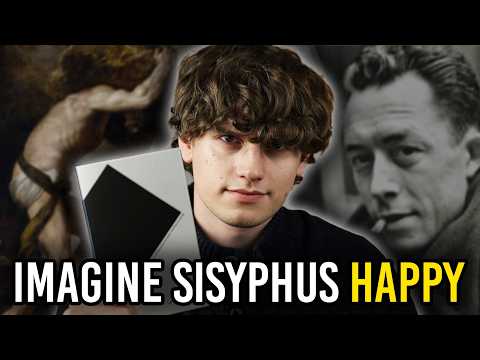
Despite the insights offered by Camus, he acknowledges that he does not provide a clear roadmap for living beyond the absurd. He suggests that we can find meaning in the struggle itself, much like Sisyphus, who finds purpose in pushing his boulder up the hill, despite its inevitable descent. Camus encourages us to make our journey self-justifying, recognizing that life itself is the point, devoid of any higher meaning.
Albert Camus' philosophy of absurdism invites us to confront the inherent meaninglessness of life without falling into despair. By embracing the absurd, we can liberate ourselves from societal constraints and live authentically. While the journey may be challenging, it ultimately leads to a deeper appreciation of existence. In a world that often feels devoid of meaning, Camus reminds us that the act of living itself is what truly matters.