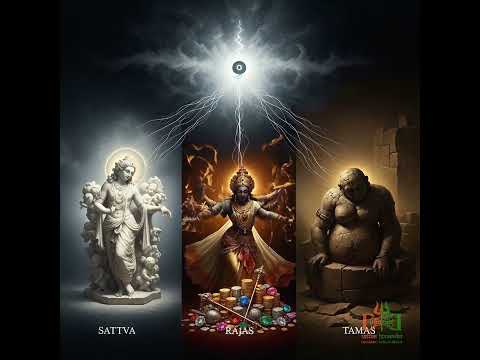
Understanding Cosmic Birth in Samkhya Philosophy
This article explores the Samkhya Darshan's perspective on cosmic birth, detailing the eternal principles of Purusha (energy) and Prakriti (nature), the three fundamental qualities (Sattva, Rajas, Tamas), and the process of cosmic evolution from the unmanifested state to the manifestation of intellect, ego, senses, and elements.
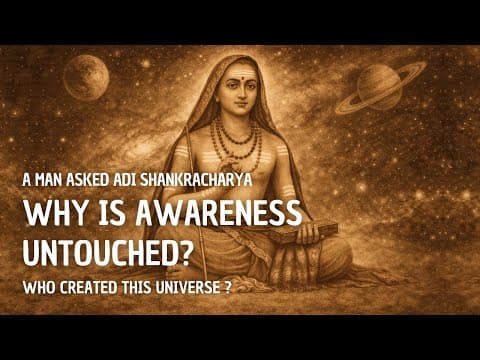
Samkhya Darshan is one of the ancient Indian philosophies that explains the origin and evolution of the cosmos. It primarily revolves around two eternal principles: Purusha and Prakriti. Understanding these concepts provides insight into the cosmic birth and the nature of existence.
The Two Eternal Principles: Purusha and Prakriti
In simple terms, Purusha can be understood as energy or consciousness. It is the pure, unchanging principle that exists eternally. On the other hand, Prakriti encompasses everything else in the universe apart from Purusha. It is the material cause of the universe, representing nature in its entirety.
According to Samkhya philosophy, both Purusha and Prakriti are eternal and indestructible. They form the foundational framework of existence, and their interaction leads to the manifestation of the cosmos.
The Three Gunas: Sattva, Rajas, and Tamas
Prakriti is characterized by three fundamental qualities or gunas:
- Sattva: The quality of purity, harmony, and balance.
- Rajas: The quality of activity, passion, and movement.
- Tamas: The quality of inertia, darkness, and ignorance.
These three gunas exist in a state of equilibrium within Prakriti. This balanced state is the unmanifested Prakriti, the potential from which the universe evolves.
The Process of Cosmic Evolution
When the equilibrium of the three gunas is disturbed, it marks the beginning of cosmic creation. This disturbance is not negative but signifies the dynamic process of transformation and manifestation.
From this imbalance, various elements begin to emerge from Prakriti in a sequential manner:
-
Mahat (Intellect): The first manifestation is Mahat, which can be understood as the cosmic intellect or universal intelligence.
-
Ahamkara (Ego): From Mahat arises Ahamkara, the sense of individuality or ego.
-
Five Jnanendriyas (Sense Organs): These are the organs of perception that allow interaction with the external world.
-
Five Karmendriyas (Motor Organs): These are the organs responsible for action.
-
Manas (Mind): The mind coordinates sensory input and motor output.
-
Five Tanmatras (Subtle Elements): These are the subtle elements that further evolve into the gross elements.
Each of these stages represents a step in the cosmic evolution, moving from the unmanifested to the manifested world.