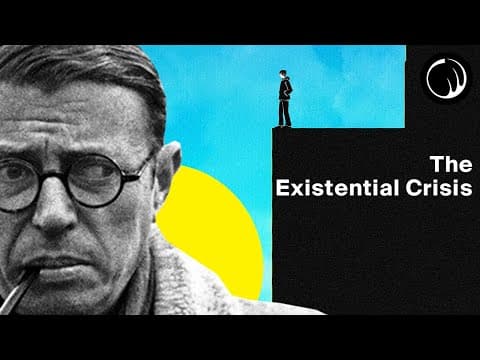
This blog post explores the existential philosophy of Jean-Paul Sartre, emphasizing the concepts of existence preceding essence, the freedom of choice, and the inherent meaninglessness of life. It discusses how individuals can create their own purpose and navigate the anxiety of choice, ultimately encouraging readers to take responsibility for their lives and decisions.
Existential crises are a common experience for many individuals, often arising from the realization of our existence in a world that seems devoid of inherent meaning. This blog post delves into the philosophy of Jean-Paul Sartre, a prominent figure in existential thought, to understand the roots of these crises and how we can navigate them.
From the moment we are born, we find ourselves thrust into a world we did not choose. We have no say in our parents, our location, or the conditions of our bodies. As we grow, we become aware of ourselves and the material world around us. This awareness leads us to confront a fundamental question: what do we make of our existence?
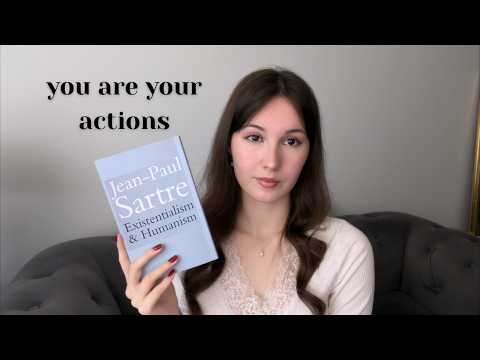
Sartre, in his influential lecture "Existentialism is a Humanism," encapsulates the essence of existential philosophy with the phrase "existence precedes essence." This means that, unlike objects created with a predetermined purpose—like a paper knife, which is designed for a specific function—humans are not born with an inherent purpose. Instead, we exist first and then define our essence through our actions and choices.
According to Sartre, there is no predetermined meaning or reason to human life. We are not designed by an authority figure, and our existence lacks an inherent essence. This realization can lead to feelings of despair, as we confront the potential meaninglessness of life. However, Sartre and other existentialists argue that this lack of predetermined meaning is not a cause for despair but rather an opportunity for freedom.
The absence of a predetermined purpose means that we have the freedom to create our own meaning. Sartre famously stated, "man is nothing else but what he purposes; he exists only insofar as he realizes himself." This perspective emphasizes that our identity and purpose are shaped by the choices we make throughout our lives.
However, this freedom comes with its own set of challenges. The anxiety of choice can be overwhelming, as we face an infinite number of possibilities regarding how to live and what to value. The pressure to make the right choice can lead to a paralysis of decision-making.
In response to the anxiety of choice, many individuals may resort to what Sartre calls "bad faith." This is a form of self-deception where we deny our freedom and responsibility by conforming to societal norms or allowing others to dictate our choices. While this may provide temporary relief from the anxiety of decision-making, it ultimately leads to a loss of our true selves and a diminished sense of agency.
Choosing not to choose is still a choice, and it is perhaps the most fundamental existential choice we face. We can either embrace the anguish of our freedom or relinquish it, leading to a life of complacency rather than one of intention.
Each of us has a limited time on this earth, and it is crucial to create a life filled with our own meaning. This involves determining what is important to us, committing to those pursuits, and finding significance in our experiences. While we may face regret over our decisions, it is essential to approach life with honesty and virtue, recognizing that our intentions matter as much as the outcomes.
Life is inherently complex and filled with uncertainty. The struggle to understand existence and find meaning is a universal human experience. However, this struggle is also a gift, reminding us of the beauty and fragility of life.
Sartre's philosophy serves as a powerful reminder of the importance of taking responsibility for our lives and the choices we make. Whether we agree with his ideas or not, they encourage us to risk the commonplace for the unique and strive towards our full potential. Ultimately, we must ensure that we do not become our own harshest critics, as we navigate the complexities of existence and the freedom that comes with it.