This blog post explores the inner workings of calculators, detailing how key presses are transformed into electrical signals, processed, and displayed as results, highlighting the roles of various components like the encoder, controller, ROM, RAM, and ALU.
Calculators are ubiquitous tools that simplify complex mathematical operations, but have you ever wondered how they actually work? This blog post delves into the intricate processes that occur within a calculator when you press a key, transforming a simple action into a series of electronic signals and computations.
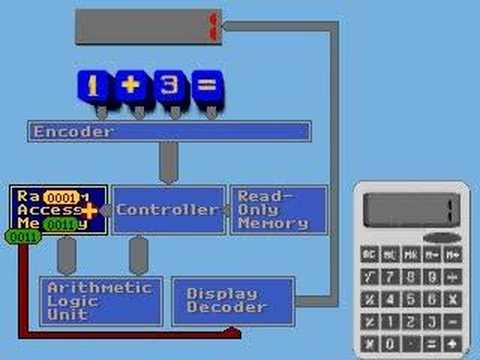
When you press the numeral one key on a calculator, the first step in the process begins. The encoder within the calculator takes this action and converts it into an electrical pulse. This pulse corresponds to a binary number, which is a format that the calculator's computer can understand.
Once the signal is encoded, it is routed through the controller. The controller plays a crucial role in managing the flow of information within the calculator. It is prompted by the read-only memory (ROM), which contains the necessary instructions for the calculator's operations. The ROM directs the controller to store the electronic signal in the random access memory (RAM) for later processing.
Simultaneously, a duplicate signal is sent through the display decoder to the calculator's display. This ensures that the number you pressed is visually represented on the screen, allowing you to see your input in real-time. This same pathway is followed when you press other keys, such as the plus sign or the numeral three.
The real magic happens when you press the equals button. At this point, the arithmetic logic unit (ALU) is activated. The ALU is responsible for performing all arithmetic operations. It retrieves the numbers stored in the RAM, adds them together, and then stores the sum back in the RAM.
After the calculation is complete, a duplicate signal of the sum is again sent through the display decoder to the display. This allows the calculator to show the final result of the arithmetic operation, completing the cycle from key press to output.
Understanding how calculators work reveals the complexity behind what seems like a simple device. From the moment a key is pressed to the display of the result, various components work in harmony to process and present information. This intricate process highlights the remarkable technology that underpins everyday tools like calculators, making them indispensable in our daily lives.