This article explores the philosophical and empirical aspects of maximizing happiness and doing the most good, focusing on utilitarianism and consequentialism. It discusses the comparative nature of happiness, the ethical debates between utilitarianism and deontology, and the practical implications of these theories in real-world decision-making.
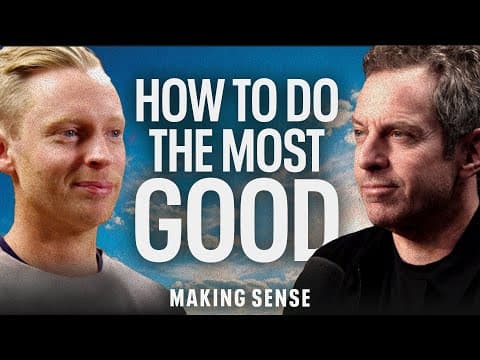
The pursuit of happiness and doing the most good are central themes in philosophy and ethics. This article delves into these concepts through a conversation with Michael Plant, a philosopher and global happiness researcher, who shares insights on utilitarianism, consequentialism, and their implications for maximizing happiness and ethical decision-making.
Happiness is not simply about avoiding pain or maximizing short-term pleasure. It is a complex, comparative experience that often requires contrast with misery to be fully appreciated. For example, despite many people in the United States earning a median salary that places them in the top 0.1% of the richest people who have ever lived, there is still widespread concern about the cost of living and expenses. This highlights how happiness is relative and influenced by societal and personal comparisons.
Michael Plant's interest in philosophy began at age 16 when he encountered the idea of utilitarianism—the ethical theory that we should maximize happiness. Over the past 20 years, he has pursued two main questions:
His work bridges these philosophical and practical inquiries.
Classical utilitarianism holds that the right action is the one that maximizes the sum total of happiness. It is a form of consequentialism but specifically defines the 'good' as happiness.
Consequentialism is a broader ethical theory that suggests one ought to do the most good, but 'good' can be defined in various ways, such as fulfilling desires or other values, not just happiness.
Deontological or common-sense ethical theories argue that while maximizing good is important, there are constraints and moral rules that should not be violated, such as prohibitions against killing. These theories also recognize prerogatives—actions that may be good but are not obligatory.
Michael Plant suggests that many deontological theories covertly collapse into consequentialism because they rely on principles that are ultimately justified by their good outcomes. For example, if a deontological principle like the categorical imperative consistently led to the worst outcomes, most would reject it.
Conversely, utilitarianism is often criticized for taking the maximization of good too seriously, such as endorsing killing one person to save many. However, even moderate consequentialists might accept such actions if the scale of good outweighs the bad.
The discussion highlights the tension between strict rule-following and outcome-based ethics. While deontologists emphasize moral constraints, consequentialists focus on maximizing overall good, sometimes at the cost of violating individual rights.
Understanding these perspectives is crucial for making ethical decisions that aim to do the most good, whether in personal choices or broader social policies.
Maximizing happiness and doing the most good are complex endeavors that require balancing philosophical theories and empirical realities. Utilitarianism and consequentialism offer frameworks for understanding these goals, but they must be considered alongside moral constraints and human experiences. Through ongoing research and dialogue, we can better navigate the ethical landscape to promote well-being and positive outcomes for all.