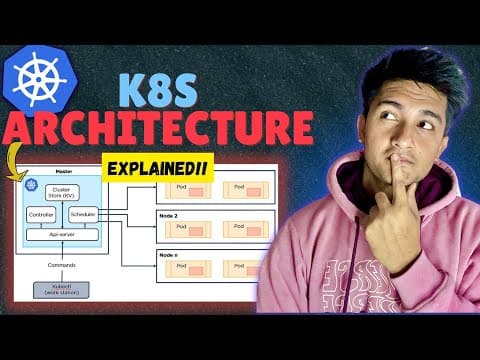
Kubernetes, often referred to as K8s, is a powerful system for managing containerized applications across a cluster of machines. In this post, we will explore the architecture of Kubernetes, breaking down its components and their functions in a straightforward manner.
Creating a Kubernetes Cluster
To begin with, creating a Kubernetes cluster can be done locally using tools like MiniKube or kubeadm. Alternatively, cloud providers such as AWS (EKS), Azure (AKS), and Google Cloud (GKE) offer services to create Kubernetes clusters in the cloud.
Nodes in Kubernetes
Within a Kubernetes cluster, there are two primary types of machines, known as nodes:
- Master Node: This node is responsible for managing the entire cluster.
- Worker Node: These nodes run the application containers.
Worker Nodes
Worker nodes are crucial as they host the application containers. Here are the key components found within a worker node:
- Pods: The smallest deployable units in Kubernetes, pods can contain one or more containers. A single worker node can host multiple pods or just one.
- Kubelet: This agent runs on all worker nodes and communicates with the master node to manage the pods. It receives instructions on where to run the pods and how to manage them.
- Container Runtime Interface (CRI): This is the software responsible for running containers. Docker is a popular choice, but alternatives like containerd and CRI-O are also supported.
- Kube Proxy: This component facilitates communication between pods and external users. It handles load balancing and service proxying, ensuring that applications are accessible.
Master Node
The master node, also known as the control plane, consists of several critical components that manage the cluster:
- Kube API Server: This is the entry point for all requests made to the cluster. Whether you are creating, deleting, or querying the status of a pod, you will interact with the kube API server. It validates requests and ensures that users are authenticated.
- Scheduler: The scheduler assigns pods to worker nodes based on resource availability. When a new pod is created, the scheduler determines which node has the capacity to run it and communicates this to the kube API server.
- Controller Manager: This component monitors the cluster to ensure that the actual state matches the desired state defined in the manifest files. If discrepancies arise, the controller manager will instruct the kube API server to recreate the necessary pods.
- etcd: This is a key-value store that holds all the cluster data, including information about running applications and pods. The etcd can only communicate with the kube API server, making the API server the central hub for cluster information.
Summary of Kubernetes Architecture
In summary, Kubernetes architecture consists of a master node and multiple worker nodes. The master node manages the cluster's operations, while worker nodes run the application workloads. Key components include:
- Master Node: Kube API server, Scheduler, Controller Manager, etcd.
- Worker Node: Pods, Kubelet, Container Runtime Interface, Kube Proxy.
This architecture allows Kubernetes to efficiently manage containerized applications, ensuring they run smoothly and are accessible to users.
Conclusion
This guide provides a simplified explanation of Kubernetes architecture. Understanding these components and their interactions is essential for anyone looking to work with Kubernetes effectively. If you have any questions or need further clarification, feel free to leave a comment. For more insights, consider checking out additional resources on Kubernetes and its functionalities.