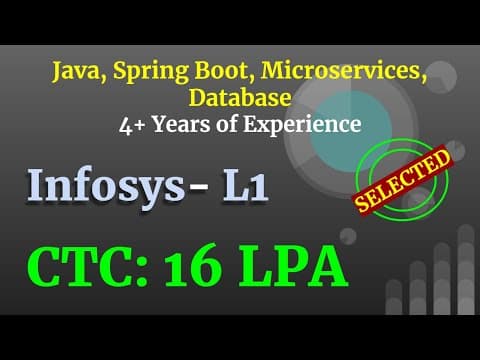
This blog post explores the key concepts of microservices architecture, Java design patterns, and best practices discussed in an Infosys Java interview, including API Gateway features, communication methods, Spring Boot application structure, and database management.
In a recent interview for a Java position at Infosys, the candidate discussed their experience with microservices architecture, Java design patterns, and best practices in software development. This blog post summarizes the key points from that conversation, providing insights into modern software architecture and Java programming.
The candidate described their project architecture as a microservices-based system, having transitioned from a monolithic architecture. In this architecture, multiple microservices revolve around specific business functionalities, enhancing modularity and scalability.
The entry point to the microservices is managed through an API Gateway, specifically using Zuul. All incoming requests are routed through this gateway, which directs them to the appropriate microservice. Key features implemented in the API Gateway include:
For service discovery, the candidate mentioned using Consul, having previously utilized Netflix Eureka. Each microservice registers with the discovery server upon startup, allowing other services to discover their URLs when needed.
The architecture also includes a load balancing mechanism, and each microservice operates with its own database. The candidate highlighted a combination of relational databases and MongoDB, showcasing the flexibility of using different database types based on service requirements.
The candidate explained two primary communication methods between microservices:
The candidate demonstrated knowledge of design patterns and the SOLID principles:
When asked about structuring a Spring Boot application for an employee management system, the candidate outlined the following layers:
The candidate emphasized the use of annotations such as @RestController, @Service, and @Repository to define these layers clearly.
The candidate explained that database connection details are specified in the application.properties file, including host, port, username, and password. Spring Boot's auto-configuration simplifies the setup process.
To address performance issues with slow APIs, the candidate suggested:
The candidate clarified the purpose of indexes in databases, which speed up data retrieval by allowing the database to avoid full table scans. They also discussed different types of joins, including inner joins and outer joins, explaining how they function in SQL queries.
The candidate highlighted several features introduced in Java 8, such as:
Optional class to handle null values more effectively.The candidate explained exception handling in Java using try-catch blocks and the distinction between checked and unchecked exceptions. They also discussed the use of the finally block for resource cleanup, noting that it may not execute in certain scenarios, such as JVM termination.
The interview provided a comprehensive overview of microservices architecture, Java programming principles, and best practices in software development. Understanding these concepts is crucial for developers looking to excel in modern software environments, particularly in roles that require expertise in microservices and Java technologies.