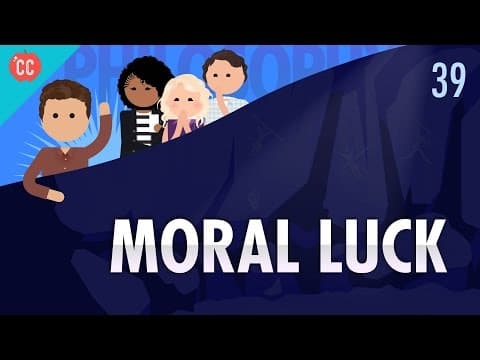
This blog post explores the concept of moral luck, examining how external factors influence moral responsibility through the lens of philosophical discussions, particularly the examples of two drunk drivers, A and B, and the implications of praise and blame in society.
Moral luck is a fascinating and complex topic in philosophy that challenges our understanding of moral responsibility. This concept is illustrated through a scenario involving two neighbors, A and B, who both make the equally poor choice to drive home while intoxicated. However, their outcomes differ drastically, leading to questions about blame and moral accountability.
Imagine A and B, two neighbors who attend the same party and drink to excess. A leaves the party just minutes before B. While A drives home without incident due to deserted roads, B encounters a tragic situation when a child unexpectedly darts into the road. B, impaired by alcohol, cannot react in time and strikes the child, resulting in the child's death. This raises the question: who deserves more blame?
At first glance, it seems clear that B is more blameworthy because they caused harm. However, both A and B made the same choice to drive while intoxicated, and neither intended to harm anyone. This leads us to consider the idea that A may have simply been morally lucky.
In philosophy, moral responsibility refers to the capacity for which individuals can be praised or blamed for their actions. A key principle in moral philosophy is "ought implies can," which suggests that moral obligations only apply to actions that are within a person's control. For instance, if someone unknowingly drives a car with cut brake lines, they cannot be held morally responsible for any resulting accidents.
This distinction between causal responsibility (being part of a chain of events) and moral responsibility (deserving judgment) is crucial. While a coconut falling on someone’s head may cause harm, the coconut itself cannot be blamed because it lacks moral agency. In contrast, humans, as moral agents, can be held accountable for their actions.
The scenario of A and B illustrates that moral responsibility is not as straightforward as it seems. If we consider that moral responsibility should only apply to actions within our control, then A and B might be equally blameworthy. However, the outcomes of their actions differ significantly, complicating our judgments.
Philosophers often equate wrongdoing with causing harm. However, consider a situation where someone takes pictures of another person in a dressing room without their knowledge. The victim experiences no harm, yet most would agree that the act itself is wrong. This distinction suggests that harm and wrongdoing are not always linked, further complicating our understanding of moral responsibility.
Philosopher Thomas Nagel offers insights into moral luck by categorizing different types of luck that influence our moral actions:
Constitutive Luck: This refers to our inherent dispositions and personalities. Some individuals may naturally be more generous or prone to anger, which affects their moral choices.
Circumstantial Luck: This relates to the situations we find ourselves in. A person may act heroically in one context and immorally in another, depending on the circumstances.
Antecedent Circumstances: Our character is shaped by our life experiences. Some individuals may have advantages that lead them to be virtuous, while others may face hardships that lead to negative behaviors.
Consequent Circumstances: This involves the outcomes of our actions. Good intentions can lead to failure, while poor plans can yield unexpected success.
Nagel argues that these factors complicate the assignment of moral praise and blame. If many aspects of our actions are beyond our control, it raises the question of whether moral judgments are justified at all.
Despite the philosophical complexities, many believe that assigning praise and blame serves a societal purpose. For instance, society may choose to blame drunk drivers to deter such behavior, even if the outcomes of their actions are influenced by luck. Similarly, praising individuals who attempt to save others, regardless of the outcome, encourages altruistic behavior.
In this view, moral praise and blame may not be about assigning responsibility but rather about shaping societal norms and behaviors. This perspective helps explain why B might face harsher consequences than A, despite both being equally culpable in their choices.
In conclusion, the concept of moral luck challenges our understanding of moral responsibility. Through the lens of the drunk driving scenario and the insights of philosophers like Thomas Nagel, we see that external factors significantly influence our moral judgments. As we navigate these complexities, it becomes clear that moral praise and blame are not merely about accountability but also about encouraging desirable behaviors within society. Understanding these nuances is essential as we continue to explore the intricate landscape of moral philosophy.