This blog post explores Nietzsche's famous aphorism about the abyss and monsters, delving into his psychological insights and philosophical critiques of morality, truth, and human nature. It emphasizes the importance of confronting our inner darkness without becoming consumed by it, advocating for a deeper understanding of the human psyche beyond traditional moral dichotomies.
Friedrich Nietzsche's quote, "He who fights with monsters should look to it that he himself does not become a monster; and if you gaze long into an abyss, the abyss also gazes into you," is one of his most famous yet often misunderstood aphorisms. This blog post aims to unpack the profound meanings behind this statement, drawing from Nietzsche's broader philosophical work, particularly his ideas on psychology, morality, and the human condition.
Nietzsche presents this quote in his book Beyond Good and Evil, a notoriously challenging text that lacks context for this particular aphorism. Nietzsche believed that aphorisms, once read, require further exposition to be fully understood. This post will serve as that exposition, guiding readers through the complexities of Nietzsche's thought.
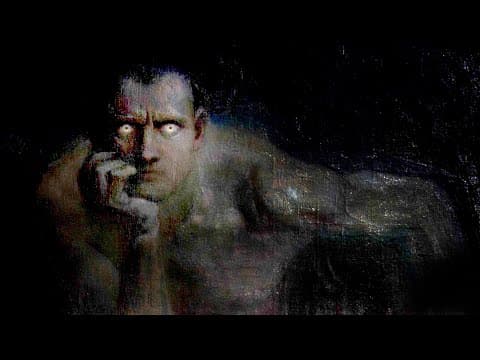
The phrase "the abyss gazes into you" suggests a reciprocal relationship between the observer and the observed. When one confronts the darker aspects of existence or the human psyche, there is a risk of being consumed by that darkness. Nietzsche's exploration of the abyss leads us into the depths of human nature, where hidden motivations and psychological truths reside.
Nietzsche often considered himself more of a psychologist than a philosopher. He sought to uncover the underlying psychological layers that inform human behavior and thought. In Beyond Good and Evil, he critiques the prejudices of philosophers and introduces the concept of perspectivism, which posits that our beliefs and philosophies are shaped by our psychological constitution rather than objective truths.
Nietzsche challenges the traditional dichotomies of altruism versus egoism and pleasure versus pain. He argues that these oppositions are simplistic and fail to capture the complexity of human motivation. Instead, he suggests that our actions are often driven by a desire for power, which can manifest in both altruistic and selfish behaviors.
Nietzsche's fascination with the Greeks, particularly the character of Odysseus, illustrates his point about the value of cunning and deception. Unlike the Romans, who viewed Odysseus as a coward for his trickery, the Greeks admired his resourcefulness. This admiration reflects a pre-Platonic worldview that did not rigidly separate truth from falsehood. In contrast, modern perspectives, heavily influenced by Platonic ideals, often regard deception as inherently negative.
Nietzsche critiques the philosophical legacy of Plato, who introduced a dualistic view of reality that separates appearance from reality. This dualism has permeated Western thought, leading to a moral framework that categorizes actions as either good or evil. Nietzsche argues that this framework is limiting and obscures the true nature of human existence, which is characterized by flux and complexity.
To truly understand ourselves, Nietzsche insists that we must confront the darker aspects of our nature. He warns against the moral prejudices that have historically sought to suppress these elements. Instead of viewing emotions like envy and cruelty as defects, Nietzsche encourages us to recognize them as integral parts of the human experience. This confrontation with our inner darkness is essential for personal growth and understanding.
Nietzsche's warning about becoming a monster serves as a cautionary tale. In our quest to confront the abyss, we must be vigilant not to lose our humanity. Engaging with our darker impulses should not lead to indulgence or moral decay. Instead, it requires a balance of self-control and awareness, allowing us to integrate these aspects into a more complete understanding of ourselves.
Central to Nietzsche's philosophy is the concept of the "Will to Power," which posits that the fundamental driving force in humans is not merely survival or reproduction, but a deep-seated desire to assert and enhance one's power. This idea challenges the notion that altruism is purely selfless, suggesting that even acts of kindness can be motivated by a desire for dominance or control.
Nietzsche's exploration of the abyss and the monsters within us calls for a new approach to psychology—one that embraces the complexities of human nature without resorting to moral simplifications. By acknowledging the interplay between our darker impulses and our higher aspirations, we can cultivate a more nuanced understanding of what it means to be human.
In summary, Nietzsche's aphorism serves as a profound reminder of the importance of self-awareness and the need to confront our inner darkness. As we navigate the complexities of our psyche, we must strive to integrate all aspects of ourselves, emerging not as monsters, but as more complete and authentic individuals.