This blog post explores Nietzsche's concept of the 'Will to Power' as the fundamental principle behind morality, emphasizing self-overcoming and the cultural origins of moral codes. It discusses how morality is shaped by societal needs and the instinctual drives of individuals, ultimately leading to a revaluation of values that transcends traditional moral systems.
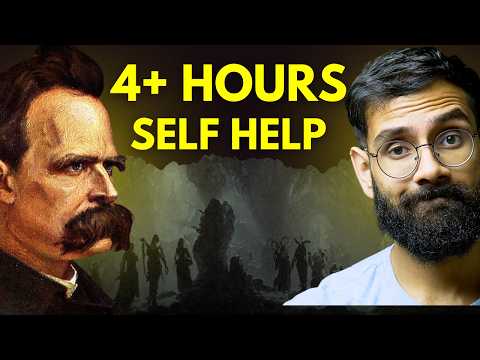
What is morality? This question transcends the debate over which moral code humanity should follow; it delves into the essence of what it means to adhere to a moral system. Friedrich Nietzsche, a pivotal figure in philosophy, sought to understand the underlying motivations for humanity's creation of moral codes. This exploration leads us to his famous concept of the "Will to Power," which he posits as the bedrock of reality and morality.
Nietzsche's philosophy rejects the notion that morality is divinely ordained. Instead, he views moral codes as constructs developed by humans, shaped by instinct and societal needs. He argues that our modern moral frameworks still cling to supernatural premises, which he critiques throughout his work.
Nietzsche categorizes morality into two broad types: master morality and slave morality. Master morality arises from the strong, valuing power and nobility, while slave morality emerges from the weak, emphasizing humility and meekness. These classifications serve as descriptive tools to understand the different moral systems that exist across cultures.
Nietzsche perceives humans as primarily driven by instinct and passion. Our moral codes, intelligence, and restraint are derived from these primal urges. He argues that reason is not a supernatural force but rather a tool that serves our will. This perspective leads to the conclusion that our moral intuitions are not innate but rather enculturated, shaped by the collective instincts of society.
Nietzsche asserts that morality is fundamentally a manifestation of the herd instinct. He illustrates this by noting that what is considered immoral in one culture may be viewed as acceptable in another. This cultural relativity suggests that morality is a collective voice rather than an individual intuition.
At the core of Nietzsche's philosophy is the concept of the Will to Power. He argues that this drive is the fundamental force behind all human actions, including the creation of moral values. In his work "Thus Spoke Zarathustra," he emphasizes that no greater power exists on earth than the concepts of good and evil, which are shaped by the will to power of different peoples.
Nietzsche defines morality as self-overcoming. Each moral system reflects a culture's struggle to transcend its limitations and achieve greater power. This self-overcoming is not merely about self-preservation; it is about striving for perfection and the expansion of one's capabilities. He critiques asceticism, viewing it as a denial of life that ultimately stifles human potential.
Nietzsche's analysis of morality leads to a meta-analysis of various moral systems. He argues that all moral codes, from ancient to modern, share the common element of self-control and the disciplining of instincts. This self-overcoming is essential for the development of reason and the cultivation of higher cultural values.
Nietzsche acknowledges that religious moralities have played a significant role in shaping human behavior. However, he critiques these systems for instilling guilt and a bad conscience, which he believes are detrimental to human flourishing. He argues that the moral pressures exerted by religions have historically compelled individuals to suppress their instincts, leading to a conflict between natural drives and imposed moral codes.
Nietzsche's project is not to reject morality outright but to understand it deeply and to propose a revaluation of values. He seeks to identify which moral systems promote healthy self-overcoming and which ones are self-destructive. This revaluation involves recognizing the unhealthy aspects of guilt and bad conscience that have been inherited from religious moralities.
Nietzsche's insights offer a framework for evaluating moral systems based on their capacity for fostering self-overcoming. He encourages individuals to discover their own goals and values, emphasizing the importance of personal agency in shaping one's moral landscape. The ultimate goal is to create a life that reflects one's true nature and aspirations, free from the constraints of traditional moralities.
Nietzsche's exploration of the Will to Power provides a profound understanding of morality as a dynamic and evolving construct. By recognizing the cultural origins of moral codes and the instinctual drives that shape them, we can engage in a meaningful revaluation of values. This process of self-overcoming is not only essential for individual growth but also for the evolution of society as a whole. Nietzsche invites us to embrace our instincts and strive for a higher form of existence, one that transcends the limitations of conventional morality.