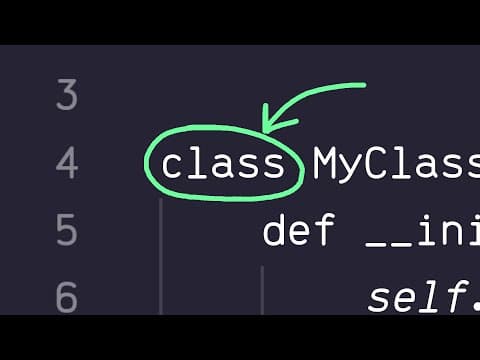
This blog post provides a concise overview of Python classes, explaining their role as blueprints for creating objects, how to initialize them using the Dunder init method, and demonstrating their functionality through an example with characters in a video game.
Python classes serve as blueprints for creating objects, allowing developers to encapsulate data and functionality in a structured way. This post will explore the concept of classes in Python, using a practical example of creating characters for a video game.
A Python class is a template for creating objects. It defines the attributes and methods that the created objects will have. For instance, if we want to create characters in a video game, we can define a class called Character that includes attributes such as health, damage, and speed.
Let's consider an example where we create two different characters: a Warrior and a Ninja. Here’s how we can define the Character class:
class Character:
    def __init__(self, health, damage, speed):
        self.health = health
        self.damage = damage
        self.speed = speed
In this class definition, the __init__ method, also known as the Dunder init method, is automatically called when a new object is created. This method initializes the object and handles the inputs provided during the object creation.
When we create instances of the Character class, we can supply specific values for health, damage, and speed. For example:
warrior = Character(100, 50, 10)
ninja = Character(80, 40, 40)
In this case, the Warrior is initialized with 100 health, 50 damage, and 10 speed, while the Ninja has 80 health, 40 damage, and 40 speed.
In the __init__ method, the self variable is used to reference the particular object being created. It is automatically supplied and is always the first parameter in the method. While you can technically name it anything, using self is the conventional practice in Python.
To access the attributes of the created objects, we can simply reference them using the dot notation. For example:
print(warrior.speed)
print(ninja.speed)
This will output the speed values we set during the creation of the objects:
Classes can also include methods that define behaviors for the objects. For instance, we can add a method called double_speed to our Character class:
def double_speed(self):
    self.speed *= 2
This method doubles the speed of the character. We can call this method on the Warrior object:
warrior.double_speed()
After calling the double_speed method, we can check the speed of both characters again:
print(warrior.speed)
print(ninja.speed)
The output will show that the Warrior's speed has doubled, while the Ninja's speed remains unchanged:
In summary, Python classes are powerful tools for object-oriented programming, allowing developers to create objects with unique attributes and methods. By using classes, we can encapsulate data and functionality, making our code more organized and reusable. This brief overview should help you understand the basics of Python classes and how they can be applied in practical scenarios. Thank you for reading, and happy coding!