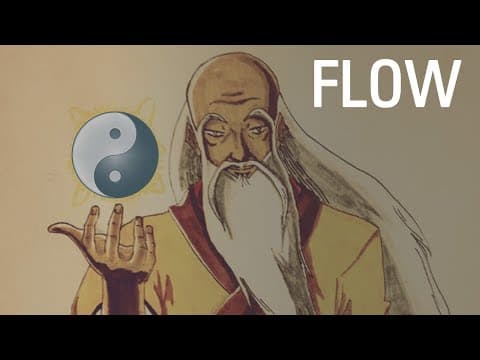
Taoism, attributed to Lao Tzu, emphasizes the importance of understanding 'The Tao' or 'The Way' as the natural order of the universe. It advocates for 'Wu Wei' or effortless action, encouraging individuals to live in the present, appreciate simplicity, and find harmony with nature. This philosophy contrasts with Confucianism, offering a yin approach to life that values yielding and flow over rigid structure and authority.
Taoism is a profound philosophy attributed to the Chinese philosopher Lao Tzu, whose existence remains a topic of debate among scholars. Believed to be a contemporary of Confucius in the 5th or 6th century BC, Lao Tzu served as the Keeper of Archives for the royal court and is renowned as the author of the Tao Te Ching, as well as the founder of Taoism.
Lao Tzu's teachings center around the concept of the Tao, often referred to as "The Way." He famously stated, "The Tao that can be told is not the eternal Tao," suggesting that while the Tao can be discussed, it must ultimately be experienced and practiced. This highlights the limitations of language and the importance of direct experience over mere intellectual understanding.
According to legend, as Lao Tzu approached the end of his life, he was persuaded by his followers to document his teachings to guide future generations in their pursuit of the Tao.
A fundamental principle of Taoism is Wu Wei, which translates to "effortless action" or "actionless action." This concept describes a state of flow characterized by ease and awareness, where individuals achieve harmony and understanding without forceful effort. Examples of this can be seen in the actions of a skilled chef, a woodcutter, or an athlete who is fully immersed in their activity.
Taoism, alongside Confucianism, represents one of the two great currents of Chinese thought that have shaped Chinese culture. The interaction between Confucius and Lao Tzu symbolizes the balance of yin and yang. Confucius advocated for a structured approach to life through firm governance and respect for authority, while Lao Tzu promoted a more natural, yielding approach that aligns with the flow of the universe.
The Tao is likened to water, flowing freely and nurturing all forms of life without seeking recognition or praise. It embodies the interconnectedness of all things, emphasizing that nothing exists in isolation. This perspective contrasts sharply with the Western notion of cause and effect, highlighting a more holistic view of existence.
In Taoism, the present moment is paramount. The philosophy teaches that time is not a linear progression; rather, it is a series of moments that exist independently. Just as spring does not become summer but exists alongside it, individuals are encouraged to embrace their current selves without the burden of past or future identities. This understanding fosters a sense of peace and allows individuals to live fully in the now.
Many people find themselves preoccupied with external pressures, striving for achievements and possessions. Taoism encourages a shift in focus towards mindfulness and meditation, allowing individuals to act with intention and energy. The philosophy advocates for living in the present, appreciating what one has, and minimizing desires.
In contrast to the Western belief that happiness comes from accumulation, Taoism teaches that true wealth lies in contentment with what one possesses. To achieve enlightenment, one must detach from the pursuit of power, recognition, and material wealth, instead embracing simplicity and humility. Living a minimalist lifestyle can lead to greater happiness by reducing mental clutter and fostering a sense of peace.
Taoism offers a refreshing perspective on life, emphasizing the importance of flow, harmony, and simplicity. By practicing humility, enjoying the journey rather than fixating on outcomes, and appreciating the present moment, individuals can cultivate a deeper connection with themselves and the world around them. In a society often driven by competition and materialism, the teachings of Lao Tzu remind us that the simple life is indeed the good life, encouraging us to keep moving forward without losing sight of the beauty in the journey itself.