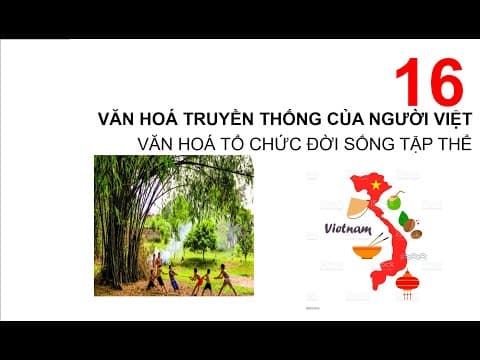
This article explores the intricate structure of collective life in Vietnamese rural culture, focusing on family dynamics, community organization, and the impact of historical and cultural influences on social relationships and governance.
In examining the organization of collective life in Vietnam, we delve into the cultural structures that govern rural, national, and urban life. These organizations play a crucial role in preserving the traditional cultural heritage of the Vietnamese people, deeply intertwined with the nation's history.
Rural organizations have historically been pivotal in shaping the cultural identity of Vietnam. They are characterized by their close-knit structure, which has evolved alongside the nation’s history. In contrast, urban organizations, primarily established by the state, tend to focus on administrative and military functions, differing significantly from the economic-driven urbanization seen in the North and West.
Traditionally, Vietnamese families were matriarchal, especially during the Hùng Kings era. However, by the early Common Era, there was a gradual shift towards a patriarchal system. This transition was influenced by the economic conditions of small-scale agriculture and the centralization of power during the feudal era, alongside the Confucian ideology that emphasized male dominance.
Despite the patriarchal shift, Vietnamese women retained significant roles within the family structure. Unlike in Western or Northern cultures, where women often lacked a voice, Vietnamese women contributed to agricultural work and held a degree of authority within the household, managing finances and family affairs. However, the influence of Confucianism during the Lê Dynasty further marginalized women's roles, leading to societal pushback against these restrictions.
Vietnamese legal codes, such as the Hồng Đức Code and the Gia Long Code, while influenced by Chinese law, also included provisions that protected women's rights. For instance, men were restricted from divorcing their wives under certain conditions, highlighting the legal recognition of women's contributions to family and society.
Clans in Vietnam are not independent economic units but serve as vital social structures. They consist of multiple families sharing a common lineage, often identified by the village name. The clan system emphasizes hierarchical relationships and kinship, with a detailed classification of family members across generations.
The village is the fundamental social unit in rural Vietnam, characterized by a strong sense of community. The traditional Vietnamese village is a stable settlement where residents engage in collective agricultural practices, share resources, and support one another during hardships. This communal lifestyle fosters a deep sense of belonging and mutual assistance.
The essence of Vietnamese village culture lies in its community-oriented nature, which is evident in various aspects:
Villages also have their own governance structures, including local councils and customary laws, which coexist with national laws. These local regulations, known as Hương ước, reflect the unique cultural practices of each village and are respected by the community.
Despite historical challenges, such as foreign invasions and attempts at cultural assimilation, Vietnamese villages have maintained their cultural identity. The resilience of village life is encapsulated in the saying, "Vietnam lost its country but not its villages."
The organization of collective life in Vietnamese rural culture is a complex interplay of family dynamics, community ties, and historical influences. While the traditional structures have evolved, the core values of cooperation, respect for elders, and community support remain integral to Vietnamese identity. Understanding these cultural nuances provides insight into the resilience and adaptability of Vietnamese society in the face of change.