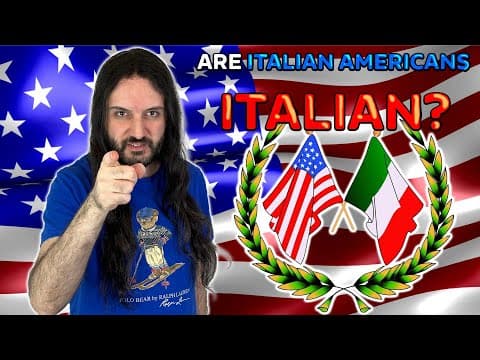
This blog post explores the complex identity of Italian Americans and their relationship with Italy, addressing cultural misunderstandings, language barriers, and the nuances of self-identification among those of Italian descent in America.
The question of whether Italian Americans can truly call themselves Italian is a topic that has sparked much debate and discussion. In this blog post, we will delve into this complex identity, inspired by a viewer's inquiry about embracing Italian culture and the challenges faced when interacting with Italians in Italy.
A viewer named Steven Musso shared his experience as an American of Italian descent. He expressed a desire to connect with his heritage, but faced hostility from Italians when he referred to himself as Italian. This sentiment is not uncommon among Italian Americans who feel disconnected from their roots due to family circumstances.
One of the primary issues at play is a cultural misunderstanding rooted in language. In the United States, it is common for individuals of European descent to identify with their ancestral origins. For example, someone might say, "I’m Irish" or "I’m German," even if they were born and raised in America. This self-identification is often accepted without question.
However, when Italian Americans say, "I’m Italian," it can lead to confusion in Italy. In Italian, saying "sono italiano" implies that one was born and raised in Italy, with Italian as their first language. This difference in meaning can create a disconnect, leading to perceived rudeness or hostility from Italians who may not understand the American context.
To bridge this gap, it is recommended that Italian Americans clarify their identity when speaking with Italians. Instead of simply stating, "I’m Italian," they could say, "I’m of Italian origin" or "My family is from Italy." This phrasing is more accurate and is likely to be better received by Italians, fostering a more positive interaction.
Despite the misunderstandings, many Italians are welcoming and eager to connect with those of Italian descent. When Italian Americans express their heritage and interest in Italian culture, they often find that Italians are enthusiastic and curious about their background. Conversations can lead to discussions about family origins, regional differences, and shared cultural experiences.
It is important to note that attitudes can vary significantly within Italy itself. Some individuals from the northern regions may hold prejudiced views towards those from the south, including Sicilians. This is a minority perspective and does not reflect the views of all Italians. Most Italians, regardless of their region, recognize that Sicilians are as Italian as anyone from Milan or Turin.
The speaker shares a personal anecdote about dining in Little Italy in New York, where a waiter from the north questioned his Italian identity upon learning he was from Palermo. This highlights the ongoing regional biases that can affect perceptions of identity, even among Italians themselves.
In conclusion, the identity of Italian Americans is multifaceted and often misunderstood. While they may face challenges in asserting their Italian heritage, it is crucial to approach these conversations with sensitivity and clarity. By acknowledging the cultural and linguistic differences, Italian Americans can foster better understanding and appreciation of their heritage.
As we continue to explore these themes, it is essential to remember that the majority of Italians are warm and welcoming to those who wish to connect with their roots. Embracing one’s heritage is a journey that can lead to enriching experiences and deeper connections with both family and culture.