This article explores the unique organization of Vietnamese collective life, emphasizing the transition from village to nation, the role of agriculture in shaping national identity, and the relationship between urban and rural areas in Vietnam.
The organization of collective life in Vietnam is deeply rooted in its agricultural traditions and the historical evolution from villages to a national identity. This article delves into the concepts of nation and state in Vietnam, the significance of community, and the relationship between urban and rural areas.
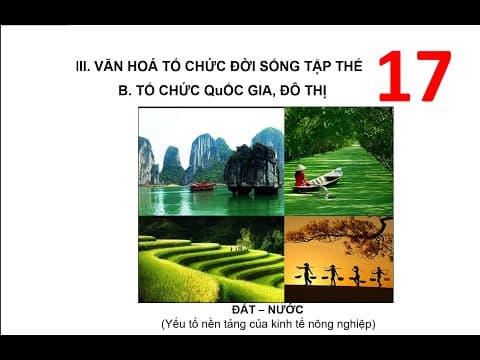
In Vietnamese culture, the concept of the nation is closely tied to agriculture. The land is seen as a vital resource for cultivation, and water is essential for rice farming. This agricultural foundation has led to a unique understanding of the nation as a harmonious balance of yin and yang, with a preference for the yin aspect, symbolizing the nurturing qualities of the land.
The Vietnamese term "làng nước" (village and nation) reflects this connection, emphasizing that the village is the primary unit of social organization, while the state is a broader extension of this community. The saying "sống ở làng sang ở nước" (living in the village, moving to the nation) illustrates the transition from local to national identity.
The introduction of Chinese cultural concepts brought the idea of a state, which was previously absent in Vietnamese society. Unlike the Chinese emphasis on family, Vietnamese culture prioritizes clan and community, leading to a distinct understanding of national identity.
The Vietnamese nation is characterized by its geographical, cultural, and social dimensions. It encompasses a sovereign organization with a shared culture, legal system, and common language, which serve as tools for communication and governance.
The village serves as a microcosm of the nation, where community consciousness is paramount. In villages, people support each other through cooperative labor, such as harvesting and irrigation. In contrast, at the national level, this cooperation expands to address larger challenges, such as flood prevention and cultural preservation.
In villages, customary laws govern social interactions, while at the national level, formal legal systems are established. The transition from village to nation involves a shift from informal to formal governance structures, with regional and provincial units often lacking significant historical importance.
Throughout history, Vietnam has seen various administrative divisions, from the 15 provinces during the Bắc thuộc period to the current 64 provinces. These changes reflect the dynamic nature of governance and the importance of local administration in the broader context of national identity.
Unlike Western nations, where individualism and mobility are emphasized, Vietnamese society has historically focused on community and collective identity. This communal approach has shaped the governance structure, where local villages play a crucial role in maintaining social order and cultural traditions.
Urban areas in Vietnam have developed in relation to the nation, often influenced by rural traditions. The concept of urbanization in Vietnam differs from the West, where cities emerged from economic development. In Vietnam, urban centers often arise from state initiatives, serving primarily administrative functions.
Vietnamese urban areas maintain strong ties to rural communities, often reflecting rural characteristics in their organization. This interdependence can lead to a phenomenon known as ruralization, where urban areas retain elements of rural life, such as traditional festivals and communal activities.
The organization of Vietnamese collective life is a complex interplay between village and nation, shaped by agricultural traditions and historical developments. The unique characteristics of Vietnamese society emphasize community over individualism, resulting in a governance structure that prioritizes collective well-being. Understanding this organization provides valuable insights into the cultural identity and social dynamics of Vietnam today.