This blog post provides a detailed explanation of the OSI model, illustrating how data travels from a user's device to a server and back. It covers the seven layers of the OSI model, the importance of DNS resolution and TCP handshake, and how these processes facilitate seamless internet communication.
In the world of networking, understanding how data travels from one point to another is crucial. The OSI (Open Systems Interconnection) model is a foundational concept that helps us grasp the journey of data across the internet. In this blog post, we will explore the OSI model in detail, using a practical example of accessing a website, such as Google.
Before diving into the OSI model, it's essential to recap some basic networking concepts. In previous discussions, we covered:
If you're unfamiliar with these concepts, it's advisable to review the foundational material before proceeding.
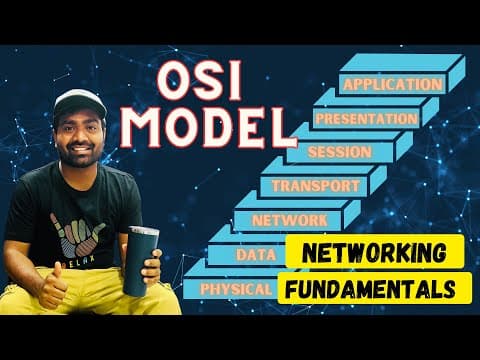
When you open your browser and type in a URL like www.google.com, a series of processes occur almost instantaneously. Understanding these processes requires knowledge of the OSI model, which consists of seven layers:
Before any data transmission begins, the first step is DNS (Domain Name System) resolution. This process translates the human-readable domain name (like www.google.com) into an IP address that computers can understand. The DNS acts as a database that maintains records of domain names and their corresponding IP addresses.
If the domain is valid, the process moves to the next stage.
Once the DNS resolution is successful, a TCP (Transmission Control Protocol) handshake occurs. This is a three-step process that establishes a connection between your device and the server:
This handshake ensures that both parties are ready to communicate before any data is sent.
Now that we have established the prerequisites, let's explore the OSI model layers in detail using the example of accessing www.google.com.
At this layer, your browser initiates an HTTP or HTTPS request to the server. This layer is responsible for user interface and user interaction with the application. It can also include headers for authentication and other necessary information.
Once the request is initiated, the next step is data encryption. This layer formats the data for transmission, ensuring that it is secure and can be understood by the receiving server. HTTPS is commonly used at this layer to encrypt data.
The session layer is responsible for maintaining a session between your browser and the server. This means that once you log in to a service, you don't have to log in again for a certain period. Sessions are typically managed through cookies and cache.
At this layer, data is segmented into smaller packets for transmission. The transport layer also defines the protocol used for communication, typically TCP for HTTP requests. This segmentation is crucial for efficient data transfer, especially for large files.
The network layer is where routing occurs. Each packet is assigned a source and destination IP address, allowing routers to determine the best path for the data to travel across the network. This layer is essential for ensuring that data reaches its intended destination.
Once the packets reach the router, they are converted into frames for transmission over the local network. This layer adds MAC (Media Access Control) addresses to the frames, which helps switches identify devices on the network.
Finally, at the physical layer, data is transmitted as electronic signals over physical mediums such as optical cables. This layer is responsible for the actual transmission of data across the network.
When the data reaches the Google server, the OSI model is applied in reverse:
The OSI model is a vital framework for understanding how data is transmitted over networks. While it may not be the most modern model, it provides a clear structure for grasping the complexities of networking. For those in fields like DevOps, having a high-level understanding of the OSI model is beneficial, even if the specifics of each layer are automated in many modern applications.
By understanding the OSI model, you can better appreciate the intricacies of data communication and the technologies that enable our daily internet experiences.