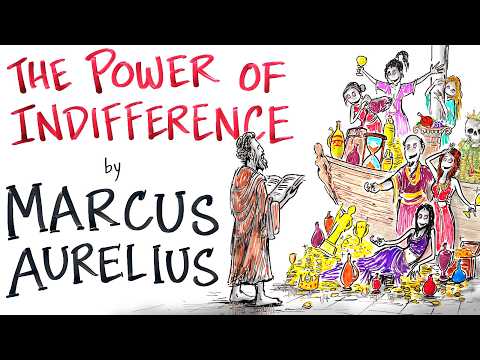
Marcus Aurelius, a Roman emperor and stoic philosopher, teaches the importance of indifference towards things that do not matter, emphasizing that true strength lies in detachment from outcomes and focusing on virtue and personal growth.
Marcus Aurelius, the Roman emperor who ruled from 161 to 180 AD, is renowned not only for his leadership but also for his profound insights as a stoic philosopher. His writings, particularly his meditations, have inspired millions across the globe, despite his original intention for them to remain private. This blog post delves into one of his essential teachings: the power of indifference.
Aurelius emphasizes that we must cultivate indifference towards things that do not significantly impact our lives. This concept may seem straightforward, yet its depth is profound. Indifference is not synonymous with apathy; rather, it represents a conscious separation of our higher self from the chaos of physical reality, emotions, and thoughts. By detaching from outcomes, we can observe events with clarity and rationality.
Much of our suffering stems from our attachment to transient things. Change is the only constant in life, and our resistance to it often leads to stress and anxiety. Aurelius illustrates this with a metaphor: just as a spring of clear water remains pure despite external curses or impurities, we too can maintain our mental clarity by focusing on what truly matters.
Aurelius encourages us to recognize our place within the larger cosmos. Despite the chaos of the world—be it personal struggles, societal issues, or global crises—everything exists in a state of balance. He draws parallels to nature, where the fall of a giant Redwood, often seen as tragic, actually creates space for new life. This perspective invites us to see beauty in adversity and to understand that all events are part of a greater order.
In his meditations, Aurelius notes that imperfections can be beautiful. He likens the cracks in a loaf of bread or the bursting of ripe figs to the charm of nature's processes. By adopting this mindset, we can find pleasure in the ordinary and appreciate the beauty in aging and decay.
Aurelius viewed adversity not as a misfortune but as a form of training for a higher purpose. He believed that every hardship we endure shapes us into who we are meant to be. Reflecting on our struggles can reveal their significance, allowing us to see them as opportunities for growth rather than obstacles.
Aurelius posits that while we cannot control our fate, we can control our reactions to it. He encourages us to embrace the hand that fate deals us and to play it to the best of our abilities. This perspective fosters resilience and empowers us to strive for our highest potential.
Indifference does not imply a lack of ambition or purpose. On the contrary, Aurelius believed it is our duty to reach our highest potential. He observed that all beings in nature fulfill their roles without seeking recognition. Similarly, we should focus on being kind, wise, and virtuous, aligning our actions with our values.
Aurelius acknowledges that perfection is unattainable, yet the pursuit of it is essential for personal fulfillment. This pursuit is not about ego but about shedding the attachments that hinder our growth. By orienting ourselves towards a divine ideal, we can live in harmony with nature and the universe.
In a world filled with distractions and uncertainties, understanding the power of indifference can be liberating. By letting go of what we cannot control and focusing on our inner integrity, we can navigate life's challenges with grace. As Aurelius reminds us, joy comes from progress towards our ideals, and there is beauty to be found in all aspects of life. Embracing this philosophy allows us to smile back at the inevitability of death and to cherish the purity of our souls amidst the chaos of existence.