This blog post explores the cultural and religious significance of firecrackers during Diwali, addressing misconceptions about pollution and the impact of bans on religious freedom. It highlights historical texts that support the practice and calls for a deeper understanding of traditions.
Diwali, the festival of lights, is celebrated with great enthusiasm across India. A significant aspect of this celebration is the use of firecrackers, known as "उल्का दान". However, in recent years, there has been a growing movement against the use of firecrackers, often citing pollution and health concerns. This blog post aims to delve into the cultural, historical, and religious significance of firecrackers during Diwali, while also addressing the implications of bans on this tradition.
The narrative against firecrackers often begins in schools, where children are taught that using firecrackers is harmful and that their ancestors were wrong to celebrate in this manner. This propaganda is sometimes supported by NGOs that petition the courts to impose bans on firecrackers. Unfortunately, these bans are often enacted without scientific discussion or debate, leading to a disregard for the cultural practices associated with Diwali.
Critics argue that firecrackers contribute significantly to pollution, particularly in cities like Delhi. However, studies indicate that pollution levels in these cities are already high before Diwali, and attributing the pollution solely to firecrackers is misleading. Various research studies conducted by institutions like IIT and BHU show that pollution is a year-round issue, not just during the festival.
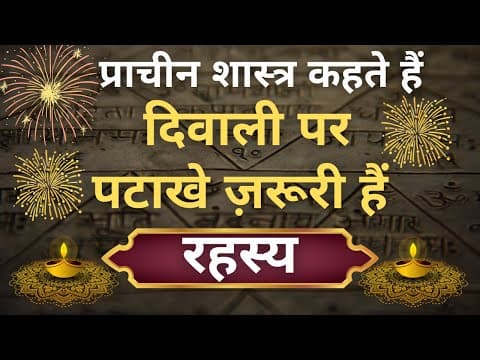
The bans on firecrackers raise important questions about religious freedom. While some may argue that firecrackers are not mentioned in ancient texts, it is essential to recognize that many religious texts, including the Skanda Purana, discuss various forms of donations and rituals, including "उल्का दान". This practice is not merely about lighting firecrackers; it is a way to honor ancestors and celebrate the festival.
The term "उल्का दान" refers to the act of lighting firecrackers, which has roots in ancient traditions. The Skanda Purana mentions that during the month of Kartika, when the sun enters Libra, ancestors visit the earth, and lighting firecrackers is a way to honor them. This tradition is deeply embedded in the cultural fabric of Indian society.
Several ancient texts provide insights into the significance of firecrackers:
These texts highlight that the use of firecrackers is not a modern invention but a continuation of ancient practices that have been passed down through generations.
Despite the cultural significance of firecrackers, there is a lack of open debate in courts and among policymakers regarding their use. While discussions around other religious practices, such as the hijab, are prevalent, the same attention is not given to the cultural practices associated with Diwali. This inconsistency raises concerns about the respect for religious freedom and cultural heritage.
As we celebrate Diwali, it is crucial to understand the significance of firecrackers beyond the surface-level concerns of pollution. They are a part of our cultural identity and religious practices. It is essential for educators, policymakers, and the public to engage in informed discussions about these traditions, respecting the historical context and the beliefs of millions.
Let us strive to preserve our cultural heritage while also addressing environmental concerns in a balanced manner. Sharing knowledge about our traditions can help foster a deeper appreciation for the practices that define our festivals.
I encourage readers to share this information widely, engage in discussions about our cultural practices, and advocate for a respectful understanding of our traditions. Together, we can ensure that the essence of Diwali continues to shine brightly for generations to come.