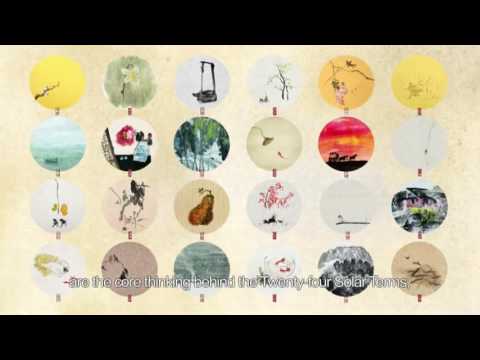
The Twenty-Four Solar Terms is an ancient Chinese system that divides the solar year into 24 segments, guiding agricultural practices and cultural rituals. Originating from the Yellow River region, it reflects the harmony between nature and human life, influencing health, farming, and cultural identity in China.
The Twenty-Four Solar Terms is a traditional Chinese knowledge system that organizes the perception of astronomical laws and their relationship with the natural world. This ancient system, which divides the solar year into 24 equal segments, has been integral to Chinese culture and agriculture for thousands of years.
The ancient Chinese divided the annual motion of the sun into 24 segments, known as "jia chi" or solar terms. These terms include:
This system has been recognized in international meteorology as the fifth great invention of China, highlighting its significance in understanding seasonal changes and agricultural practices.
The origins of the Twenty-Four Solar Terms can be traced back to the Yellow River region. The formulation of these terms was based on observations of astronomical time sequences, air temperature, precipitation, and other local natural phenomena. Over time, this knowledge became a time directory for agricultural societies and was shared among various ethnic groups in China.
The Twenty-Four Solar Terms is not just a guide for agricultural activities; it is a vital part of Chinese cultural identity. Each solar term is associated with specific rituals and practices that reflect the agricultural calendar. For instance, during the Beginning of Spring, various regional ceremonies are held to worship the god of spring and encourage farming activities.
These practices illustrate how the solar terms influence daily life and agricultural cycles, guiding activities such as ploughing, weeding, harvesting, and storing.
The Twenty-Four Solar Terms encapsulates the wisdom of China's agricultural civilization. It serves as a reference for forecasting farming seasons and preventing natural calamities. For example, proverbs related to the solar terms are widely used in agriculture today, such as the arrival of the first frost signaling the time for sweet potato digging.
The rhythm of life in China is closely tied to the solar terms, influencing traditional health practices. For instance, during the Beginning of Summer, people engage in activities to maintain good health, such as eating black sticky rice and climbing mountains. This reflects the principles of traditional Chinese medicine, which emphasizes nourishing the body according to seasonal changes.
The Twenty-Four Solar Terms has been incorporated into the curricula of primary and middle schools in China. Students learn about the solar terms through songs and activities, fostering an understanding of time and nature. This educational approach helps instill a sense of harmony with the environment and cultural identity from a young age.
The concepts of the unity of heaven and man, along with the circulation of yin and yang, are central to the philosophy behind the Twenty-Four Solar Terms. This philosophy promotes respect for nature and emphasizes the importance of balance and harmony in social life.
The Twenty-Four Solar Terms continues to inspire modern Chinese culture, influencing various forms of artistic expression, including sculpture, music, literature, and digital applications. It has also been integrated into calendars used across the country, coexisting with traditional calendars of various ethnic groups.
Festivals associated with the solar terms, such as the Day of Fresh Green and Winter Solstice celebrations, play a significant role in promoting cultural identity and community cohesion. These events encourage intergenerational transmission of cultural practices and foster dialogue between different cultures.
The Twenty-Four Solar Terms is a rich cultural heritage that reflects the deep connection between the Chinese people and their environment. It serves as a guide for agricultural practices, a framework for health and lifestyle, and a source of cultural identity. As this knowledge continues to be passed down through generations, it remains a vital part of China's cultural landscape, promoting harmony between humanity and nature.