This blog post explores the Vietnamese cultural foundations rooted in the Yin-Yang philosophy and the Five Elements theory, detailing their historical origins, significance in daily life, and applications in various aspects of Vietnamese culture, including agriculture, spirituality, and social customs.
Vietnamese culture is deeply intertwined with its understanding of the universe, shaped by historical interactions with various civilizations. The foundational philosophies of Yin-Yang and the Five Elements (Ngũ hành) play a crucial role in shaping this worldview. This post delves into these concepts, their origins, and their significance in Vietnamese culture.
The understanding of the universe in Vietnamese culture began with indigenous beliefs during prehistoric times. However, significant influences came from interactions with Chinese and Eastern cultures, which introduced philosophical and scientific knowledge. The scientific knowledge, in particular, became a universal aspect of human civilization, transcending national boundaries.
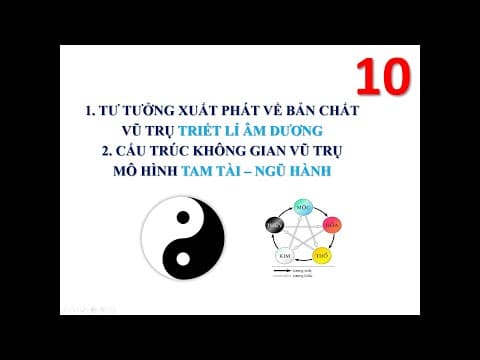
Yin-Yang philosophy is a fundamental aspect of ancient Chinese thought, representing the duality of nature. It encompasses pairs of opposites that create balance and harmony in the universe. Key pairs include:
These dualities are essential for understanding life, especially for agricultural communities that rely on the balance of these forces for successful harvests.
In this philosophy, Yin is often associated with femininity, softness, and passivity, while Yang represents masculinity, strength, and activity. For example, the mother is seen as Yin (nurturing and gentle), while the father embodies Yang (strong and protective). This duality extends to various aspects of life, including seasons, time, and even colors.
Yin-Yang principles influence many aspects of Vietnamese life, from agriculture to spiritual practices. For instance, the agricultural calendar is often aligned with these principles, guiding planting and harvesting times based on seasonal changes.
The Five Elements theory categorizes the universe into five fundamental elements: Wood (Mộc), Fire (Hỏa), Earth (Thổ), Metal (Kim), and Water (Thủy). Each element has its characteristics and relationships with the others, forming a complex web of interactions.
These relationships are not only theoretical but are applied in various aspects of life, including feng shui, medicine, and even personal relationships.
The Five Elements are deeply embedded in Vietnamese customs, influencing everything from architecture to traditional medicine. For example, when building a house, the orientation and materials are often chosen based on the elemental balance to ensure harmony and prosperity.
The Yin-Yang and Five Elements philosophies are reflected in Vietnamese spiritual beliefs and practices. Many rituals, such as weddings and funerals, incorporate these principles to ensure harmony and balance. For instance, during funerals, the colors used often reflect Yin (black and white) to signify mourning, while weddings may use vibrant colors representing Yang.
For agricultural communities, understanding the cycles of Yin and Yang and the Five Elements is crucial for successful farming. Farmers often plant crops based on lunar calendars, which align with these philosophies, ensuring that they work in harmony with nature.
The influence of Yin-Yang and the Five Elements can also be seen in Vietnamese art and literature. Traditional motifs often depict these concepts, illustrating the balance of opposites and the interconnectedness of all things.
The Yin-Yang philosophy and the Five Elements theory are integral to understanding Vietnamese culture. They provide a framework for interpreting the world, guiding daily life, and shaping spiritual beliefs. As Vietnam continues to evolve, these ancient philosophies remain a vital part of its cultural identity, reflecting the enduring connection between humanity and the universe.