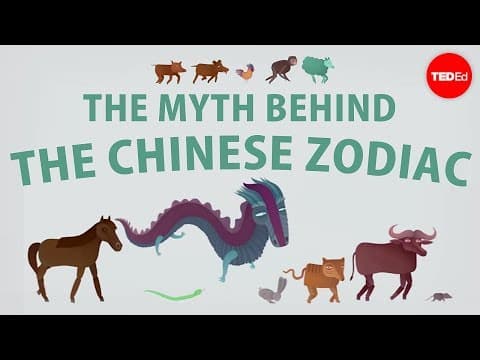
The Chinese zodiac, based on a mythological race organized by the Jade Emperor, assigns an animal to each year in a 60-year cycle. This system reflects cultural values and has variations across different Asian cultures.
The Chinese zodiac, known as shēngxiào, assigns an animal to each year based on the lunar calendar, contrasting with Western astrology, which is determined by the position of constellations at the time of one's birth. Central to the understanding of the Chinese zodiac is the enduring myth of the Great Race, a fascinating story that explains how the twelve animals were chosen and their order in the zodiac calendar.
According to the myth, the Jade Emperor, known as Yù Dì, sought a method to measure time and decided to organize a race. The first twelve animals to cross a river would earn a place in the zodiac calendar, and the order of their arrival would determine their ranking.
The race commenced with the rat, who cleverly rose with the sun to gain an early advantage. On his way to the river, he encountered several larger animals, including the horse, tiger, and ox. Despite his small size and poor swimming ability, the rat sought assistance from the stronger animals. The ox, being kind-hearted, agreed to carry the rat across the river. However, just before reaching the shore, the rat jumped off the ox's head, securing first place for himself. The ox followed closely behind, finishing in second place, while the powerful tiger came in third.
Following the tiger was the rabbit, who, despite being too small to swim, skillfully hopped across stones and logs to claim fourth place. The dragon, capable of flying directly across, chose instead to help other creatures in need, which delayed her arrival. She finished in fifth place, just ahead of the horse, who galloped across the river but was surprised by the sneaky snake, which slithered into sixth place.
The next trio to arrive consisted of the sheep, monkey, and rooster, who worked together on a raft to navigate through the weeds. They agreed to place the sheep in eighth position for its comforting nature, followed by the monkey and rooster. The dog, a strong swimmer, was distracted by play and ended up in eleventh place. Finally, the pig, who stopped to eat and nap, waddled across the finish line to claim the twelfth and final spot.
This race established the order of the twelve animals in the Chinese zodiac, with each year corresponding to one of these animals. The cycle repeats every 60 years, which may seem unusual given the twelve animals. The reason lies in the traditional Chinese calendar, which combines two systems: the Twelve Earthly Branches (shí'èrzhī) and the Ten Heavenly Stems (tiāngān).
The Twelve Earthly Branches are linked to the zodiac animals, while the Ten Heavenly Stems correspond to the five classical elements: metal, wood, water, fire, and earth. Each element is associated with either yīn or yáng, creating a ten-year cycle. When these two systems are combined, they produce a total of 60 unique combinations, known as the sexagenary cycle or gānzhī. For instance, someone born in 1980 is identified as the yáng metal monkey, while a person born in 2007 is classified as the yīn fire pig.
In addition to the zodiac sign based on the birth year, individuals can also have an inner animal determined by their birth month, a true animal based on their birth date, and a secret animal linked to their birth hour. This complexity adds depth to the zodiac's significance in personal identity.
While the Great Race myth is central to the Chinese zodiac, as the system spread throughout Asia, various cultures adapted it to reflect their own traditions. For example, in the Vietnamese zodiac, the rabbit is replaced by a cat, and in Thailand, the dragon is substituted with a mythical snake known as a Naga.
Whether or not one believes in the zodiac's influence on personal traits, the Chinese zodiac offers a rich tapestry of cultural significance and storytelling. The Great Race not only explains the order of the animals but also reflects the values and beliefs of the cultures that embrace this ancient system. Understanding the Chinese zodiac provides insight into a fascinating aspect of cultural heritage that continues to resonate with millions today.