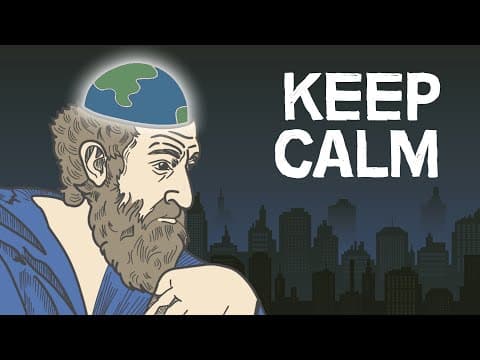
Epictetus, an ancient Stoic philosopher, teaches that true happiness and inner peace come from controlling our perceptions and desires rather than external events. By aligning our will with nature and letting go of attachments to things beyond our control, including loved ones and material possessions, we can overcome suffering and achieve unshakable tranquility.
Epictetus, a prominent Stoic philosopher, believed that happiness and inner peace are entirely within our power. However, this idea can seem difficult to accept, especially when we consider the immense suffering in the world—illness, death, heartbreak, betrayal, political turmoil, and uncertainty. How can we maintain peace amidst such adversity?
Little is known about Epictetus' early life, but historical records suggest he was likely born into slavery around 50 AD in present-day Turkey. After gaining his freedom, he pursued philosophy, studying under the Stoic philosopher Musonius Rufus in Rome. When Emperor Domitian banned philosophers from Rome, Epictetus moved to Nicopolis, where he founded a school that attracted many students.
Epictetus' teachings were not written by himself but preserved through the notes of his pupil Arrian, known today as the Discourses and the Enchiridion. He lived simply and taught with a sharp, direct style, emphasizing the dichotomy of control and the goal of inner freedom. For Epictetus, philosophy was not merely theoretical but a way of life to be embodied and practiced.
Epictetus identified the root of human suffering not in external events themselves but in how we perceive and respond to them. For example, we grieve financial loss not because of the loss itself but due to our attachment to wealth. Similarly, spiders are not inherently frightening; our minds project fear onto them.
The Stoics observed that when events occur, we instantly form value judgments—often subconsciously. We might see a spider and judge it as dangerous or see a fresh loaf of bread and desire it. These judgments are not always reasonable. A reasonable impression might be recognizing daylight as the sun shining, while an unreasonable one would be fearing a harmless house spider as a deadly threat.
Our judgments shape our emotional responses, such as fear, anger, disappointment, or grief. These unpleasant emotions arise from our desires and aversions toward external things, not from the things themselves.
Epictetus explained that desire and aversion cause distress. For instance, if someone cuts you off in traffic, your anger stems not from the event itself but from your judgment and desire not to be cut off. Desire and aversion are two sides of the same coin; wanting to avoid certain people or situations automatically implies aversion toward them.
While it might seem simple to avoid suffering by avoiding undesirable situations or people, this approach is unreliable. External circumstances are unpredictable and beyond our control. Epictetus warned against relying on such external factors for our happiness.
Desire and aversion are not inherently bad. Directed toward things within our control—such as our own virtue—they can lead to positive outcomes. In Stoicism, living in agreement with nature means living a life of virtue, which is the only true good. Vice is the only true bad.
Therefore, desiring to become virtuous and avoiding vice is appropriate because these choices are within our power. Problems arise when we attach desire and aversion to external things beyond our control, such as wealth, health, public office, honors, friends, or children. These things are fickle and unreliable, and basing our happiness on them leaves us at the mercy of fate.
Epictetus stated:
"Attach your desire and aversion to wealth and property and you'll fail to get what you desire and you'll fall into what you want to avoid. Attach them to health and you'll fall into misfortune, and likewise if you attach them to public office, honors, your country, friends, children, and in a word to anything that lies outside the sphere of choice."
Attachments to loved ones—friends, spouses, children—are often the deepest and most painful. Losing a child or spouse can cause profound suffering. While love and attachment bring joy and intimacy, they also make us vulnerable to pain because we cannot control the fate of others.
Epictetus acknowledged the beauty in attachment but cautioned that it also makes us puppets of unpredictable forces. He advised us to stop valuing things beyond our control to avoid emotional turmoil:
"Why then are we angry? Because we attach value to the things that these people steal from us. Well, stop attaching such value to your clothes and you won't be angry with the man who steals them. Don't attach value to the beauty of your wife and you won't be angry with the adulterer."
Since events themselves do not disturb our peace, but our perceptions and judgments do, we should focus on changing our thinking rather than trying to change the universe. Our thinking should be reasonable and aligned with nature, which leads to undisturbed inner peace.
Epictetus suggested that to reduce desire and aversion, we should learn to see the general nature of things. For example, if you are fond of a particular ceramic cup, remind yourself that it is only a ceramic cup. If it breaks, you will not be disturbed. Similarly, if you kiss your child or spouse, remember you are kissing a human being, and thus you will not be disturbed if they die.
This perspective may sound cold, but it does not mean we cannot cherish or care for our loved ones. True freedom and unshakable peace come from letting go of desire and aversion for things beyond our control, even those we hold most dear.
Acceptance, in the Stoic sense, is not passive tolerance of injustice or misfortune but recognizing that many things are beyond our control and not allowing ourselves to be emotionally at their mercy. Instead, we focus on what we can control—our own thoughts and actions.
Epictetus flipped the concept of acceptance by suggesting that difficulties arise because we still have desires and aversions toward things beyond our control. Acceptance means aligning our desires and aversions with the natural order of the universe.
He famously said:
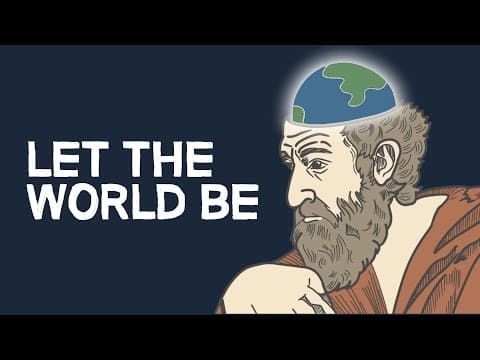
"Ask not that events should happen as you will, but let your will be that events should happen as they do, and you shall have peace."
By wishing for things to happen as they do, rather than demanding they happen as we want, we let go of resistance, attachments, and bitterness. This mindset brings immense relief and peace, even in an unpredictable world.
Stoic virtue includes striving to improve the world wherever we can. However, it is better to do so with clarity and inner peace rather than from anger or fear. By accepting the natural flow of events and focusing on what we can control, we can face life's challenges with resilience.
Epictetus' teachings offer a radical but profound path to inner peace. By understanding that suffering arises from our judgments and attachments, and by aligning our will with nature, we can overcome emotional turmoil. Letting go of desire and aversion toward external things, including loved ones and material possessions, frees us to live a life of virtue and tranquility.
What do you think about Epictetus' radical teachings? Feel free to share your thoughts and reflections.