This article explores the Clever Hans effect in AI, particularly in music classification models. It explains how AI models often rely on superficial cues rather than genuine understanding, demonstrated through frequency analysis of music. Examples reveal that AI can misclassify music genres based on minimal or altered audio signals, highlighting the limitations of current AI in truly grasping musical concepts.
Artificial Intelligence (AI) has made remarkable strides in various fields, including music classification. However, a phenomenon known as the Clever Hans effect reveals that AI models often do not understand the content they analyze but instead rely on subtle cues or shortcuts. This article delves into the Clever Hans effect, its origins, and its implications for AI music classifiers.
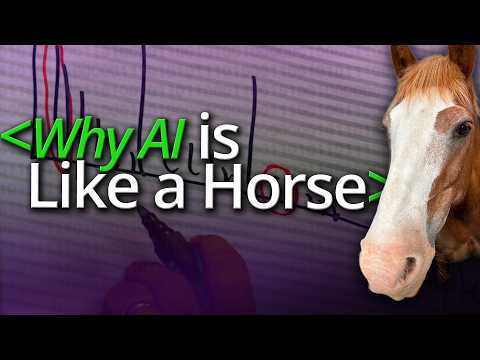
Clever Hans was a horse born in Germany in the late 1890s, famous for seemingly being able to perform arithmetic and answer questions by tapping his hoof. For example, when asked "What's 3 + 3?", Hans would tap six times. This amazed audiences and suggested extraordinary intelligence.
However, a German psychologist later discovered that Hans was not actually performing calculations. Instead, he was responding to involuntary body language cues from his questioners, such as subtle changes in posture or facial expressions that indicated when to stop tapping. Hans had learned to read these signals, not to do math.
The Clever Hans effect describes situations where AI models appear to perform complex tasks but are actually exploiting unintended cues or shortcuts in the data. This effect is particularly prevalent in AI music classification.
About 12 years ago, researcher Bob Sturm published a paper demonstrating that music classifier models often behave like Clever Hans. He showed that by applying simple audio effects such as equalization filters or delays, the classification of a music piece could change drastically. For instance, adding delay to a rock song might cause the model to classify it as reggae, without any clear reason.
This suggests that models are not truly understanding the music but are instead relying on superficial features.
Audio signals can be represented as waves, with time on the x-axis and amplitude (volume) on the y-axis. To analyze these signals, a mathematical tool called the Fourier transform decomposes the audio into sinusoidal components at different frequencies.
The Fast Fourier Transform (FFT) is a computationally efficient method to obtain the frequency spectrum of an audio signal, showing the amplitude of each frequency present.
To test whether AI models use genuine musical information or shortcuts, researchers decompose audio signals into frequency components and analyze which frequencies are necessary or sufficient for classification.
A sufficient signal is the minimal set of frequency components that, when passed to the model, still results in the same classification. For example, a subset of frequencies might be enough for the model to classify a piece as blues.
A complete explanation is a sufficient signal that is also necessary. This means that if these frequencies are removed, the model no longer classifies the audio as that genre.
The inverse signal is what remains after removing the complete explanation frequencies. Ideally, if the model truly understands the music, the inverse should not be classified as the original genre.
Researchers have tested these concepts with real audio. For instance, a 12-bar blues piece was analyzed:
This demonstrates that the model's classification does not align with human perception.
These findings imply that AI music classifiers are not truly understanding music in a human sense. Instead, they perform frequency analysis and learn shortcuts that can be easily fooled or manipulated.
Despite good accuracy metrics, these models do not work in ways humans expect or understand. This limitation is not unique to music classification but is a broader challenge in AI.
The Clever Hans effect highlights a critical issue in AI: models may appear intelligent but often rely on unintended cues rather than genuine understanding. In music classification, this means AI can misclassify genres based on minimal or altered audio signals that do not correspond to human musical experience.
Improving AI to overcome the Clever Hans effect requires developing models that grasp causal and semantic aspects of data, not just statistical correlations. Until then, AI remains a clever horse, not a true musician or mathematician.
This exploration underscores the importance of cautious interpretation of AI outputs and the need for continued research into explainable and robust AI systems.