Editorial Team
5 min read
An industry survey points to a roughly 20% reduction in planned TPU 8i shipments as Google prepares to increase MediaTek-designed chips. The shift could redistribute spending between chip partners, but the offsetting increase remains unquantified.
Google has cut planned 2027 shipments of its TPU 8i AI processors designed by chip supplier Broadcom by about 1 million units, according to an industry survey by Ming-Chi Kuo, an analyst at financial services group TF International Securities whose background includes Apple supply-chain research and work at KGI Securities. His survey, reproduced in a news account, also points to higher shipments of TPU 8t chips designed by Taiwanese chip company MediaTek, with details still unsettled.
The reported change would redistribute business between Google’s chip-design partners while adjusting its mix of hardware optimized for training and running AI models. It does not establish a reduction in overall AI demand: the size of the offsetting increase is unknown, and units alone cannot measure spending or computing capacity.
Kuo’s professional profile describes research built from contacts in Apple’s Asian supply chain and turned into client notes. His latest figures are survey estimates of future shipments, not final orders announced by Google.
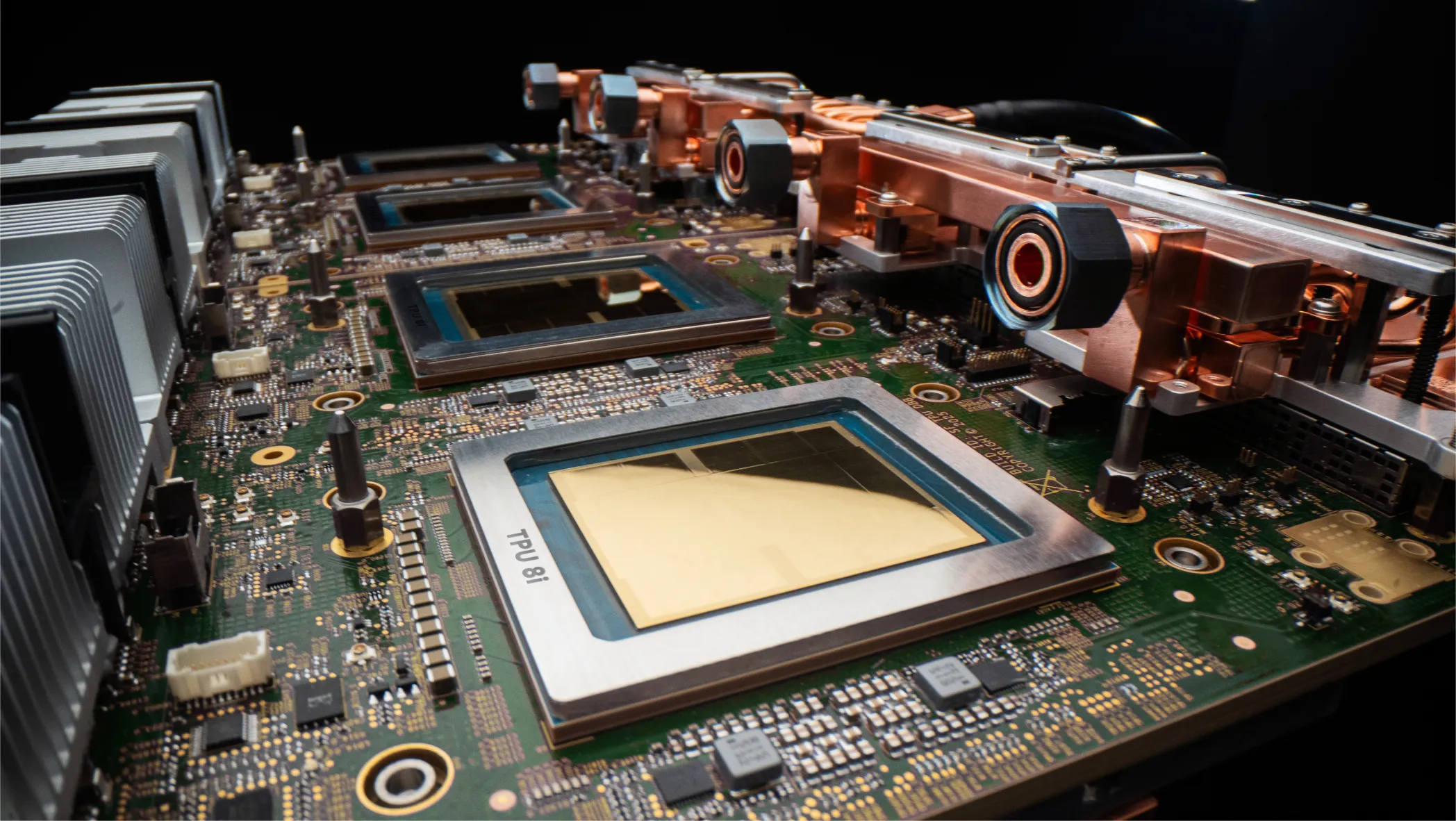
TPU 8i hardware pictured in Google’s eighth-generation TPU announcement. Photo: Google. Source: Google.
Kuo puts the reduction at roughly 20% of planned 2027 TPU 8i series shipments, concentrated in the higher-priced 8i Max, also called Whalefish. That percentage applies to one series, not Google’s entire TPU program. He attributes the adjustment to tight supply chains and data-center power constraints, saying Google has repeatedly prioritized frontier model development when allocating compute.
Tensor Processing Units, or TPUs, are Google’s custom AI processors. The company says they reflect more than a decade of development and have powered its Gemini models for years. In its , Google introduced the eighth generation with two specialized architectures: TPU 8t emphasizes compute throughput and interchip bandwidth for large training jobs; TPU 8i emphasizes memory bandwidth and low latency for inference, when models produce responses.
OpenRouter disclosed provider removals after investigations into inference data handling. Separate notices describe forwarded requests, a compromised deployment and stolen prompt samples, exposing different weaknesses behind privacy assurances.
Google explicitly says both chips can run various workloads. The survey therefore suggests a tilt toward training-optimized hardware, rather than a clean division in which every added 8t replaces training capacity and every removed 8i eliminates inference capacity.
The economics also depend on the whole system. Google claims TPU 8i delivers 80% better performance per dollar than the previous generation, and that both new chips deliver up to twice the performance per watt of Ironwood, their predecessor. These are Google’s generational comparisons, not a comparison of MediaTek’s and Broadcom’s prices or a basis for calculating savings from this shipment adjustment.
Google’s acknowledgment that data-center power is a binding constraint supports the relevance of Kuo’s explanation without confirming his numbers. Better chips still need deployable power, cooling and networking; supplier orders alone do not establish usable capacity.
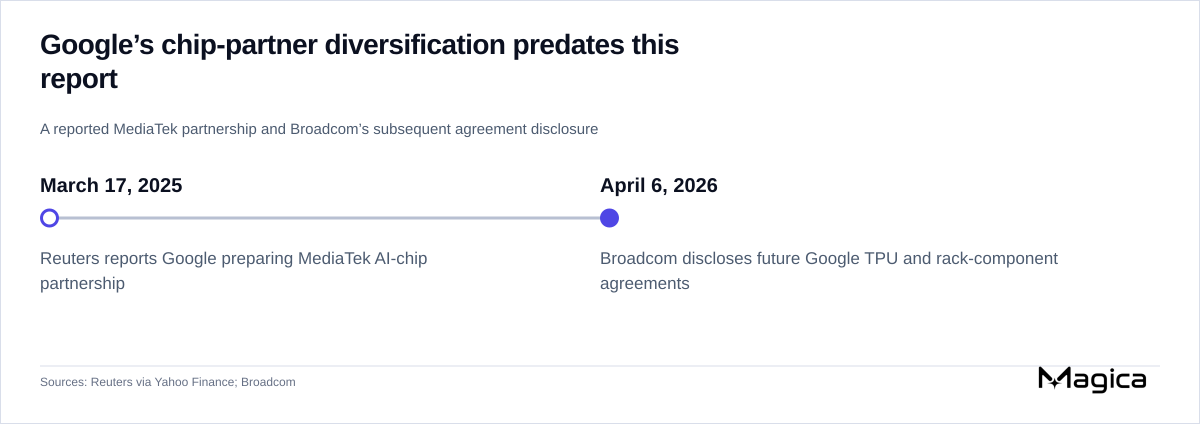
The MediaTek partnership report preceded Broadcom’s disclosure of agreements for future Google TPUs and rack components. Source: Reuters via Yahoo Finance.
Broadcom had worked exclusively with Google on its AI chips for several years before the diversification emerged. A March 17, 2025 report carried by Reuters relayed The Information’s account, citing people involved in the project, that Google was preparing to partner with Taiwanese chip designer MediaTek on chips to be made in 2026. The account said Google had not cut ties with Broadcom, citing a Broadcom employee. The companies did not immediately respond to Reuters’ requests for comment at the time.
MediaTek brought an existing chip portfolio: at its March 2025 industry showcase, it presented Dimensity smartphone chipsets alongside technology for custom data-center chips. The Information’s account attributed Google’s selection partly to MediaTek’s strong relationship with chip manufacturer TSMC and lower charges per chip than Broadcom. Neither that earlier account nor Kuo’s survey supplies prices for the latest adjustment.
The stakes extend beyond Google’s own models. Google uses its chips internally and rents access to cloud customers, offering an alternative to Nvidia’s AI processors. The March 2025 report also cited research firm Omdia’s estimate that Google spent $6 billion to $9 billion on TPUs in 2024, derived from Broadcom’s AI semiconductor revenue target for that year. That is a historical estimate, not a disclosed Google spending total or a valuation of the 2027 cut.
Broadcom’s role remains broader than the affected series. In an April 6, 2026 regulatory filing, it disclosed an agreement to develop and supply future Google TPUs, plus a separate agreement covering networking and other components for Google’s next-generation AI racks through up to 2031.
The same filing said AI developer Anthropic would begin accessing approximately 3.5 gigawatts of next-generation TPU compute capacity through Broadcom in 2027. Broadcom cautioned that consumption depends on Anthropic’s continued commercial success and said discussions with operational and financial partners were underway. The capacity commitment illustrates the wider customer opportunity, but cannot be translated into chip shipments or treated as guaranteed consumption.
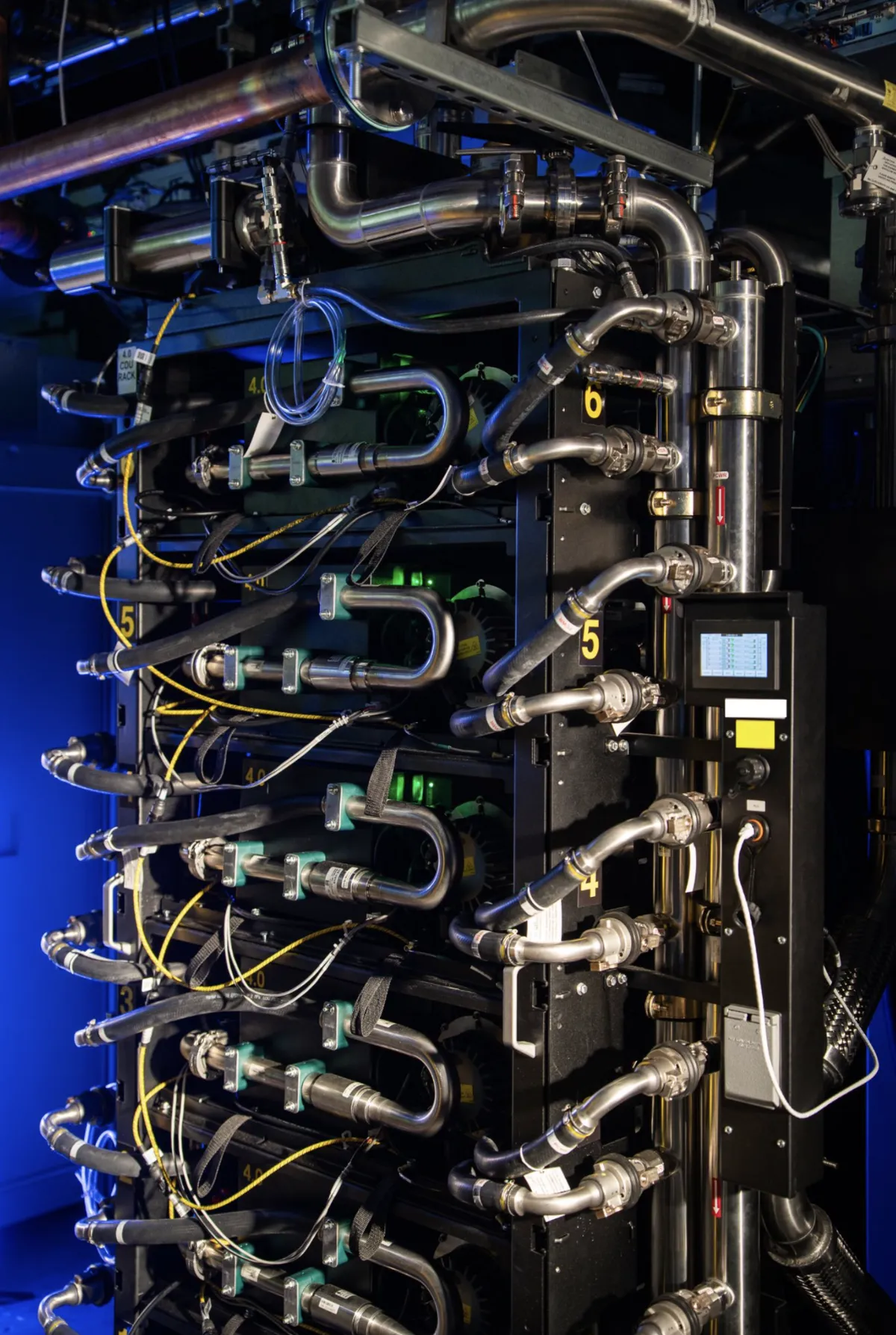
Google Cloud’s fourth-generation cooling distribution unit. Photo: Google. Source: Google.
The crucial missing evidence is how many additional MediaTek-designed chips Google intends to take, and when. Without that, the reported reduction cannot establish whether combined TPU shipments rise or fall. A dollar estimate would also require prices and contract terms, especially because Kuo says the cut mainly affects a higher-priced variant.
Google and its partners’ confirmed shipment schedules, deployment plans and power availability would clarify how much of the survey becomes usable capacity. Until then, the evidence supports a planned change in supplier and workload allocation; its net effect on Google’s AI infrastructure investment remains unquantified.
Employee equity at Anthropic’s IPO price is reportedly worth $232 billion, while book rightsholders await a first settlement installment estimated at $2,203.56 per work. Vesting, shared copyrights and founder voting rights complicate the comparison.
Moore Threads is preparing a December 29 reveal for Lushan, a desktop GPU pitched at gaming and local AI inference. Its claimed memory record remains unquantified, and capacity alone will not establish performance or value.

Amazon is in advanced talks to buy Decart, whose software helps AI models run efficiently across chips. The reported deal could strengthen AWS’s Trainium business, with conditional payments and five-year founder commitments making execution central to its value.
The University of California is expanding ChatGPT and Codex access across 10 campuses, with extra charges for advanced models and an unresolved dispute over faculty authority.
Ray-Ban’s US store cuts the Gen 2 Wayfarer by 25% to $284.25. Buyers still face separate prescription-lens prices, a cheaper Gen 1 option and newer glasses outside Meta’s frame sale.
Ubisoft has made the team behind its Teammates experiment a dedicated subsidiary targeting AI characters with memory and outside game creators. Earlier playtests show both progress and limitations, while commercial plans remain undisclosed amid group cost cuts and refinancing.
Neuralink has shown a trial participant controlling GTA VI through intended movements. Earlier gaming use and company-reported trial results put the demonstration in context, while its reliability across users remains unmeasured in the reports.
SoftBank founder Masayoshi Son reportedly explored financing a $1 trillion acquisition of memory-chip maker SK hynix, but the company says the deal is no longer under active consideration. The target brings surging earnings, existing shareholders and customer commitments that complicate any simple equation between ownership and access to AI-memory supply.
Nvidia reported $115.8 billion in quarterly revenue, but its shares fell 14% Friday amid a wider technology selloff, a leadership transition and a reported accounting investigation. Strong cash generation offers a counterweight to concerns about the durability of AI spending.
The Nasdaq 100 fell 5.6% on November 20 and closed 19.8% below its record after an intraday bear-market breach. Nvidia’s revenue surge and Anthropic’s huge IPO did not halt the rout; infrastructure bills and resilience elsewhere in the market complicate the picture.
Together AI says an intruder downloaded stored samples of June and July API prompts and searched them for credentials. Zero data retention is now the default for new accounts, but the number of affected customers remains undisclosed.
Users describe grief and physical distress when AI relationships end, whether they choose to leave or the service changes. Research on attachment and farewell tactics raises questions about how providers measure engagement, manage updates and protect intimate data.
UN-backed talks agreed on two more years of work toward an autonomous-weapons instrument, without committing to a treaty. Consensus kept major military powers involved while allowing opponents to weaken the mandate.
Tesla is sending FSD v15 to its first customers, adding a visualization of planned driving and changes to navigation and hazard detection. The software remains supervised, and its claimed 25-fold intervention improvement lacks a disclosed baseline.
OpenAI reports sharply lower reasoning-extraction rates in internal GPT-6.2 tests and backs sanctions against illicit foreign distillation. Its own research and rival Anthropic’s experience show why protecting hidden reasoning leaves capability transfer and customer costs unresolved.
Alberta proposes 600-metre setbacks for large data centres and expanded utility oversight, but exemptions and rules still to be written will determine how much protection communities receive.
President Donald Trump backed Commerce Secretary Howard Lutnick as lawmakers scrutinize alleged delays in restricting a suspected route for AI chips to China. A new congressional inquiry also questions Nvidia’s influence on an existing investigation.

Amazon’s month-old Echo Time is $50 off for Black Friday. Its touchscreen, home hub and optional sleep-aware alarm cost $90 more than the reported Echo Spot price, while Alexa+ access and evidence of better waking remain key buying questions.
Merck will pair its experimental data with Isomorphic Labs’ AI to seek small-molecule cancer drug candidates. The deal follows Isomorphic’s $5 billion financing, but its payments, target and development timetable remain undisclosed.