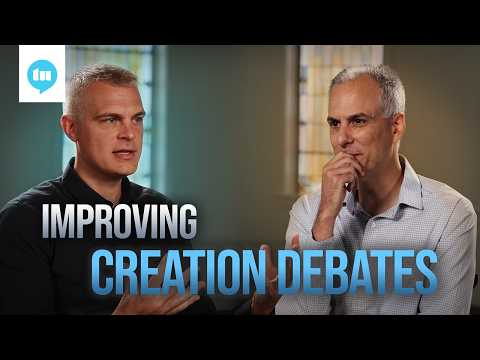
This article presents a comprehensive dialogue between a theologian and Dr. Marcus Ross, a paleontologist and young earth creationist, exploring the interpretations of Genesis 1, the doctrine of creation, and the tensions between young earth and old earth creationism. It emphasizes humility, respect, and the pursuit of truth in Christian discussions on creation.
The debate between young earth and old earth creationism has been a longstanding and often contentious topic within Christian communities. This article presents a thoughtful and respectful dialogue between a theologian and Dr. Marcus Ross, a paleontologist and young earth creationist, exploring their perspectives on the doctrine of creation, biblical interpretation, and the relationship between science and faith.
The conversation begins with an emphasis on the importance of humility and charity in discussing differing views within the body of Christ. Both participants express a desire to model how Christians can engage in meaningful dialogue despite disagreements, particularly on the topic of creation.
Dr. Ross shares his background as a paleontologist with extensive academic training, highlighting his lifelong fascination with dinosaurs and his early awareness of tensions between scientific findings and biblical teachings. The theologian shares his own journey, noting his interest in the science-faith interface and his openness to wrestling with complex questions.
Dr. Ross outlines five key theological tenets defining young earth creationism:
He emphasizes that YEC is defined theologically and biblically rather than by scientific claims.
The theologian expresses a position that lies between old earth creationism and evolutionary creationism. He affirms the historicity of Genesis 1-11 but is open to non-literal interpretations of the creation days, influenced by literary genre considerations and the writings of Augustine. He stresses the importance of creation ex nihilo (creation from nothing), the goodness and contingency of creation, and the reality of a historical Adam and Eve and the fall.
Both agree that Genesis 1-11 is historical but acknowledge differences in literary style and genre within the text. The theologian notes that Genesis 1:1-2:3 has a more elevated, broad-stroke style compared to the detailed genealogies and narratives that follow.
Dr. Ross emphasizes the historical nature of the Pentateuch and the importance of understanding Genesis as foundational history for Israel. He argues that the use of the Hebrew word "yom" (day) along with "evening" and "morning" strongly supports a literal 24-hour day interpretation.
The theologian, drawing on Augustine's writings, points out challenges such as the presence of light before the creation of the sun and the concept of divine rest, suggesting these may indicate a non-literal understanding of the days.
The theologian highlights the difficulty of reconciling the creation of light on day one with the creation of the sun, moon, and stars on day four. He suggests that God providing light before the luminaries may be a theological statement to discourage idol worship of celestial bodies.
Dr. Ross agrees that the earth was created first and was formless and void, with darkness over the deep. He envisions God creating a light source to establish time cycles before the sun and stars were made on day four.
The theologian finds it counterintuitive to imagine the earth existing without the sun and then being placed into orbit. Dr. Ross responds that, as God created all things, the physical laws and processes are subject to divine command, and miracles can account for such phenomena.
The theologian acknowledges the overwhelming scientific evidence for an old earth, such as starlight travel time and radiometric dating, and advocates for seeking harmony between scripture and science while prioritizing scripture.
Dr. Ross, while affirming biblical inerrancy, points out that nature is fallen and does not communicate propositions like scripture does. He acknowledges the challenges posed by scientific data but remains hopeful due to ongoing research within the young earth creationist community.
He shares his personal experience wrestling with scientific challenges during his education and career, emphasizing the importance of critical thinking and distinguishing between facts, reasonable inferences, and speculation.
The theologian raises the issue of animal death before the fall, which is a significant challenge for old earth and evolutionary creationist views. He notes that early church fathers like Basil and Augustine accepted that carnivory existed before the fall, viewing it as part of God's good creation and a form of discipline.
Both acknowledge the emotional and theological tension this issue creates and the need for ongoing reflection and dialogue.
Throughout the conversation, both participants emphasize the need for humility in interpreting scripture and science. They caution against arrogance and the weaponization of theological positions.
They advocate for face-to-face conversations within churches and communities to reduce hostility and foster understanding. They encourage pastors to courageously address creation topics within congregations, recognizing the diversity of views among believers.
The dialogue concludes with a hopeful vision for the future where Christians can engage in creation discussions with mutual respect, focusing on foundational doctrines such as creation ex nihilo, the goodness and contingency of creation, and the historical reality of Adam and Eve.
They express a desire for continued conversations that uphold truth and love, contributing to the edification of the body of Christ and effective cultural engagement.
This dialogue between a theologian and Dr. Marcus Ross exemplifies how Christians with differing views on creation can engage in respectful, thoughtful, and humble conversations. By focusing on shared commitments to biblical truth and the love of Christ, believers can navigate complex issues without division, fostering unity and deeper understanding within the church.
This article aims to provide readers with a comprehensive overview of the young earth versus old earth creationism debate, highlighting theological, biblical, and scientific perspectives while modeling charitable dialogue.