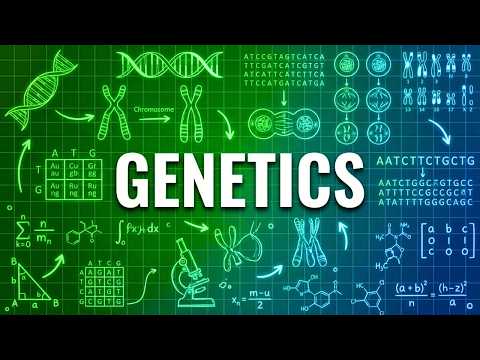
This article demystifies genetics by explaining key concepts such as DNA, genes, chromosomes, alleles, dominant and recessive traits, genotype and phenotype, mutations, carriers, and inheritance patterns. It clarifies common misconceptions and illustrates how genetic information is passed from parents to children, why siblings differ, and how hereditary conditions can appear even if parents show no symptoms.
Many people have encountered genetics in school, often memorizing terms like dominant, recessive, allele, and genotype without truly understanding what they mean or how they relate to real life. This article aims to provide a clear and comprehensive explanation of genetics, focusing on the fundamental question genetics seeks to answer: Why do children resemble their parents but are never identical to them?
Long before modern laboratories, farmers, doctors, and breeders observed patterns in traits and diseases across generations. They noticed some traits repeated, some conditions skipped generations, but lacked a model to explain or predict these patterns.
Gregor Mendel, in the 1860s, conducted controlled breeding experiments on pea plants and discovered consistent inheritance patterns. His model, refined over time, forms the foundation of modern genetics.
Genetics addresses how biological instructions are stored, copied, and passed from one generation to the next, producing both consistency and variation simultaneously.
DNA is a real chemical molecule present in nearly every cell of the body. It is a long chain of molecules arranged in a specific sequence, which serves as the instruction set for biological functions.
Because DNA is a physical molecule, it can be damaged. For example, asbestos exposure can damage DNA in lung cells, disrupting instructions that control cell division, potentially leading to cancer.
A gene is a segment of DNA that carries instructions for one particular trait or function. Humans have about 20,000 genes, each responsible for producing a specific protein or regulating a body process.
Genes are like sections in a large technical manual; each section covers a specific component without affecting others. For example, the gene for eye color does not influence bone density.
DNA is packaged into chromosomes to fit inside the cell nucleus. Humans have 23 pairs of chromosomes (46 total), with one chromosome in each pair inherited from each parent.
This pairing is crucial for inheritance because it means each gene exists in two versions, one from each parent.
An allele is a specific version of a gene. For example, the gene for eye color exists in all humans, but different alleles produce different eye colors.
Each person has two alleles for every gene, one on each chromosome in a pair. Variation in alleles leads to variation in traits within a species.
Dominant and recessive describe which allele's instructions are followed when two different alleles are paired:
For example, a man with one dominant allele for a cleft chin will have a cleft chin. The dominant allele's effect appears even if only one copy is present.
Importantly, dominant does not mean common, and recessive does not mean rare. These terms only describe expression rules.
They are not always the same. A person can carry an allele for a condition (genotype) but not show any symptoms (phenotype).
Each parent contributes exactly half of their chromosomes to their offspring. During the formation of reproductive cells (egg or sperm), chromosome pairs separate and shuffle randomly, so each reproductive cell contains one chromosome from each pair.
When fertilization occurs, the offspring receives one chromosome from each parent for each pair, resulting in 23 pairs.
This random selection explains why siblings from the same parents can look and function very differently.
Every time a cell divides, it copies its DNA, which happens billions of times in a human lifetime. Copying errors, or mutations, occur when the copied DNA differs from the original.
Mutations are changes in the DNA sequence and are not automatically harmful. Their effect depends on where they occur:
A carrier has one recessive allele and one dominant allele for a gene. The dominant allele's instruction is followed, so the carrier shows no symptoms.
Carrier status is different from having the condition. The condition appears only if both alleles are recessive.
When two carriers have a child, there is a 25% chance the child inherits both recessive alleles and expresses the condition.
Each pregnancy is an independent event with the same probabilities. For example, even if a couple has one child with a recessive condition, the odds for the next child remain the same.
This is a common misunderstanding in families dealing with hereditary conditions.
Consider a couple whose child is born with hereditary hearing loss caused by a recessive genetic variant. Neither parent has hearing problems or family history.
Genetic testing reads the genotype directly, identifying carriers who show no symptoms.
Genetic testing can identify carrier status before pregnancy, helping couples understand risks.
Consumer DNA tests report health risks based on genotype, but without understanding genetics, these numbers can be misinterpreted.
Understanding genetics allows individuals to interpret risk reports accurately and make informed medical decisions.
Genetics explains how traits are inherited and expressed through DNA, genes, chromosomes, and alleles. It clarifies why children resemble but are not identical to their parents and how hereditary conditions can appear unexpectedly.
By understanding genotype, phenotype, dominant and recessive alleles, mutations, carriers, and inheritance patterns, you can better grasp the complexities of heredity and make informed decisions about health and family planning.
This foundational knowledge goes beyond memorizing Punnett squares, providing the logic and understanding behind genetic inheritance.