Florence Scoville Shin's early 20th-century teachings reveal that life is a game governed by spiritual laws, where consciousness shapes reality. Her principles emphasize the power of words, non-resistance, imagination, and faith as keys to manifesting desired outcomes. These ideas, supported by modern science and psychology, offer a transformative framework for mastering life by aligning inner beliefs with external experiences.
Almost 100 years ago, Florence Scoville Shin wrote a small but profoundly influential book that has quietly shaped the lives of millions. Her work predates modern manifestation movements, the law of attraction, and even neuroscience, yet many of her principles are now validated by psychology, behavioral science, and our understanding of identity.
In this article, we explore five powerful distinctions from Shin's teachings, explained through the lens of modern science and personal coaching experience.
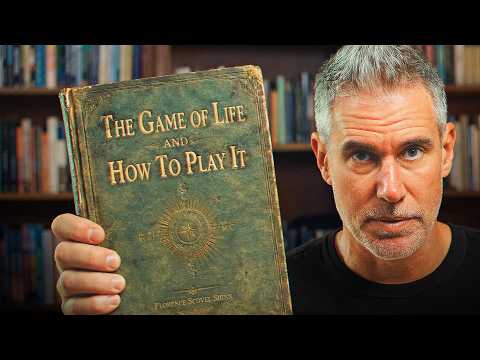
Shin opens her seminal book, The Game of Life and How to Play It, with a striking claim: life is not a battle but a game. This reframing is crucial because if life were a battle, strength would be the key to winning. However, if life is a game, understanding the rules is what leads to success.
She argues that everyone is playing this game, knowingly or unknowingly, and that the laws governing it are spiritual rather than purely material. This perspective contrasts sharply with today's hustle culture, which emphasizes grinding harder or waking up earlier.
Shin teaches that suffering arises not from a lack of blessings but from unknowingly violating spiritual laws. Instead of asking "Why is this happening to me?" we should ask, "What law am I failing to understand?"
Her stories consistently show that internal realizations precede external changes. For example, a woman struggling financially changes her situation only after releasing resentment and fear dominating her consciousness. Another person finds freedom only after ceasing to fight their circumstances and learning to let go, allowing divine order to intervene.
Shin frequently references scripture, interpreting it as a guide to understanding consciousness and spiritual laws. For instance, she cites Isaiah: "If ye be willing and obedient, ye shall eat the good of the land," emphasizing prosperity through law adherence.
This law-based framework presents reality as a structure anyone can learn and master, making the game of life accessible and exciting.
One of Shin's most repeated ideas is that speech is a powerful creative force. She authored two books on this subject, emphasizing that words are never neutral; they reveal beliefs and thought processes and reinforce themselves into reality.
Many people unknowingly speak against themselves, saying things like "I never have enough," or "Nothing works out for me," which then manifest in their lives. For Shin, speech participates in creating life rather than merely describing it.
She believed words impress themselves not only on the subconscious mind but on reality itself. Changing the way one speaks—from fear to faith—alters decisions, identity, expectations, and eventually circumstances.
Shin also highlights the magical nature of words, influencing coincidence and synchronicity. She references scripture: "Death and life are in the power of the tongue. By thy words thou shalt be justified; by thy words thou shalt be condemned," interpreting these as spiritual instructions.
From a modern perspective, words are amplified vibrations of thoughts, the first physical representation of inner consciousness. The stories we tell ourselves become the lens through which we perceive reality.
Most people complain frequently, often verbalizing negative thoughts that reinforce limiting beliefs. By consciously stopping negative speech, one can starve these beliefs and foster positive change.
Shin teaches that resistance strengthens what is resisted. Emotional resistance binds consciousness to unwanted conditions—fear perpetuates fear, resentment keeps the past alive, and conflict sustains conflict.
Instead of forcing life, she advocates non-resistance, which creates space for higher order solutions to emerge. Letting go is not giving up but withdrawing creative energy from problems, allowing resolution.
She points to biblical teachings such as "Agree with thine adversary quickly," interpreting them as instructions for consciousness rather than passive submission.
This aligns with the "golden equation" of personal growth: desire plus non-resistance equals the desired result. Often, when we want something, we notice its absence and begin resisting it mentally, which blocks manifestation.
Maintaining a non-resistant state toward desires means ignoring current lack and holding the vision of the desired outcome. This spiritual law is fundamental to overcoming challenges and achieving goals.
Shin consistently taught that the unseen precedes the seen. The inner image or vision must be held first before the outer condition manifests.
She encourages "mentally occupying" the fulfilled state long before physical evidence appears, living in anticipation and preparation as if the desire already exists. This is akin to embodying your future self now.
She shares stories such as a woman setting her table nightly in anticipation of her estranged husband's return, which eventually happens after consistent faith and preparation.
Modern neuroscience supports this: athletes imagining their performance activate muscle fibers as if training, and pianists imagining playing stimulate brain activity similar to actual playing.
Thus, imagination is a powerful creative force, and manifestation follows the inner vision.
Shin's understanding of faith is practical and non-religious. Faith is unconditional acceptance—what you believe in shapes your reality.
If you believe in scarcity, that is your faith; if you believe in abundance, that is your faith. Faith is belief, full stop.
She illustrates this with a biblical story where kings and their armies, stranded in a desert without water, are instructed by the prophet Elisha to dig ditches despite no sign of rain. They obey, and a supernatural flood fills the ditches, saving their lives and leading to victory.
This story exemplifies that wishing alone is insufficient; one must act as if the desired outcome is certain. Digging the ditches symbolizes preparation and faith, creating space for manifestation.
Shin criticizes the average person for waiting for physical proof before believing, whereas the law requires action first, then expectation.
Practical examples include buying a work bag before securing a job, applying for a passport before having funds to travel, or purchasing a decorative item for a future home. These acts train the subconscious to focus on expected abundance rather than current lack.
After studying Florence Scoville Shin's works, it is clear she was not merely teaching manifestation but revealing how consciousness operates according to spiritual laws. Understanding reality, words, imagination, resistance, and faith are interconnected expressions of the same principle: the inner world crystallizes into the outer world.
Her teachings have endured nearly a century because while language evolves, human consciousness remains constant. The invitation remains: learn the rules, master your consciousness, and watch your life transform.
Embracing these principles offers a profound and elegant way to play the game of life with mastery and grace.