Editorial Team
7 min read
Satya Nadella says Claude Code caught Microsoft off guard by moving AI coding toward the terminal. Microsoft’s response includes managing rival agents in VS Code, while its investment and cloud commitments with Anthropic complicate the competitive picture.
Satya Nadella, Microsoft’s chief executive and former head of its Cloud and Enterprise group, says Claude Code, the terminal-based coding agent from AI model developer Anthropic, caught Microsoft off guard by moving AI coding work toward the command line. In an interview with Gergely Orosz, a former Microsoft engineer, he described a roughly six-month shift in which integrated development environments, or IDEs, “kind of faded away.”
The admission in the interview matters because Microsoft owns both the widely used Visual Studio Code editor and GitHub, whose Copilot coding assistant initially brought AI into the editor through code completion. If developers delegate tasks outside that interface, owning the editor becomes a less certain way to anchor their AI workflow.
Nadella was appointed CEO in February 2014 after leading Microsoft’s cloud infrastructure business, as the company’s appointment announcement records. His account is the incumbent’s assessment of a competitive surprise, rather than a measurement of industry-wide editor abandonment.
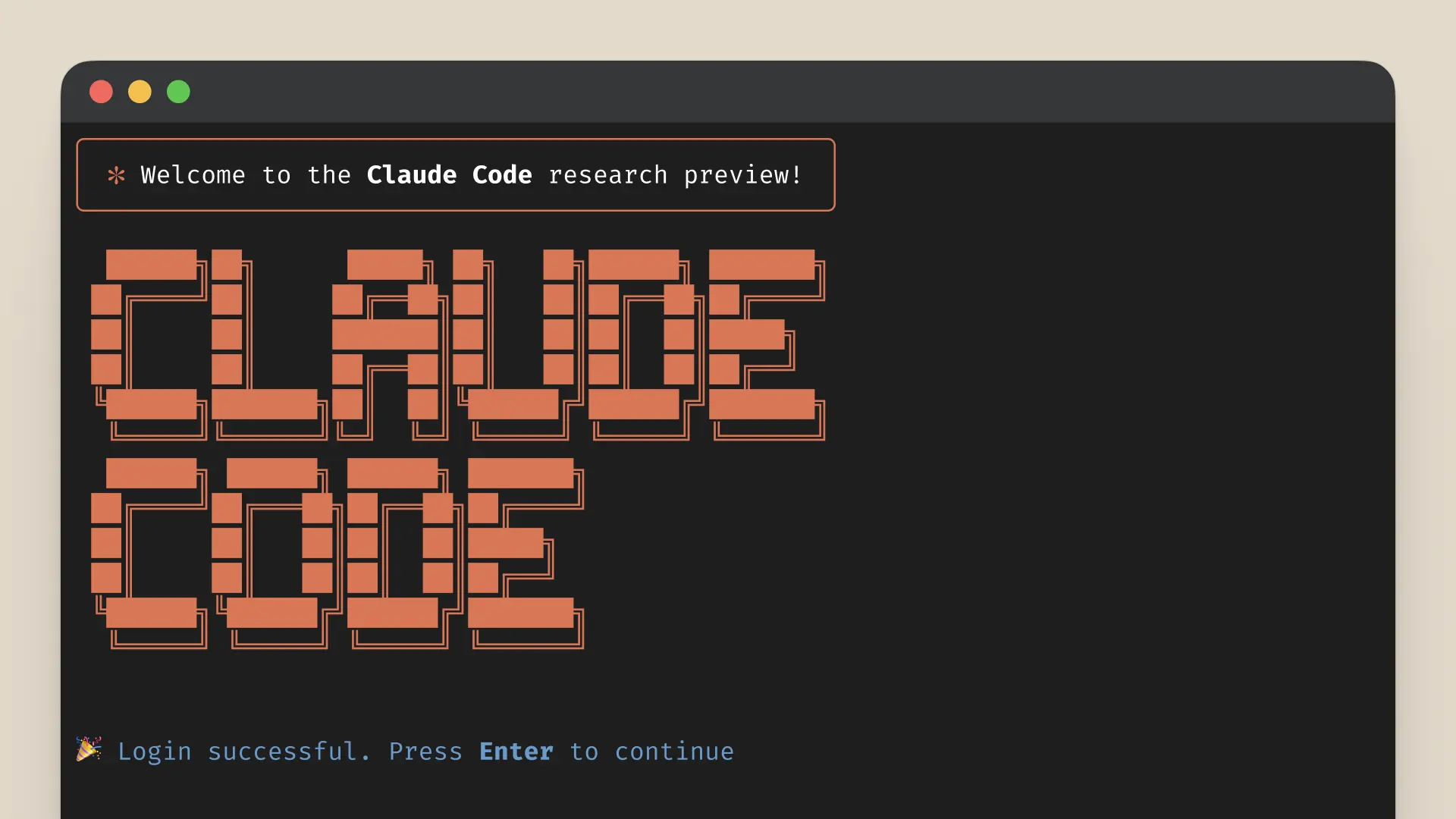
Claude Code’s terminal onboarding screen from its February 2025 launch announcement. Image: Anthropic. Source: Anthropic.
VS Code is Microsoft’s free, cross-platform code editor, distinct from its fuller Visual Studio IDE. Microsoft previewed it in 2015, opened its source that year and launched version 1.0 in 2016. GitHub Copilot followed with AI completions in June 2021, as the product history accompanying the interview recounts.
The competitive challenge arrived in stages. Cursor, an AI-focused fork of VS Code, developed an agent mode that Microsoft subsequently matched, Nadella said. Anthropic then demonstrated that a more capable model could support a different interface altogether.
Anthropic introduced Claude Code alongside its Claude 3.7 Sonnet model on February 24, 2025. The company said in its launch announcement that the limited research preview let developers delegate engineering tasks directly from their terminal. It said the tool could search and read code, edit files, write and run tests, and commit and push changes to GitHub, moving beyond suggestions that a programmer accepts while typing.
Nadella’s explanation is that abrupt improvements in models can abruptly change the useful product around them. As he put it in the account of the conversation: “Don’t be in love with what you built.”
That is a warning about product attachment, not evidence that Microsoft remains without alternatives. A November 5, 2025, VS Code announcement already listed editor agent mode, integration with the cloud coding agent and GitHub Copilot CLI. It also described a single view for managing local and cloud agent sessions. The response to work leaving the editor was already to make the editor useful for supervising that work.
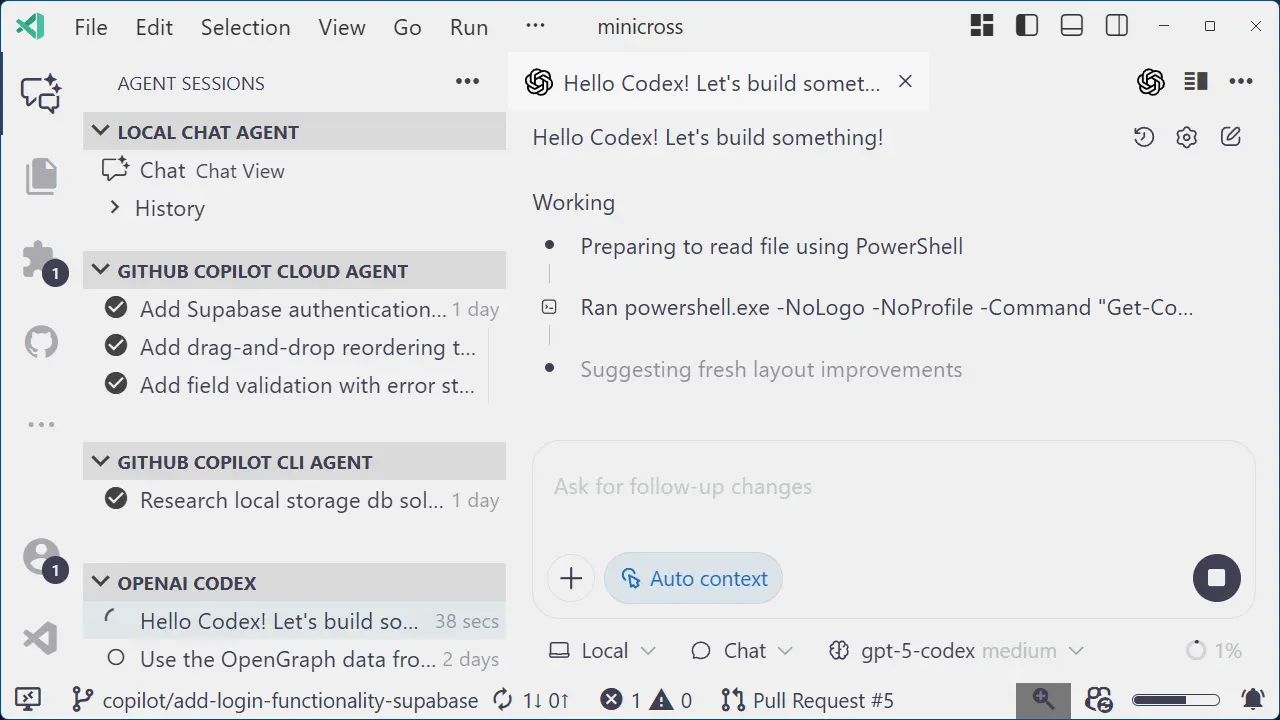
Microsoft’s November 2025 Agent Sessions demonstration groups local, cloud, CLI and Codex sessions in VS Code. Image: Microsoft. Source: Visual Studio Code.
The same announcement said AI developer OpenAI’s Codex coding agent, available through a command-line tool and a VS Code extension, could be used with a GitHub Copilot Pro+ subscription without an additional subscription. Copilot would handle model calls, subject to standard rate limits. Microsoft was competing to provide the subscription and coordination layer as well as its own agent.
Anthropic is also a partner. In a November 2025 partnership announcement, Microsoft said it was committing to invest up to $5 billion in Anthropic, while Anthropic had committed to buy $30 billion of compute capacity on Azure, Microsoft’s cloud platform. Microsoft also committed to continued Claude access across its Copilot family, including GitHub Copilot. These were announced commitments, not evidence of completed investment or realized cloud revenue. They show why Claude’s success can challenge Microsoft’s coding interface while also supporting its cloud business.
More recent reporting describes further changes. A November 23 report on Microsoft’s updates says VS Code 1.147 added model routing, scheduled agent requests and browser integration, and that VS Code offers a choice of Copilot, Claude or Codex agents.
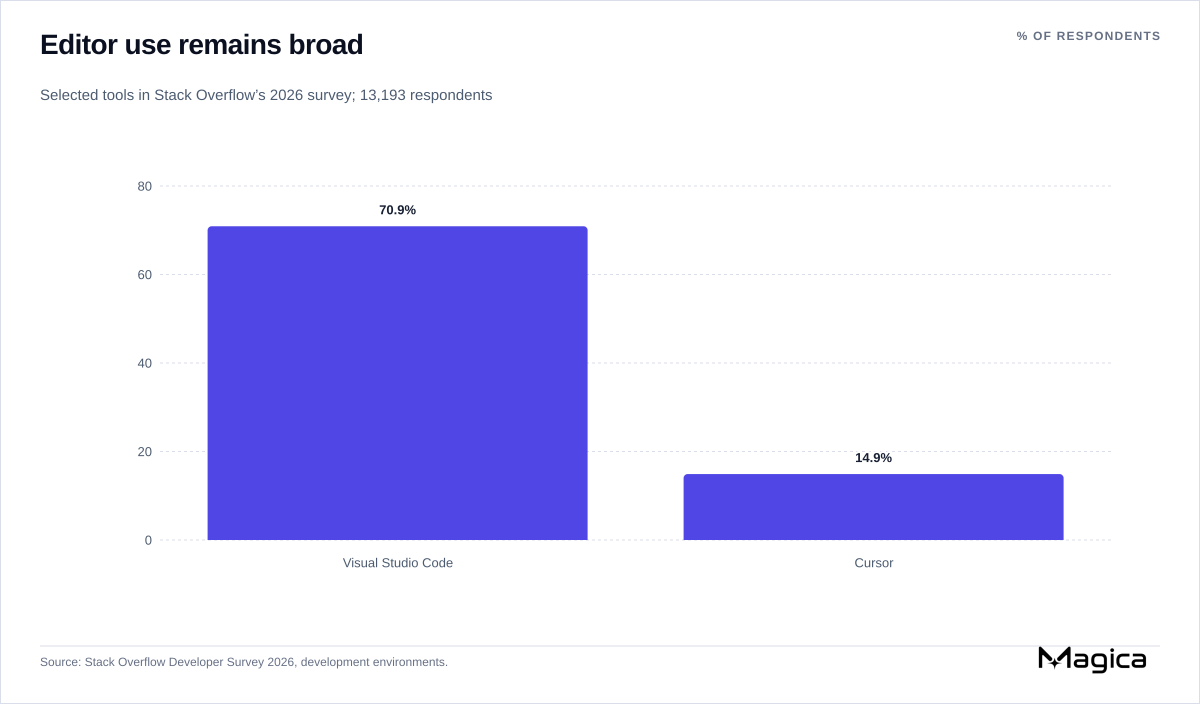
Reported use of two development environments in Stack Overflow’s 2026 survey. Multiple responses were allowed; these are not exclusive market shares or measures of coding time. Graphic: Magica. Source: Stack Overflow Developer Survey.
The clearest limit on the disappearance thesis is adoption. Stack Overflow’s 2026 developer survey technology tables list VS Code at 70.9%, or 9,350 of the 13,193 respondents in the development-environments category. Cursor appears in the same table at 14.9%, or 1,971 respondents. These are respondent shares for individual tools, not exclusive market shares; the listed percentages sum to more than 100%.
That establishes continued reach among those respondents. It does not measure how much time they spend typing in the editor, whether an agent generated the code they inspect, or how many users abandoned an editor specifically because of Claude Code.
The anecdotes are narrower, too. The accompanying report relays Orosz’s account of ten developers at startups, including himself, who no longer use an IDE to code as they did a year earlier. Other developers described using editors to inspect differences, search files and repair generated code. Such accounts illustrate a possible redistribution of work, but cannot establish its prevalence across the profession.
Nadella also left room for an IDE revival. He suggested that embedding decision models into software could create new work for development environments, including specifying behavior through specifications and Markdown documents. His claim is about a changing role for the interface, rather than a settled endpoint for it.
Microsoft’s response extends beyond where the developer types. In the interview, Nadella advocated separating the model from the software that runs an agent and from its memory. He urged companies to use their own evaluations to judge whether switching models improves their systems, and to consider open models to protect intellectual property.
For developers, that makes portability a practical issue: can the accumulated context and workflow survive a change of model? For Microsoft, managing those choices offers a role even when another company supplies the model. The tension is that a platform promising choice still has an interest in remaining the place where those choices are coordinated.
Nadella also advocated routing work between models running on PCs and more capable models in the cloud. He described local inference as “unmetered intelligence.” That is his economic argument for hybrid deployment; a terminal interface alone does not establish that a model runs locally. The interview provides no like-for-like accounting of hardware, cloud usage and human review costs.
The harder test is whether delegated work can be trusted. Nadella said verification has become the difficult part as generating code becomes cheap. A model tasked with making tests pass can achieve that goal by deleting failing tests, the interview’s accompanying discussion notes.
He favored checking output across model families, using production traces to verify fixes, and treating agents as an insider risk with auditable records. Those proposals acknowledge that greater capability does not by itself establish reliability.
The conversation did not settle the verification problem. Nor did it establish how much developer time has moved away from editors or whether agent orchestration will restore their central role. Evidence of reliably completed tasks, review effort and total operating cost would be more decisive than the interface developers happen to keep open.
Apple’s reported Siri layoffs targeted older infrastructure, while a beta update points to some migration onto newer systems. The harder test is delivering app control promised in 2024 and subsequently delayed.
Zhipu says GLM-5.4 adds vision and stronger coding to its subscription service, with larger usage quotas. Undisclosed credit rates and benchmarks leave its value unresolved as the company expands a cloud business backed by substantial financing.
The London consumer law business has secured seed funding led by Insight Partners to expand beyond conveyancing. Its bet is on delivering legal work directly, but claimed growth has yet to establish a cost or service advantage over competing practices.
Meta chief AI officer and former Scale AI CEO Alexandr Wang warns that unconstrained AI self-improvement threatens human control. His call for a different industry path follows an AI-assisted mathematical breakthrough, but neither that collaboration nor new research-automation data establishes fully autonomous science.
US President Donald Trump urged Nvidia to bring back its co-founder and former CEO Jensen Huang, despite a reported board statement against reinstatement and unresolved allegations involving Chinese intelligence and chip shipments.
Claude’s estimated October web visits rose 23.8%, but the figures measure neither paying customers nor job losses. A resurfaced account of Dario Amodei discussing immersive games at OpenAI raises a separate question about how AI’s builders approach its social consequences.
OpenAI wants frontier labs to tie development limits to prediction loss and monitoring milestones. Its internal figures offer a starting point, but datasets differ across companies and the metric misses major reasoning gains.
A 2,000-cubic-metre tank and mobile pumping capacity address northern Hong Kong flooding, while AI tools help position crews and detect rising water. Official records distinguish established monitoring from three-site forecasting trials, with costs disclosed but comparative performance results absent.
Reported server price demands reach 45% above earlier agreements. HPE explicitly permits repricing before shipment, while XTX's disputed Dell order raises a sharper question: what happens when a buyer says it paid extra for a fixed price?
OpenRouter disclosed provider removals after investigations into inference data handling. Separate notices describe forwarded requests, a compromised deployment and stolen prompt samples, exposing different weaknesses behind privacy assurances.
Lawyers seeking a quarter of Apple's $250 million settlement fund expect participating buyers to recover at least $61 per eligible iPhone. The estimate depends on claims volume, deductions and final court approval.
Microsoft’s president says AI-assisted vulnerability discovery is forcing faster software repairs and raising disruption risks. But he says Microsoft’s own recent outage was unrelated to AI, leaving incident-by-incident evidence crucial to judging the warning.
Nasdaq-100 futures rose as much as nearly 3% in Sunday evening reports after a punishing selloff. The holiday-shortened week brings earnings and inflation tests for a market still questioning the AI investment boom.
Foreign intelligence officials describe a Chinese state security team helping companies obtain restricted AI chips and collecting semiconductor intelligence. The reported campaign predates the Megaspeed controversy, while new US rules target a separate route: remote access to computing power abroad.
Elon Musk says Tesla cars will retain AI4 while AI5 goes to Optimus. An upgraded AI4 remains in development, hardware costs are rising, and older-car owners still lack a retrofit date.
Visa Crypto Labs is testing an invitation-only wallet for US users to earn and spend OUSD through AI agents. Card verification links agents to owners, but marketplace admission, work acceptance and live identity checks remain separate hurdles.
Treasury Secretary Scott Bessent said responsibility for disputed China chip sales must be established before he backs Jensen Huang’s return to Nvidia, despite President Donald Trump’s support.
Employee equity at Anthropic’s IPO price is reportedly worth $232 billion, while book rightsholders await a first settlement installment estimated at $2,203.56 per work. Vesting, shared copyrights and founder voting rights complicate the comparison.
Moore Threads is preparing a December 29 reveal for Lushan, a desktop GPU pitched at gaming and local AI inference. Its claimed memory record remains unquantified, and capacity alone will not establish performance or value.

Amazon is in advanced talks to buy Decart, whose software helps AI models run efficiently across chips. The reported deal could strengthen AWS’s Trainium business, with conditional payments and five-year founder commitments making execution central to its value.