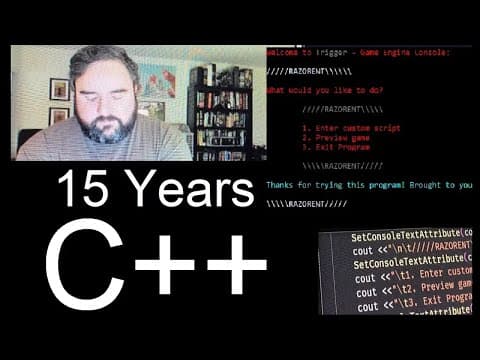
Chris shares his 15 years of experience in C++ programming, emphasizing the importance of practice over perfection, the value of learning through mistakes, and encouraging new programmers to start coding without fear of making errors.
Programming in C++ for over 15 years, Chris reflects on his journey and offers valuable insights for newcomers to the field. In this blog post, we will explore his experiences, the challenges he faced, and the advice he has for those just starting out in programming.
Chris begins by sharing a personal anecdote about going through old files from his programming past. He has kept all his code, including college homework and tutorials, out of a sense of paranoia that he might need them in the future. Among these files, he discovered his first compiling C++ program, dated June 23, 2008. This moment sparked a reflection on his extensive experience with the language.
As a professional game developer, Chris uses C++ daily. He acknowledges that there is a prevalent narrative online suggesting that new programmers should avoid learning C++. Critics often label C++ as problematic and outdated, warning that beginners may become frustrated and abandon programming altogether. However, Chris offers a counterpoint to this perspective.
While Chris admits that C++ has its flaws, he believes that no programming language is perfect. He emphasizes that when starting out, new programmers should not be overly concerned with the language they choose to learn. Instead, the focus should be on writing code and gaining practical experience.
Chris encourages beginners to prioritize the act of coding itself over the fear of making mistakes. He states, "You’re trying to get stuff up on the screen, trying to change and mutate files the way that you want to." This hands-on approach is crucial for learning and growth in programming.
Reflecting on his own early experiences, Chris admits that he often fixated on whether he was learning correctly. He compared himself to others he admired, believing that their methods were the only way to succeed. This mindset, he suggests, may have hindered his progress.
He advises new programmers to avoid this trap. Instead of worrying about writing perfect code, they should embrace the process of trial and error. Writing bad code is not only acceptable but can be a valuable learning experience. Chris believes that understanding what constitutes bad code can lead to significant improvements in programming skills.
Ultimately, Chris reassures aspiring programmers that there is no "end of the world" scenario when it comes to learning programming. If you have an interest in coding, he encourages you to dive in.
"Just get on your computer, open up your IDE of choice, and write some code," he says. This straightforward advice encapsulates his belief that the journey of learning programming is more important than the specific language or method used.
Chris's reflections on his 15 years of C++ programming provide a wealth of insight for new programmers. By focusing on practice, embracing mistakes, and enjoying the process of coding, beginners can set themselves up for success in the programming world. Whether you choose C++ or another language, the key is to start coding and keep learning along the way.