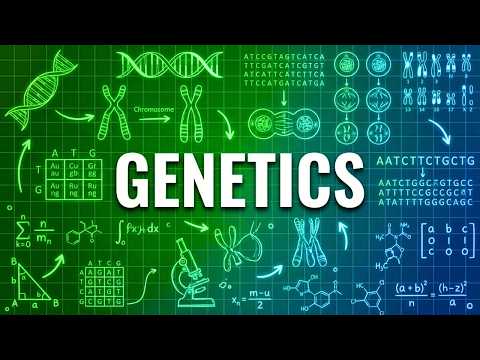
This blog post provides a detailed summary of key concepts in OCR A Level Physics, including forces, energy, motion, momentum, electricity, waves, and more, all condensed into a one-hour review.
In this post, we will cover the essential concepts of OCR A Level Physics, providing a concise yet comprehensive overview that can be reviewed in about one hour. This guide will touch on forces, energy, motion, momentum, electricity, waves, and more.
Forces can be represented as vectors, which are arrows indicating both direction and magnitude. When two forces act on an object, the resultant force is found by vector addition. If forces are in opposite directions, one is considered negative. For example, if a force of 5 Newtons acts to the right and another of 2 Newtons acts to the left, the resultant force is 3 Newtons to the right.
When vectors are at right angles, the Pythagorean theorem is used to find the resultant. If a force has only magnitude and no direction, it is classified as a scalar. Examples include distance and speed, while displacement and velocity are vector quantities.
Weight is the force due to gravity acting on an object, calculated as:
[ \text{Weight} = \text{mass} \times g ]
where ( g ) is the gravitational field strength (approximately 9.8 N/kg on Earth). When lifting an object at a constant speed, the force exerted must equal its weight to maintain balance. The work done in lifting an object can be calculated using:
[ \text{Work Done} = \text{Force} \times \text{Distance} ]
In the case of lifting an object, this translates to:
[ \text{Gain in Energy} = \text{mass} \times g \times h ]
where ( h ) is the height lifted.
An object remains at rest or in uniform motion unless acted upon by a resultant force.
The acceleration of an object is directly proportional to the resultant force acting on it and inversely proportional to its mass:
[ F = m \times a ]
where ( F ) is the resultant force, ( m ) is mass, and ( a ) is acceleration.
For every action, there is an equal and opposite reaction. This law emphasizes the interaction between two objects, such as a ball being pulled down by gravity while simultaneously pulling the Earth upwards.
Momentum is defined as the product of mass and velocity:
[ p = m \times v ]
Momentum is a vector quantity, and during collisions, total momentum is conserved, even if kinetic energy is not.
Kinetic energy is given by:
[ KE = \frac{1}{2} mv^2 ]
In collisions, we differentiate between elastic (where kinetic energy is conserved) and inelastic collisions (where kinetic energy is not conserved).
Electricity involves the flow of charge, typically electrons, through a circuit. The key concepts include:
Current (I) is the rate of flow of charge, measured in Amperes (A):
[ I = \frac{Q}{t} ]
where ( Q ) is charge in coulombs and ( t ) is time in seconds. Voltage (V), or potential difference, is the energy transferred per unit charge:
[ V = \frac{E}{Q} ]
where ( E ) is energy in joules.
Resistance (R) is defined by Ohm's Law:
[ V = I \times R ]
In series circuits, total resistance is the sum of individual resistances, while in parallel circuits, the total resistance decreases as more paths are added.
Waves transfer energy without transferring matter. They can be classified as longitudinal (oscillations parallel to energy transfer) or transverse (oscillations perpendicular to energy transfer).
Key properties of waves include:
[ v = f \times \lambda ]
When waves pass from one medium to another, they change speed and direction, a phenomenon known as refraction. Snell's Law describes this relationship:
[ n_1 \sin(\theta_1) = n_2 \sin(\theta_2) ]
where ( n ) is the refractive index.
This overview encapsulates the fundamental concepts of OCR A Level Physics, providing a solid foundation for further study or revision. Understanding these principles is crucial for success in physics examinations and applications in real-world scenarios.