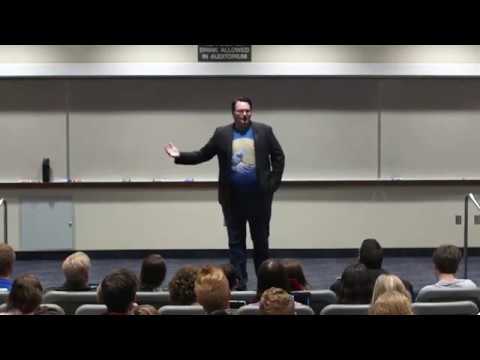
Brandon Sanderson's lecture on writing science fiction and fantasy emphasizes the importance of practical skills in writing, the value of persistence, and the balance between writing and personal life. He shares his journey from student to teacher, the significance of community in writing, and the different approaches to writing, including discovery and outlining.
Welcome to the Writing Science Fiction and Fantasy class of 2020, taught by Brandon Sanderson. This course has a rich history, beginning in the 1980s when Orson Scott Card was set to teach a creative writing class at BYU but was unable to do so. A literature professor stepped in, and the class has continued to thrive ever since. Sanderson himself took the class in 2000, taught by David Wolverton (Dave Farland), which he credits as the most valuable class of his career.
Sanderson took over the class in 2004 after Wolverton retired. His experience as a student shaped his approach to teaching, focusing on the practical aspects of writing, such as character development, plot structure, and the business of publishing. He aims to provide students with the tools they need to succeed in the industry, whether they aspire to be professional writers or simply want to improve their storytelling skills.
The class is structured to cover the nuts and bolts of writing over several weeks, focusing on:
Sanderson encourages students to view writing as a fulfilling hobby, similar to playing sports. He believes that writing is beneficial for personal growth and communication, regardless of whether one seeks publication. He acknowledges the societal pressures that often accompany the desire to write, such as questions about publication and financial success, but reassures students that the joy of storytelling is valid in itself.
While Sanderson acknowledges the challenges of becoming a professional writer, he shares that the odds are not as bleak as they may seem. He recounts his own experience and that of his classmates, noting that several went on to have successful careers in writing or editing. He emphasizes that persistence and dedication are key, and that many writers find fulfillment in the act of writing itself, regardless of commercial success.
A significant question arises: can writing be taught? Sanderson believes that while the fundamentals can be taught, much of writing is instinctual and developed through practice. He encourages students to write consistently and to experiment with different techniques to find what works best for them.
Sanderson discusses two primary approaches to writing: discovery writing (or gardening) and outlining (or architecting).
He stresses that there is no single right way to write and that each writer must find their own process. Sanderson encourages students to view writing advice as tools to be adapted to their individual styles.
Consistency is crucial for developing writing skills. Sanderson shares his own writing routine, which includes writing thousands of words daily. He advises students to find a schedule that works for them, whether that means writing every day or dedicating specific hours each week. He emphasizes that even a few hours a week can lead to significant progress over time.
Sanderson highlights the importance of maintaining a balanced life while pursuing writing. He shares personal anecdotes about how his passion for writing can sometimes overshadow relationships and emphasizes the need for boundaries. He encourages writers to engage with their lives fully, as real-life experiences enrich their storytelling.
Sanderson discusses the value of community in writing, particularly through writing groups. He shares his own experience of forming a writing group with classmates, which has provided ongoing support and feedback throughout his career. He warns, however, that feedback should be constructive and focused on the writer's intentions rather than imposing personal preferences.
Brandon Sanderson's lecture on writing science fiction and fantasy offers invaluable insights for aspiring writers. By focusing on practical skills, encouraging persistence, and fostering a supportive community, he aims to equip students with the tools they need to succeed in their writing endeavors. Whether students aim for professional publication or simply wish to tell their stories, Sanderson's approach emphasizes the joy and fulfillment that comes from the act of writing itself.