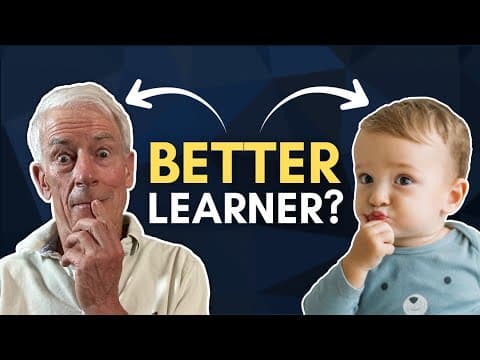
This article explores the differences and similarities between how adults and children learn languages, focusing on brain function, flexibility, prior knowledge, and attitudes towards learning. While children have greater flexibility and less fear, adults benefit from prior knowledge and strategic learning methods, allowing them to achieve high levels of language proficiency despite challenges in pronunciation and adaptability.
The question of whether adults learn languages like children is a topic of much discussion. In this article, we will explore this question from four different perspectives: brain function, flexibility, prior knowledge, and attitude towards learning.
To begin with, it is essential to understand how the brain functions in both adults and children when it comes to learning languages. Our brains are not solely designed for language acquisition; they are learning machines that acquire knowledge and develop the ability to anticipate responses to various stimuli. This learning process is crucial for survival, as it allows us to react appropriately to our environment.
When we learn a language, inputs are processed in the hippocampus and then transferred to the cortex, where long-term memory is formed. This process is similar for both children and adults. Neurons in the brain are organized by categories, and with enough stimulation, they connect through synapses, facilitating learning.
Children possess what Manfred Spitzer describes as "unlimited potential and very limited capability." For instance, a baby can learn to be a native speaker of any language, regardless of its complexity. Babies are naturally inclined to explore new sounds and are highly receptive to the language input they receive from their environment, even starting to hear language in the womb.
This flexibility allows children to imitate sounds and develop language skills without the anxiety that often accompanies adult learning. The natural process of language acquisition, where children absorb language through exposure rather than formal instruction, is often more efficient than traditional learning methods.
While children have a blank slate, adults come with prior knowledge and experience, which can be both beneficial and limiting. On one hand, adults have established patterns of speech and sound recognition from their native language, which can make it challenging to learn new sounds and structures. On the other hand, adults possess a wealth of knowledge about the world, including vocabulary and grammar rules from their own language, which can aid in learning a new language.
Adults can also utilize reading as a powerful tool for language acquisition. Reading helps condition the brain to recognize patterns in the new language, and adults who are proficient readers in their native language often find it easier to read in a new language. Additionally, adults have access to various learning strategies, such as podcasts and online resources, which enhance their language learning experience.
The attitude towards learning a new language can significantly impact the success of both children and adults. Research indicates that children are naturally curious and excited about new experiences, while adults may become set in their ways and view new learning as a chore. This reluctance can hinder language acquisition.
For example, an adult may dismiss a new language structure as "stupid" or inconvenient, which can create a negative learning environment. In contrast, children approach language learning with an open mind, free from the fear of making mistakes. This fearless attitude allows them to absorb language more effectively.
Moreover, adults who have previously learned languages may find it easier to learn new ones due to the experience gained from their past efforts. The more one practices language learning, the more efficient the brain becomes at processing and retaining new information.
In conclusion, while the fundamental processes of language learning are similar for both children and adults, there are distinct advantages and disadvantages for each group. Children benefit from their flexibility and lack of fear, allowing them to learn languages naturally. Conversely, adults leverage their prior knowledge, strategic learning methods, and reading skills to achieve high levels of proficiency.
Ultimately, both children and adults can succeed in language learning, albeit through different pathways. Adults may not achieve the same level of native-like pronunciation as children, but they can accumulate a vast vocabulary and understanding of the language in a relatively short time. The key lies in maintaining a positive attitude, setting realistic expectations, and embracing the learning process.