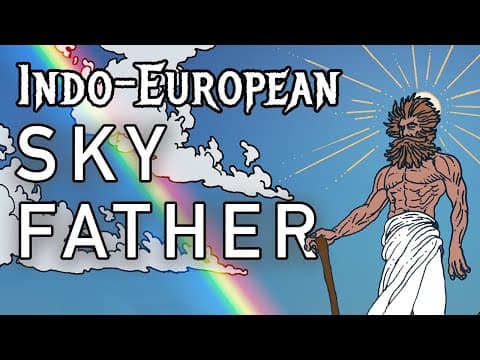
The Indo-European Sky Father, known as Dyḗus ph₂tḗr, is a central figure in ancient Proto-Indo-European religion, representing a common archetype of a celestial deity across various cultures. This blog post delves into the origins, characteristics, and significance of this figure in the context of Indo-European mythology, highlighting parallels in Greek, Hindu, and Norse traditions.
The phrase "Our Father who art in heaven" is widely recognized, transcending Christian contexts. This notion of a divine father figure in the heavens is ancient and prevalent across various cultures. From Native American tribes to Polynesian beliefs, the concept of a sky father deity appears in many forms. However, the existence of these diverse gods does not imply a singular origin; rather, it reflects a common human inclination to envision a celestial father figure. Among these, the Indo-European sky fathers share a more direct lineage, rooted in the Proto-Indo-European religion.
The Proto-Indo-European (PIE) people, who inhabited the steppes of Eastern Europe between the Neolithic and Bronze Ages, worshipped a sky father known as Dyḗus ph₂tḗr. This deity was central to their cosmology, embodying the daylight sky and overseeing the world. The vast grasslands of Russia and Ukraine, characterized by extreme seasonal changes, provided an ideal backdrop for the pastoral lifestyle of these ancient peoples, who domesticated horses and herded cattle.
Dyḗus ph₂tḗr was believed to have created the world through the first sacrifice, providing cattle for humans to offer in return. He was associated with justice, kingship, and the natural order. His attributes included:
Professor David Anthony notes that the prominence of Dyḗus ph₂tḗr reflects the importance of paternal figures in the social structures of herding communities.
The concept of a sky father is not only evident in mythology but also in linguistics. The name Dyḗus derives from the PIE root *dyeu-, meaning "daylight sky." This root is reflected in various Indo-European languages:
These cognates reveal a shared understanding of a celestial deity associated with the sky. In Lithuanian folklore, Dievas is recognized as the sky god, while in Greek mythology, Zeus is a direct descendant of this archetype. His name, derived from the Proto-Italic *djous (day, sky) and *patēr (father), translates to "sky-father."
In ancient Indian texts, Dyaus is referred to as Dyaus Pitṛ́, meaning "sky father." Although his prominence waned over time, he is depicted as a paternal figure, often paired with the Earth goddess in the dual form dyā́vāpr̥thivī. His familial connections include:
These relationships hint at a complex Indo-European solar mythos that remains partially understood.
As Indo-European religions evolved, the roles of deities shifted. For instance, Tyr, known as Tiw in Anglo-Saxon culture, is derived from the same linguistic roots but does not embody the characteristics of a sky father. Instead, he represents order and justice, reflecting a different aspect of the divine.
In Norse mythology, Odin, referred to as Álföđr (father of all), embodies many attributes of the sky father, including wisdom and sovereignty. Similarly, the Dagda in Irish mythology is recognized as a sky father figure, emphasizing the widespread nature of this archetype.
The cosmogenesis myth of the Proto-Indo-Europeans involves twin brothers, Manu and Yemo, who perform the first sacrifice to create the world. This act establishes a connection between priesthood, sacrifice, and the divine order. The sky father plays a crucial role in these myths, often linked to the creation of various elements of the world.
The sacred cycle of giving between humans and the sky father is maintained through sacrifices, particularly cattle, which symbolize wealth and sustenance. This practice is evident across Indo-European cultures, where the significance of cattle in rituals reflects their value in society.
The sky father archetype manifests differently across cultures:
Animals play a significant role in the symbolism of the sky father. The bull, often associated with fertility and strength, appears in various myths. Eagles, representing nobility and authority, are linked to sky fathers like Zeus and Odin, although their association may have developed later in cultural contexts.
The wolf also holds significance in Indo-European warrior cultures, suggesting a connection between the sky father and the warrior ethos.
The concept of the Indo-European sky father, Dyḗus ph₂tḗr, offers a fascinating glimpse into the shared religious and cultural heritage of ancient peoples. Through linguistic analysis and comparative mythology, we can reconstruct aspects of this primordial belief system, revealing the enduring legacy of the sky father archetype across diverse cultures. While much remains to be explored, the study of the sky father continues to illuminate our understanding of ancient Indo-European religions and their impact on contemporary beliefs.