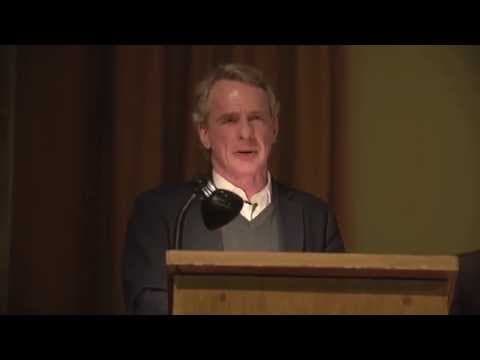
Professor William Lane Craig presents the Kalam Cosmological Argument, discussing its historical roots, philosophical implications, and scientific support for the universe's beginning, ultimately arguing for the existence of a personal creator.
In a public lecture at the University of Birmingham, Professor William Lane Craig, a prominent philosopher and theologian, discussed the Kalam Cosmological Argument. This argument, originally introduced by medieval Islamic theologians, has been revitalized in contemporary philosophy and is now a significant topic in discussions about the existence of God.
Professor Craig is a Research Professor of Philosophy at Talbot School of Theology and a Professor of Philosophy at Houston Baptist University. He has authored over thirty books and more than one hundred articles in professional journals, establishing himself as one of the most influential philosophers of religion today.
The Kalam Cosmological Argument posits that:
Craig reflects on his childhood curiosity about the universe's existence and its beginning. He notes that ancient Greek philosophers believed in an eternal universe, while Hebrew writers, as stated in Genesis 1:1, believed that God created the universe at a specific point in time. This historical debate continued through the ages, culminating in the thoughts of Immanuel Kant, who suggested that both sides had compelling arguments.
Craig highlights the work of Al-Ghazali, a twelfth-century Muslim theologian, who argued against the idea of a beginningless universe. Al-Ghazali's reasoning can be summarized in three premises:
Craig emphasizes that Al-Ghazali's argument does not require a strong premise about causation, allowing for a more modest interpretation that avoids distractions from quantum mechanics.
The more controversial premise is that the universe began to exist. Craig presents philosophical arguments supporting this claim:
Craig discusses modern scientific evidence supporting the universe's beginning:
If the universe began to exist, it must have a cause. Craig argues that this cause must be:
Craig concludes that the Kalam Cosmological Argument provides compelling grounds for believing in a personal creator of the universe, aligning with the traditional understanding of God. The lecture ends with a Q&A session, where Craig addresses various questions regarding the implications of his argument and the nature of the universe.
The Kalam Cosmological Argument remains a significant topic in philosophy and theology, bridging ancient thought with contemporary scientific understanding. Professor Craig's insights challenge us to consider the profound questions surrounding existence, causation, and the nature of the universe.