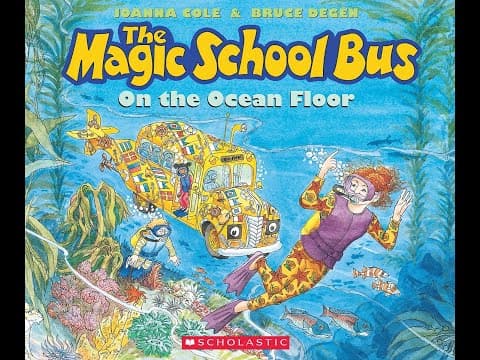
The Magic School Bus takes students on an adventurous underwater journey, exploring various oceanic zones, marine life, and ecosystems, all while learning about the ocean's wonders and the importance of marine conservation.
In the delightful children's book "The Magic School Bus on the Ocean Floor" by Joan Cole and Bruce Deacon, readers embark on an exciting underwater adventure with Miss Frizzle and her class. This story not only entertains but also educates young readers about the ocean's ecosystems and the fascinating creatures that inhabit them.
The story begins on a hot day at school, where Miss Frizzle's students are busy completing their ocean science projects. Their hard work makes Miss Frizzle happy, but the heat makes the students tired. Just as one student expresses a wish to go swimming, Miss Frizzle surprises everyone by announcing a class trip to the ocean the very next day. The students cheer, excited for the adventure ahead.
On the day of the trip, the students arrive in their bathing suits, ready for fun. However, instead of stopping at the beach, Miss Frizzle drives the bus straight into the water, explaining that they are now in the intertidal zone, where the shore is covered with water at high tide and exposed at low tide. The students are eager to explore, but Miss Frizzle has other plans.
As the bus splashes through the waves, a sudden wave sweeps the lifeguard inside, and the students find themselves underwater. To their surprise, the bus has transformed into a submarine, and they are all wearing diving suits. Miss Frizzle begins to teach them about the ocean, starting with the continental shelf, which is the area from the shore to where the water is 400 to 600 feet deep.
Once outside the bus, the students are surrounded by a vibrant underwater world. Miss Frizzle explains that many fish swim in schools, while lobsters catch crabs and jellyfish float by. The ocean is alive with creatures, and Miss Frizzle introduces them to plankton, tiny living things that are crucial to the marine ecosystem.
As they explore, dark shapes approach, causing panic among the students. Miss Frizzle reassures them that most sharks do not pose a threat to humans. They encounter a gentle whale shark, which feeds only on plankton, further easing their fears.
Continuing their journey, the class descends to the deep ocean floor, where it is dark and cold. Miss Frizzle explains that the pressure is too great for ordinary submarines, and they are now in a specialized submersible. Here, they discover that the deep ocean is like an underwater desert, with few large animals due to the lack of food.
Suddenly, they come across a hot water vent, an area teeming with life despite the harsh conditions. Miss Frizzle explains that these vents release super hot water mixed with hydrogen sulfide, creating a unique ecosystem.
After their exploration of the deep ocean, the bus transforms into a glass-bottom boat, allowing the students to view a colorful coral reef. Miss Frizzle describes the reef as a habitat for many ocean plants and animals. The students marvel at the diversity of life, including crabs, lobsters, eels, and vibrant fish.
As the adventure comes to a close, Miss Frizzle leads the class back to the surface. They ride a giant surfboard back to shore, experiencing a thrilling wipeout before washing up on the beach. The bus returns to its original form, and the students reflect on their incredible journey.
Back in the classroom, the students create a bulletin board charting their ocean adventure. They are grateful for the experience and ready for a well-deserved weekend. "The Magic School Bus on the Ocean Floor" is not just a fun story; it is an engaging way to learn about the ocean's wonders and the importance of marine life conservation. This book encourages curiosity about the natural world and inspires young readers to explore and protect our oceans.