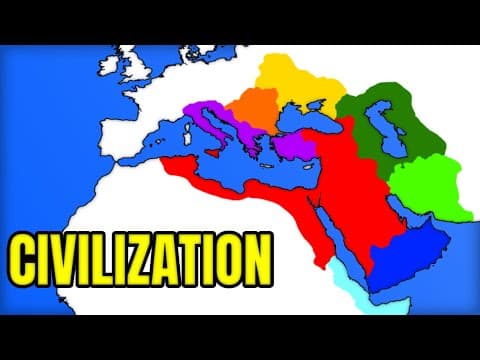
In Episode 2 of the series exploring a hypothetical scenario where civilization starts over, various teams expand their territories, engage in conflicts, and discover new lands. The dynamics between teams evolve as they explore, colonize, and face internal and external challenges, leading to the formation of new civilizations and the complexities of governance.
In this second episode of our series, we delve deeper into the fascinating scenario of civilization starting over. The response from viewers has been overwhelmingly positive, and many have contributed insightful ideas that shape our exploration of this new world. One notable suggestion was to color unexplored areas of the map gray, which we have implemented to visually distinguish between explored and unexplored territories.
As we continue our journey, the map has evolved significantly. The gray areas represent land that has not yet been fully explored or claimed, while the colored regions indicate territories that have been actively engaged with by various teams. This visual representation helps us understand the dynamics of exploration and colonization.
The red team, the first to establish a civilization, has begun to expand its territory. They moved down the Red Sea and encountered the blue team's colony. Historically, the blue team was once part of the red team, but differences led to their separation. Currently, the red team finds itself limited in expansion options, primarily confined to Africa unless they choose to engage in conflict with neighboring teams.
Meanwhile, the purple team, initially boxed in by the yellow team to the east, has opted for sea travel. They successfully land in Greece, marking the beginning of their colonization efforts in the Greek Peninsula. This strategic move allows them to establish a foothold in a new region, expanding their influence.
The yellow team is actively exploring the northern regions, aiming to reach colder climates. Their expansion efforts have led them to discover vast areas in the Balkans, while the green team has also begun to explore northward into modern-day Kazakhstan, seeking to claim the Caspian Sea.
As the red team continues its exploration of Northern Africa, they stumble upon the Atlantic Ocean, marking the onset of the Age of Exploration in this new civilization. They begin to colonize the land they discover, focusing on stabilizing their control over these territories.
The blue team, on the other hand, faces internal challenges as a new African civilization emerges from their territory. This development leaves the blue team feeling vulnerable and uncertain about their future.
The yellow team experiences significant internal strife as factions break away, leading to the formation of the orange team. This new entity seeks independence and quickly expands its territory, mirroring the aggressive expansion tactics of the yellow team.
The green team faces its own challenges as a military coup leads to a shift in power dynamics. The military, dissatisfied with the current leadership, takes control and begins to expand the territory, further complicating the political landscape.
As we conclude this episode, we see a complex tapestry of civilizations emerging, each with its own ambitions, conflicts, and governance structures. The interactions between these teams will shape the future of this reborn world, leading to new alliances, rivalries, and the continuous evolution of society.
In the next episode, we will explore the implications of these developments and how they affect the overall balance of power in this new civilization. Thank you for joining us on this journey, and we look forward to your thoughts and feedback as we continue to build this narrative together.