Symbols are integral to human communication and understanding, evolving in meaning across cultures and time. This blog explores the nature of symbols, their psychological impact, and how they shape our perceptions and interactions in modern society.
Symbols are everywhere, permeating every aspect of our lives and culture, both ancient and modern. They often hide in plain sight, waiting for us to recognize their influence on our consciousness. This exploration delves into the nature of symbols, their meanings, and their profound impact on human behavior and society.
An anthropologist would define a symbol as a mark, sign, or word that indicates, signifies, or represents an idea, object, or relationship. A common example is the stop sign: a red octagon universally recognized as a signal to halt. However, the shape itself holds no inherent meaning; it is society that has assigned it significance. This raises intriguing questions about how symbols are interpreted across different cultures.
The meaning of symbols is often arbitrary and heavily influenced by cultural context. For instance, in the movie "Mars Attacks," Martians misinterpret a dove, a symbol of peace on Earth, as a declaration of war. This illustrates how symbols can carry vastly different meanings depending on the cultural lens through which they are viewed.
Symbols evoke emotional responses that can sometimes override rational thought. This phenomenon is exploited in advertising, where companies use symbols to create strong associations with their brands. The subconscious mind communicates through symbols, weaving together archetypal and personal meanings into complex patterns.
Many symbols have ancient origins and have evolved over time. For example, the cross has been a powerful symbol throughout history, representing balance and protection long before its association with Christianity. Similarly, the swastika, once a symbol of good fortune in various cultures, became tainted by its appropriation by the Nazis in the 20th century.
Symbols are not static; they change in meaning as cultures evolve. A recent example involves a TikTok user proposing a matching tattoo for Gen Z that inadvertently resembled a symbol associated with white supremacy. This incident highlights how symbols can be misinterpreted and how their meanings can shift dramatically based on societal context.
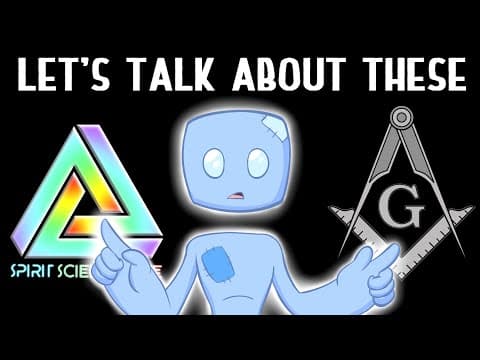
The discussion of symbols is further illustrated by the controversy surrounding the logo of the "Spirit Science Live" podcast, which was mistakenly associated with a known pedophilia logo. The logo, a Penrose triangle, was chosen for its optical illusion qualities, representing the transition from 2D to 3D. The backlash prompted a deeper examination of how symbols can be misinterpreted and the importance of understanding their historical context.
At a fundamental level, all symbols are composed of basic geometric shapes. The dot, line, and circle serve as the foundational elements from which all other symbols derive. The dot signifies unity and origin, while the line represents action and change. Understanding these basic principles can help decode the meanings behind various symbols.
Symbols can be categorized into three main types:
As society evolves, so too must our symbols. Heinrich Zimmer noted that while symbols hold the mind to truth, they are not the truth themselves. Each civilization must create its own symbols to communicate effectively. The challenge lies in whether new symbols can emerge from the basic shapes that have defined human communication for millennia.
Symbols are a fundamental aspect of human communication, shaping our perceptions and interactions. They carry meanings that are deeply rooted in cultural contexts and personal experiences. As we navigate a world filled with symbols, it is crucial to remain aware of their power and the potential for misinterpretation. By understanding the evolution of symbols, we can better appreciate their role in our lives and the messages they convey.
Until next time, stay vigilant for those subliminal messages and the hidden meanings behind the symbols that surround us.