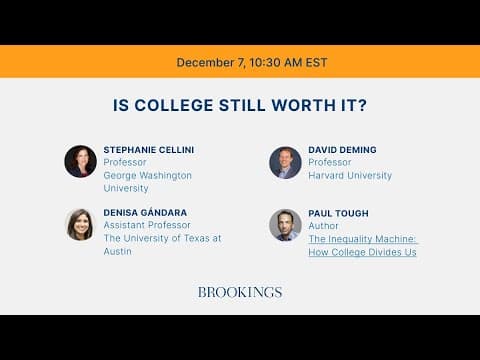
This blog post explores the evolving perceptions of college education in America, examining the benefits, costs, and barriers associated with higher education. It highlights the importance of understanding the return on investment, the impact of political polarization, and the need for structural reforms to ensure that college remains a viable path for upward mobility.
The question of whether college is still a worthwhile investment has become increasingly relevant in today's society. With rising tuition costs, political polarization, and changing attitudes towards higher education, many Americans are questioning the value of a college degree. This discussion aims to unpack these concerns and explore the benefits, costs, and barriers associated with pursuing higher education.
Historically, college has been viewed as a crucial pathway to upward mobility, economic security, and social status. However, recent polling data indicates a significant shift in public perception. For instance, a decade ago, 74% of young adults believed that higher education was very important; today, that number has dropped to 41%. Similarly, nearly half of parents now express reluctance for their children to pursue a four-year degree immediately after high school.
The decline in faith in higher education is also intertwined with broader political trends. Since 2015, there has been a marked divergence in how Democrats and Republicans view higher education, with Republican support plummeting. This polarization has contributed to a growing skepticism about the value of college, particularly among young people who are concerned about the financial burden of tuition and the risk of accumulating debt without completing their degrees.
Economists often refer to the "college wage premium," which is the difference in average earnings between college graduates and those without a degree. Historically, this premium has been significant, with college graduates earning substantially more over their lifetimes. However, recent research indicates that while the wage premium remains high for those who graduate, it is less pronounced for recent graduates entering the job market.
The returns to college can vary significantly based on age and the type of institution attended. Younger graduates often face challenges in securing high-paying jobs, while the wage premium tends to increase as individuals progress in their careers. Additionally, the type of institution plays a crucial role; for-profit colleges, for example, often yield lower returns and higher debt levels compared to community colleges and traditional four-year institutions.
The cost of college is a significant factor influencing students' decisions. The sticker price, or the published tuition, often deters potential students. However, the net price, which accounts for financial aid and scholarships, can be much lower. Understanding the difference between these two figures is essential for prospective students.
Many students rely on loans to finance their education, leading to concerns about debt repayment. Research shows that students who do not complete their degrees often struggle the most with repayment, even if their loan balances are relatively low. This highlights the importance of not only completing a degree but also choosing the right institution and program.
One of the significant barriers to accessing higher education is the lack of clear information. Many students, particularly those from underrepresented backgrounds, struggle to navigate the complex landscape of college admissions and financial aid. There is a pressing need for better resources and support systems to help students make informed decisions about their educational paths.
Community colleges offer a more affordable pathway to higher education, with lower tuition rates and the potential for transfer to four-year institutions. They serve as a critical resource for students seeking to minimize debt while pursuing their educational goals. However, community colleges often face funding disparities compared to more prestigious institutions, which can limit the support they provide to students.
To ensure that college remains a viable option for upward mobility, significant reforms are necessary. This includes increasing funding for community colleges, improving student support services, and enhancing accountability measures for all institutions. By addressing these issues, we can create a more equitable system that benefits all students, regardless of their background.
In addition to traditional four-year degrees, there is a growing recognition of the value of alternative pathways, such as vocational training and certificate programs. These options can provide students with the skills needed to succeed in the job market without the financial burden of a four-year degree.
In conclusion, while college can still be a worthwhile investment for many, the landscape is changing. Students must navigate a complex system filled with risks and uncertainties. It is crucial to provide them with the information and support they need to make informed decisions about their educational futures. As we move forward, a collective effort to reform higher education and expand access to diverse pathways will be essential in ensuring that college remains a viable option for all.