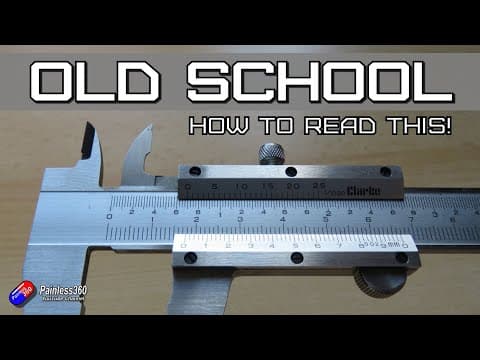
This blog post provides a comprehensive guide on how to use a manual vernier caliper, detailing its components, measurement techniques, and practical examples for accurate readings without electronics.
In a world dominated by digital tools, the manual vernier caliper stands out as a classic precision instrument. While many may be familiar with electronic versions that display measurements on a screen, the manual vernier caliper offers a unique charm and accuracy that can measure down to 0.02 millimeters without any electronic assistance. This guide will walk you through the components of a manual vernier caliper, how to read it, and practical examples to enhance your measuring skills.
The vernier caliper consists of a main scale and a sliding scale, known as the vernier scale. The main scale is graduated in millimeters, while the vernier scale allows for more precise measurements by providing additional graduations.
To achieve accurate measurements with a manual vernier caliper, follow these steps:
Place the object you wish to measure between the measuring jaws of the caliper. Ensure that it is held firmly in place for an accurate reading.
Look at the main scale to determine the whole number measurement. This is the value before the decimal point. For example, if the main scale reads 24 millimeters, note this down.
Next, observe the vernier scale to find which line aligns best with the main scale. This will give you the decimal part of the measurement. For instance, if the line that aligns best is at 0.02 millimeters, you would add this to the whole number from the main scale.
Combine the readings from the main scale and the vernier scale to get the final measurement. For example, if the main scale reads 24 millimeters and the vernier scale reads 0.02 millimeters, the total measurement is 24.02 millimeters.
To illustrate how to use a manual vernier caliper, let’s go through a couple of examples:
Let’s measure the diameter of a peanut camera. After placing the camera between the jaws, we find:
Thus, the measurement is 24.00 millimeters.
Next, we measure another dimension of the peanut camera:
This gives us a final measurement of 54.02 millimeters.
Let’s say we have a measurement that looks like this:
The final measurement would be approximately 17.7 millimeters.
The manual vernier caliper is a powerful tool for precise measurements, allowing users to achieve accuracy down to 0.02 millimeters without the need for batteries or electronics. By understanding its components and practicing the measurement techniques outlined in this guide, anyone can master the art of using a manual vernier caliper. Whether you are an old-school engineer or a hobbyist, this skill can enhance your measuring capabilities significantly. Thank you for taking the time to learn about this essential tool, and happy measuring!