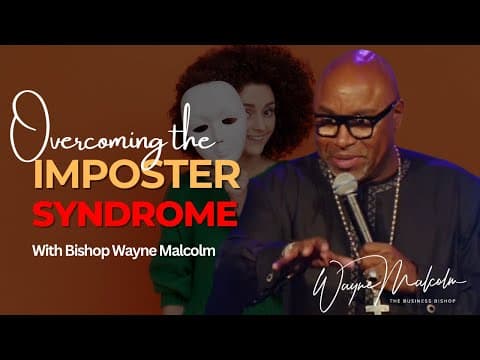
Bishop Wayne Malcolm discusses the concept of impostor syndrome, its psychological implications, and how to overcome it through self-affirmation and understanding one's divine purpose. He emphasizes that feelings of unworthiness are common but can be transformed by focusing on one's true identity and authority in God.
In a world where success is often measured by external achievements, many individuals grapple with feelings of inadequacy and self-doubt. This phenomenon, known as impostor syndrome, affects even the most accomplished individuals, leading them to feel like frauds despite their successes. In a recent sermon, Bishop Wayne Malcolm delves into this topic, offering insights on how to overcome these feelings and embrace one's true identity and purpose.
Impostor syndrome is a psychological pattern where individuals doubt their accomplishments and have a persistent fear of being exposed as a fraud. This feeling is not rooted in reality; rather, it stems from internal fears of failure, rejection, and embarrassment. Many successful people, including award-winning actors and high-achieving professionals, experience this syndrome, feeling unworthy of their success and fearing that others will discover their perceived inadequacies.
Bishop Malcolm defines impostor syndrome as the feeling of being unqualified or unworthy to occupy a certain space or role. This feeling can lead to self-sabotage, where individuals avoid opportunities or downplay their achievements to blend in rather than stand out.
Bishop Malcolm emphasizes that overcoming impostor syndrome requires a spiritual awakening and a shift in focus. He encourages individuals to tune into their spiritual antennas to hear God's voice, which affirms their worth and purpose. Worship and prayer are essential tools for elevating one's understanding and breaking free from the mental barriers that hold them back.
In his sermon, Bishop Malcolm references the story of Moses, who felt unqualified to lead the Israelites out of Egypt due to his past and perceived shortcomings. Despite his doubts, God reassured Moses that he was chosen for this purpose, highlighting that divine calling often comes without human qualifications. This narrative serves as a reminder that God does not call the qualified; He qualifies the called.
To combat impostor syndrome, Bishop Malcolm stresses the importance of self-affirmation. He encourages individuals to recognize their inherent worth and the authority they possess as representatives of God. By understanding that their value is not determined by external opinions or societal standards, individuals can reclaim their confidence and pursue their passions without fear.
Bishop Malcolm explains that feelings of inadequacy often arise from focusing on the wrong things, such as age, race, or other people's opinions. He asserts that feelings follow focus; therefore, shifting one's focus to God's promises and affirmations can transform negative feelings into empowering ones.
Bishop Malcolm introduces the concept of favor, which occurs when God influences the perceptions of key individuals in our lives. He emphasizes that those who have the keys to our destiny will see our potential, regardless of our current circumstances. This divine favor allows individuals to access opportunities that may seem out of reach.
The sermon also draws parallels to the baptism of Jesus, where God publicly affirms Him as His beloved Son. This affirmation serves as a model for believers, illustrating the importance of knowing one's identity in God. Just as Jesus received validation from God, individuals must seek and accept their identity as beloved children of God.
Bishop Wayne Malcolm's message serves as a powerful reminder that impostor syndrome is a common struggle that can be overcome through faith, self-affirmation, and a shift in focus. By recognizing their divine purpose and authority, individuals can break free from feelings of inadequacy and step confidently into their calling. The journey to self-discovery and empowerment begins with understanding that they are not impostors but rather chosen representatives of a greater purpose.
As Bishop Malcolm encourages, embrace your identity, reject the impostor syndrome, and walk boldly into the opportunities that God has prepared for you.