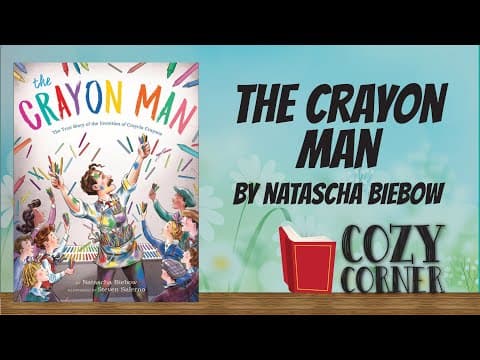
This blog post explores the inspiring story of Edwin Binney, the inventor of Crayola crayons, detailing his journey from observing colors in nature to creating a beloved product that transformed children's art. It highlights his innovative spirit, the challenges he faced, and the collaborative efforts that led to the birth of Crayola.
In the world of art and creativity, few products have made as significant an impact as Crayola crayons. This blog post delves into the fascinating story of Edwin Binney, the man behind the invention of these colorful tools that have inspired generations of children to express themselves through art.
Edwin Binney was a man who found joy in color. He admired the vibrant yellow petals of black-eyed Susans, the rich scarlet of cardinals, and the deep blue of ocean waves. However, his daily work life was starkly different, filled with black dust, tar, smoke, and ink. Edwin worked for a company that sold carbon black, a pigment derived from burning oil and natural gas, used in various products like printing inks and rubber tires.
Edwin was not just an employee; he was an inventor. Alongside his cousin, Harold Smith, they formed Binney & Smith. While Harold excelled in sales, traveling the world, Edwin had a unique ability to listen and innovate based on people's needs. He had already created several successful products, including a smooth gray slate pencil and a non-dusty white chalk. However, when it came to crayons, he realized there was a significant gap in the market.
Children and educators expressed their dissatisfaction with existing crayons. They were often too big, dull, and clumsy, made from lumps of colored clay that produced fat lines. The artist-grade crayons from Europe were prohibitively expensive and prone to breaking. Edwin's wife, Alice, a former schoolteacher, recognized this need and encouraged Edwin to create a better, more affordable crayon.
Determined to invent a superior crayon, Edwin and his team began experimenting in a small stone mill in Pennsylvania. They sought to create a crayon that was not only colorful but also durable and safe for children. Edwin recalled the challenges faced with their previous inventions, which often smudged or rubbed off easily.
The team experimented with various materials, including melted paraffin wax, which was a departure from the traditional charcoal and oil mixtures that resulted in fragile crayons. They ground rocks and minerals into fine powders, mixing them to create vibrant pigments. Edwin's team worked tirelessly, measuring ingredients and adjusting temperatures to achieve the perfect shades.
Safety was a priority, as Edwin was aware that children might chew on the crayons. The team focused on developing non-toxic colors and materials. After months of hard work, they finally succeeded in creating a new kind of colored crayon.
In June 1903, Edwin returned home covered in color, excited to share his invention. The next challenge was naming the product. Alice suggested combining the French word "cray" (meaning stick of chalk) with "ola" (from the word oily), leading to the creation of the name "Crayola."
Binney & Smith launched the first Crayola crayon boxes, featuring eight colors: red, orange, yellow, green, blue, violet, brown, and black, priced at just a nickel. The response from children was overwhelmingly positive. They could now create vibrant drawings without the smudging and rubbing off that plagued previous products.
As the 1900s progressed, advancements in paper manufacturing allowed children to draw on paper instead of slates. The excitement surrounding Crayola crayons grew, culminating in a gold medal win for their dustless chalk at the St. Louis World Fair. Edwin and Harold proudly showcased their achievements, further solidifying Crayola's place in the market.
To celebrate their 19th anniversary, Crayola held a color naming competition, inviting children to contribute names for new shades. This initiative led to creative names like "tropical rainforest," "tickle me pink," and "macaroni and cheese," further engaging the young audience.
Thanks to Edwin Binney's innovative spirit and his ability to listen to the needs of children, Crayola crayons became a staple in art supplies around the world. Today, children can reach for a crayon in just the right shade to bring their imaginations to life, a testament to the legacy of a man who truly saw color everywhere.