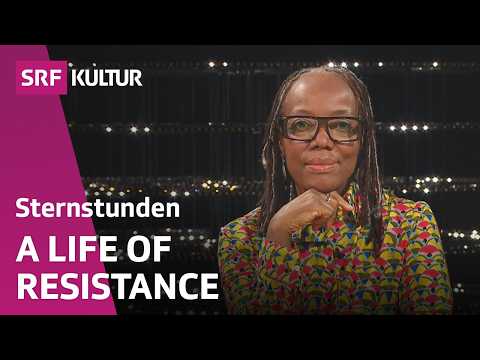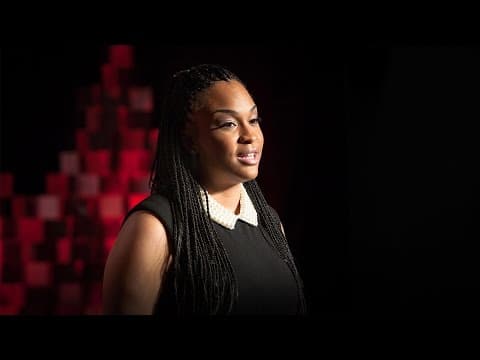
Kandice Sumner discusses the systemic inequalities in America's public school system that keep children in poverty, emphasizing the need for equitable education and resources for all students, regardless of their background.
Kandice Sumner opens her talk by expressing her deep affection for her students, whom she refers to as her kids. With a total of 696 students, she sees them as intelligent, inventive, and powerful individuals. However, she highlights a troubling reality: many of her students come from low-income backgrounds and are predominantly children of color, which often prevents them from recognizing their own potential.
Sumner shares her own upbringing as the daughter of two college-educated African-American parents who worked as public servants. Despite their hard work, wealth was not a priority in her household. Growing up in a less affluent neighborhood, she was fortunate to participate in a voluntary desegregation program that allowed her to attend a suburban school, where she received a better education. This experience opened her eyes to the disparities in educational opportunities between her and her neighborhood friends.
As she reflects on her educational journey, Sumner recalls the feelings of guilt and survivor's remorse for receiving opportunities that many of her friends did not. She questions why high-quality education seems to be reserved for the wealthy, while countless other children are left behind. This disparity is not just an achievement gap; it is an education debt, a term coined by Gloria Ladson-Billings, which refers to the historical lack of investment in the education of black and brown children.
Sumner provides a brief overview of the historical context of education in America, noting that the public school system was built on the foundations of the slave trade. While African-Americans were denied education, their labor contributed to the very institutions that excluded them. The landmark case of Brown v. Board of Education in 1954 aimed to dismantle segregation in schools, yet Sumner argues that many schools today are more segregated than ever.
In her own classroom, Sumner faces the challenge of engaging her students in reading. Despite her efforts to cultivate a love for literature, she found that her modest classroom library was not enough to spark interest. However, after discovering DonorsChoose, a platform that allows teachers to create wish lists for classroom resources, she received over 200 brand-new books. This experience transformed her classroom, as students began to eagerly engage with reading materials.
Sumner emphasizes that the public school system has historically failed to provide adequate resources for black and brown children. The focus on test results and achievement gaps overlooks the root causes of educational disparities. She argues that neglecting these children for too long leads to predictable outcomes, and society should not be surprised by the resulting socioeconomic issues.
Sumner calls for systemic changes in how public education is funded. She argues that funding should not be tied to property taxes, which perpetuates inequality. Instead, public education should be genuinely public, serving all children equally. She provocatively states that if the system continues as it is, it should be labeled as "poverty insurance" rather than public education.
On a broader scale, Sumner urges policymakers to ensure equitable funding for all schools, regardless of their location or the socioeconomic status of their students. She believes that if education is truly the "great equalizer," it must be accessible to everyone.
At the community level, Sumner encourages affluent schools to adopt impoverished schools or classrooms, fostering relationships that can help bridge the resource gap. Sharing resources can multiply opportunities rather than divide them.
On an individual level, she calls on everyone to contribute in whatever way they can—be it time, money, or resources. Websites like DonorsChoose provide a platform for individuals to support teachers and students in need.
Sumner concludes her talk by emphasizing the importance of providing children with the tools they need to succeed. She challenges the audience to consider the implications of neglecting the educational needs of children and to take action to ensure that every child has access to a high-quality education. In her words, "What is a carpenter with no tools? What is a scientist with no laboratory? What is a doctor with no equipment? I'll tell you: they're my kids. Shouldn't they be your kids, too?"