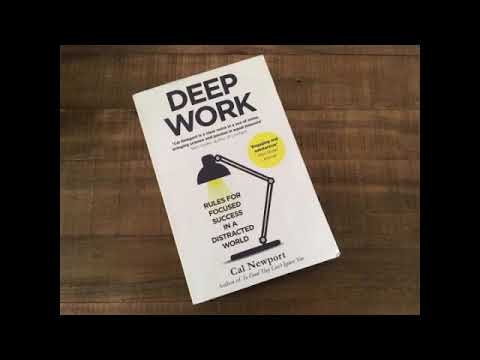
This blog post explores the concept of deep work through the lens of Bill Gates' early career and the author's personal journey. It highlights the importance of focused work in achieving significant productivity and success, emphasizing that deep work is a skill that can be cultivated to produce meaningful results.
The story of Microsoft’s founding is legendary, often recounted as a tale of insight and boldness. In the winter of 1974, a young Harvard student named Bill Gates saw the Altair, the world’s first personal computer, on the cover of Popular Electronics. Recognizing an opportunity, Gates, along with Paul Allen and Monty Davidoff, spent eight weeks developing a version of the BASIC programming language for the Altair. This pivotal moment not only marked the beginning of Microsoft but also showcased Gates's extraordinary ability to engage in deep work.
Recent interviews have shed light on another crucial trait that contributed to Gates's success: his innate ability to focus intensely. Walter Isaacson, in a 2013 article for the Harvard Gazette, described how Gates worked with such intensity that he would often fall asleep at his keyboard, only to wake up and continue coding seamlessly. Paul Allen referred to this as a prodigious feat of concentration, highlighting how Gates's obsessive focus set him apart from others.
Isaacson summarized this unique tendency toward depth, noting that while Allen's mind flitted between ideas, Gates was a serial obsessor. This story illustrates the core argument for deep work: in a rapidly evolving information age, the ability to concentrate is a valuable skill that leads to significant accomplishments.
Deep work is not merely a moral or philosophical stance; it is a pragmatic recognition of the value of concentration. It is essential not because distraction is inherently evil, but because it enables individuals like Bill Gates to create billion-dollar industries in a short time. The author reflects on their own experiences with deep work, emphasizing its transformative power.
Having been a devotee of deep work for over a decade, the author recounts how this skill allowed them to write quality peer-reviewed papers while maintaining a balanced lifestyle. During graduate school, they managed to produce two papers a year without working late or on weekends, a feat uncommon among peers.
As the author transitioned to a postdoctoral position, they faced increased time commitments and anxiety about maintaining productivity. To counter this, they devised a plan to enhance their deep work capabilities. This involved introducing artificial constraints to mimic the limited free time expected as a professor. They implemented rules such as not working at night and taking extended lunch breaks for exercise and reflection.
During their postdoc years at MIT, the author refined their ability to work deeply. They began blocking out specific hours for deep work and sought out quiet locations conducive to focus. For instance, they often worked in the Barker Engineering Library during the summer and the Lewis Music Library during winter. They even invested in a high-end notebook to encourage careful thinking.
This commitment to deep work paid off when the author became a computer science professor at Georgetown University. Despite increased obligations, they not only maintained their research productivity but improved it, publishing four papers a year compared to two during graduate school.
In their third year at Georgetown, the author recommitted to deep work, driven by the need to produce a book manuscript and prepare for the tenure process. They became ruthless in declining time-consuming commitments and worked in isolated locations to maximize focus. They tracked their deep work hours and sought to engage their mind in problem-solving during everyday activities.
This year of extreme depth resulted in a remarkable increase in productivity, with the author publishing nine peer-reviewed papers while maintaining a prohibition on evening work. However, they acknowledged that this intensity was exhausting and recognized the need for moderation in the future.
The experiences shared highlight that deep work is far more powerful than many realize. It allowed Bill Gates to seize an unexpected opportunity and enabled the author to double their academic productivity while managing personal commitments. Embracing a deep work philosophy can lead to a life rich with productivity and meaning.
The deep life is not for everyone; it requires hard work and significant changes to one’s habits. Many find comfort in the busyness of rapid communication and social media, while deep work demands a departure from these distractions. However, for those willing to confront their fears and commit to focused work, the rewards are substantial.
As writer Winifred Gallagher stated, "I'll live the focused life because it's the best kind there is." This sentiment resonates with both Bill Gates and the author, and hopefully, it inspires readers to embrace the power of deep work in their own lives.