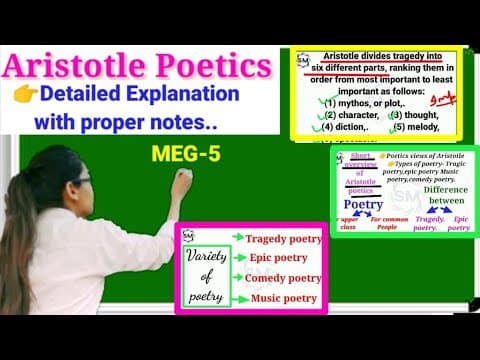
This blog post delves into Aristotle's Poetics, exploring his views on politics, the nature of poetry, and the distinctions between different types of poetry such as tragedy, comedy, and epic. It highlights Aristotle's critique of Plato, his definitions of imitation, and the essential elements that constitute a good tragedy, providing a thorough understanding of his literary theories.
Aristotle's contributions to literature and philosophy have been profound, particularly through his work, Poetics. This blog post aims to provide a detailed explanation of Aristotle's views on poetry, politics, and the various types of poetry he discusses.
Before diving into Poetics, it is essential to understand why Aristotle wrote about politics. He was influenced by his teacher, Plato, who had a significant impact on his thinking. Aristotle's Politics serves as a response to Plato's critiques in The Republic. While Aristotle respected Plato, he disagreed with several of his ideas, leading him to articulate his own views in Politics.
Aristotle believed that all things in the world are imitations of some ideal form. He argued that poetry, like other forms of art, is an imitation of life. This concept of imitation is central to understanding his perspective on poetry. He posited that poetry conveys messages and meanings through its representation of reality.
Aristotle categorizes poetry into several types, each with its unique characteristics:
Tragedy is a form of drama that presents serious themes and often ends in a sorrowful or disastrous conclusion. Aristotle emphasized that a tragedy must evoke emotions such as fear and pity in the audience. He defined tragedy as an imitation of noble actions that leads to a cathartic experience for the viewers. The essential components of a tragedy include:
Comedy, in contrast to tragedy, aims to entertain and amuse the audience. It often involves common people and their humorous situations. Aristotle noted that comedy focuses on the lighter aspects of life, using laughter as a means to connect with the audience. The characters in comedies are typically relatable, and the narratives often highlight social norms and absurdities.
Epic poetry is characterized by its length and grand themes, often dealing with heroic deeds and significant events. Unlike tragedy, epic poetry does not have a strict time limit and can explore vast narratives. It is often written in a formal style and can include various poetic devices.
Aristotle placed significant emphasis on the plot as the most crucial element of a tragedy. He argued that a well-structured plot must move logically from beginning to end, creating a cohesive narrative that engages the audience. The plot should involve a series of events that lead to a climax and resolution, allowing the audience to experience the emotional journey of the characters.
Aristotle believed that tragedy should evoke strong emotions in the audience, particularly fear and pity. This emotional engagement is what makes tragedy a powerful form of art. He argued that through the portrayal of suffering and moral dilemmas, tragedies allow audiences to reflect on their own lives and experiences.
In summary, Aristotle's Poetics provides a foundational understanding of poetry and its various forms. His exploration of tragedy, comedy, and epic poetry highlights the importance of imitation, emotional engagement, and the structural elements that contribute to effective storytelling. By analyzing these components, readers can gain a deeper appreciation for the art of poetry and its impact on society.