This blog post provides a comprehensive overview of an introductory course on Artificial Intelligence (AI) in Business Analytics, covering course structure, evaluation methods, key concepts of AI, and its applications across various industries.
Artificial Intelligence (AI) is transforming the landscape of business analytics and decision-making. This blog post outlines the key components of an introductory course on AI in Business Analytics, designed to equip students with the necessary skills and knowledge to navigate this evolving field.
The course spans 14 weeks, focusing on both AI and business analytics. Each week includes classes, assignments, and a final exam. The course is structured to provide a blend of theoretical knowledge and practical application.
The course is led by Hash, an associate professor and lecturer in business at the university. With a background as a Microsoft certified trainer, Hash brings expertise in Microsoft software, particularly Power BI, which will be a focal point of the course.
The evaluation for this course consists of four main components:
There are no midterm exams; instead, students will complete three assignments, with the first being a group project.
The course is divided into two main sections:
Students are encouraged to download Power BI, which is available for free, and will learn how to create dashboards and perform data analytics.
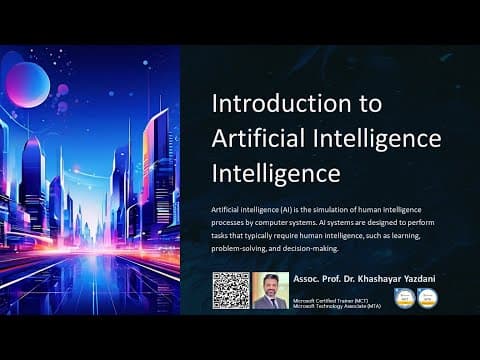
AI can be defined as the simulation of human intelligence processes by computer systems. This includes learning, problem-solving, and decision-making. AI systems are designed to perform tasks that typically require human intelligence, making them distinct from traditional search engines.
AI is being integrated into numerous sectors, including:
As AI technology advances, ethical considerations become increasingly important. Key issues include:
The introductory course on AI in Business Analytics aims to provide students with a foundational understanding of AI concepts and their applications in business. By engaging with both theoretical and practical components, students will be well-equipped to leverage AI in their future careers.
As the course progresses, students will have the opportunity to explore the ethical implications of AI and its transformative potential across various industries.
AI is not just a technological advancement; it is a paradigm shift that is reshaping how businesses operate. Understanding AI and its applications is crucial for anyone looking to thrive in the modern business landscape.