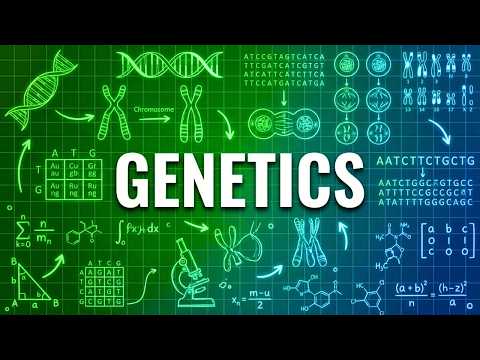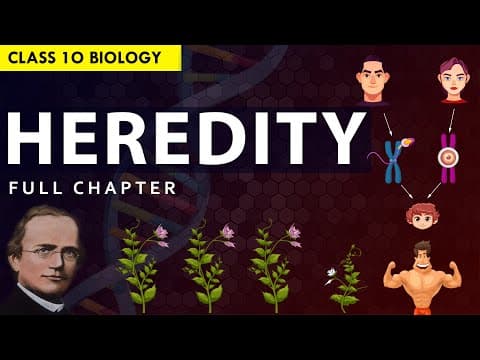
This blog post explores the concepts of heredity and evolution, detailing how traits are inherited, the role of variations, and the foundational principles established by Gregor Mendel through his experiments with pea plants. It covers the types of traits, the rules of inheritance, and the genetic mechanisms that determine characteristics in living organisms.
All living organisms have the remarkable ability to produce offspring of their own kind through reproduction. This process ensures that offspring inherit traits from their parents, a phenomenon known as heredity. While offspring may resemble their parents, they are not exact replicas; variations exist among individuals of the same species.
Variations refer to the differences in characteristics or traits among individuals of the same species. These variations can arise from both sexual and asexual reproduction, although sexual reproduction tends to produce a greater degree of variation. For instance, a group of sugar cane plants, which reproduce asexually, shows minimal variation compared to a group of dogs, which reproduce sexually and exhibit a wide range of traits.
Variations that occur during reproduction can be passed down to subsequent generations. Over time, these accumulated variations contribute to the evolution of populations. Some variations may provide advantages that enhance survival. For example, certain bacteria may develop the ability to withstand high temperatures, allowing them to thrive in extreme conditions.
Traits can be categorized into two main types: inherited traits and acquired traits.
Inherited traits are characteristics passed from parents to offspring through genetic information. These traits are fixed at birth and are not influenced by environmental factors. Examples include eye color, skin color, and hair color. Inherited traits play a crucial role in the process of evolution as they involve changes in an organism's DNA.
Acquired traits, on the other hand, are developed during an individual's lifetime due to experiences, behaviors, or environmental influences. These traits are not genetically inherited and do not alter the DNA of the organism. Examples include skills such as speaking different languages or playing musical instruments.
The inheritance of traits follows specific rules, which can be understood through the study of genetics. During reproduction, both parents contribute equal amounts of genetic material, or DNA, to their offspring. DNA is composed of segments called genes, which carry information about various traits.
A gene is a segment of DNA that determines a specific characteristic. For example, genes dictate traits such as eye color or earlobe shape. Each offspring inherits two genes for each trait—one from the mother and one from the father. These genes can exist in different forms known as alleles.
In the case of eye color, if one parent has brown eyes (dominant allele) and the other has blue eyes (recessive allele), the child will inherit both alleles. However, the dominant brown allele will be expressed, resulting in brown eyes for the child. This leads to the classification of traits into dominant and recessive categories:
The foundational principles of heredity were established by Gregor Mendel in the 19th century through his experiments with pea plants. He proposed three laws of inheritance:
This law states that in a heterozygous organism, one trait will conceal the presence of another trait for the same character. For example, a plant with one tall allele and one short allele will exhibit the tall trait due to the dominance of the tall allele.
According to this law, each parent contributes two genes for a character, but during gamete formation, each gamete receives only one allele. For instance, a person with brown and black hair alleles will produce gametes that carry either the brown or black allele, but not both.
This law states that alleles for different traits segregate independently during gamete formation. For example, the inheritance of seed color does not influence the inheritance of seed shape.
Traits are expressed through the interaction of genes and the proteins they encode. DNA, located in the nucleus of cells, contains the information necessary for protein synthesis. Each gene corresponds to a specific protein, which in turn influences physical characteristics. For example, the production of plant growth hormones is regulated by specific genes, affecting the height of the plant.
Human cells typically contain 23 pairs of chromosomes, with one pair being sex chromosomes. Females have two X chromosomes (XX), while males have one X and one Y chromosome (XY). During reproduction, gametes are formed that carry only one set of chromosomes, which means that each gamete contributes one allele for each trait.
The sex of a newborn is determined by the combination of sex chromosomes inherited from the parents. In humans, if a sperm carrying a Y chromosome fertilizes an egg, the resulting zygote will be male (XY). Conversely, if a sperm carrying an X chromosome fertilizes the egg, the zygote will be female (XX). Thus, the father's contribution determines the sex of the child.
Understanding heredity and evolution is crucial for grasping how traits are passed from one generation to the next and how variations contribute to the diversity of life. The principles established by Mendel provide a framework for studying genetics and the inheritance of traits in living organisms. Through this knowledge, we can appreciate the complexity of biological inheritance and its implications for evolution.