Howard Gardner's theory of multiple intelligences challenges the traditional view of intelligence as a static IQ score. Gardner identifies nine distinct types of intelligence, each with unique traits and characteristics, emphasizing that individuals possess varying strengths and weaknesses across these intelligences.
Are you interested in learning more about the theory of multiple intelligences? Developed by Howard Gardner, this theory provides a comprehensive framework for understanding the diverse ways in which individuals can be intelligent. In this post, we will explore how this theory emerged, its significance, and delve into the specific traits and characteristics of each of the nine types of intelligence.
In the 1970s, Howard Gardner conducted research that challenged the prevailing belief that intelligence could be quantified solely through IQ scores. At that time, it was widely accepted that individuals were born with a fixed level of intelligence, which remained unchanged throughout their lives. Gardner, however, proposed two key ideas:
Gardner's theory gained significant traction in the 1980s, particularly after the publication of his book "Frames of Mind" in 1983. This work introduced the concept of multiple intelligences to a broader audience, emphasizing that everyone has unique strengths and weaknesses.
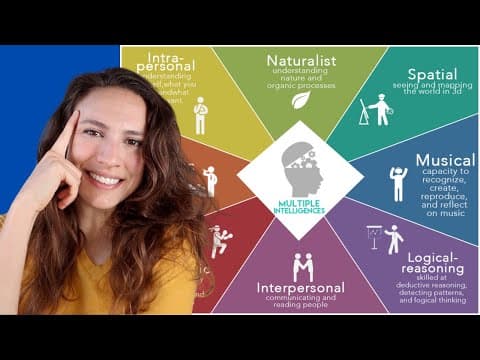
Gardner identified nine distinct types of intelligence, each reflecting different ways of processing information and interacting with the world. Here’s a closer look at each type:
Naturalist intelligence refers to an individual's ability to recognize and categorize plants, animals, and other elements of the natural world. People with high naturalist intelligence often pursue careers as zoologists, biologists, or environmentalists. They typically enjoy outdoor activities such as hiking, camping, and gardening.
Individuals with musical intelligence possess a keen ability to discern tones, pitches, and rhythms. They may have a natural inclination towards music, often humming or tapping to rhythms from a young age. Careers in this area include musicians, composers, and conductors.
This type of intelligence is commonly associated with traditional IQ tests. It involves strong problem-solving skills, logical reasoning, and numerical proficiency. People with high logical-mathematical intelligence often excel in careers such as mathematics, science, and engineering.
Existential intelligence relates to an individual's capacity to ponder deep questions about existence, purpose, and spirituality. Those with high existential intelligence may become philosophers, theologians, or spiritual leaders, exploring the fundamental questions of life.
Interpersonal intelligence is the ability to understand and interact effectively with others. Individuals with this intelligence are often skilled communicators, able to read social cues and empathize with others. Careers in this field include counseling, psychology, and politics.
This intelligence involves the ability to use one's body effectively to solve problems or create products. Athletes, dancers, and craftspeople often exhibit high bodily-kinesthetic intelligence, demonstrating exceptional coordination and physical skill.
Linguistic-verbal intelligence pertains to the ability to use language effectively, both in writing and speaking. Individuals with this intelligence are often skilled writers, poets, and public speakers, excelling in careers that require strong communication skills.
Intrapersonal intelligence is the capacity for self-awareness and self-reflection. Individuals with high intrapersonal intelligence are in tune with their emotions and thoughts, often engaging in practices like journaling or meditation. They may pursue careers in therapy, coaching, or spiritual guidance.
Visual-spatial intelligence involves the ability to visualize and manipulate objects in space. People with this intelligence often excel in fields such as architecture, engineering, and the arts. They can easily solve puzzles and visualize transformations of objects.
Howard Gardner's theory of multiple intelligences offers a more nuanced understanding of human intelligence, recognizing that individuals possess a variety of strengths across different domains. This perspective encourages us to appreciate the diverse talents and abilities that people bring to the table, moving beyond the limitations of traditional IQ testing. By acknowledging and nurturing these intelligences, we can foster a more inclusive and supportive environment for learning and personal growth.