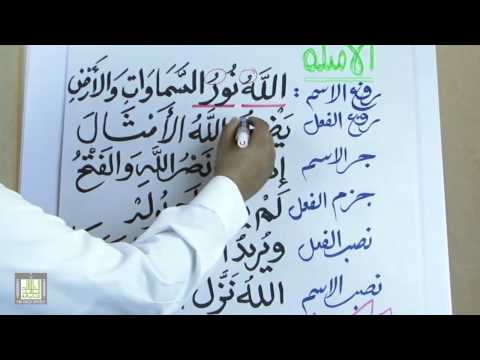
This blog post explores the concepts of I'raab (grammatical inflection) and Binaa (fixed form) in Arabic, detailing their definitions, types, and examples to illustrate how words change based on their grammatical roles in sentences.
In this lesson, we delve into the concepts of I'raab (الإعراب) and Binaa (البناء) in the Arabic language. These concepts are crucial for understanding how Arabic words—nouns, verbs, and particles—function within sentences. Words can either be fixed in form (Binaa) or change based on their grammatical position (I'raab).
I'raab, linguistically, refers to expression, change, and improvement. In a grammatical context, it involves changing the endings of words based on the factors affecting them.
Consider the following sentences:
These examples illustrate how the ending of the word "محمد" changes according to its grammatical role in the sentence, making it a case of I'raab.
I'raab can manifest in several forms:
Binaa refers to the fixed form of a word, where the ending remains constant regardless of the grammatical factors affecting it. This concept is akin to the construction of buildings, where the structure remains unchanged.
Words can be built in various ways:
It is essential to distinguish between the grammatical state (حالة الإعراب) and the sign of I'raab (علامة الإعراب). The state refers to the grammatical role (nominative, accusative, etc.), while the sign refers to the specific markers used (Dhamma, Fatha, Kasra, Sukoon).
In summary, understanding I'raab and Binaa is fundamental for mastering Arabic grammar. I'raab involves the changing forms of words based on their grammatical roles, while Binaa refers to the fixed forms that remain unchanged. Both concepts are vital for constructing meaningful and grammatically correct sentences in Arabic.
We will continue exploring these topics in the next lesson. Thank you for your attention!