This blog post provides a comprehensive overview of key Java concepts discussed in a midterm review lecture, including static and dynamic typing, typecasting, comparators, iterators, and the differences between linked lists and array lists. It emphasizes the importance of understanding these concepts for effective programming in Java.
In this midterm review lecture, we delve into several fundamental concepts of Java programming, focusing on static and dynamic typing, typecasting, and the use of comparators and iterators. This post aims to summarize these concepts clearly and comprehensively, ensuring that readers grasp the essential elements discussed in the lecture.
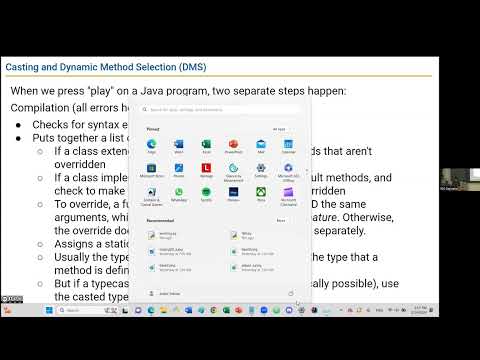
When a Java program is executed, it undergoes two critical steps: compilation and runtime execution.
Compilation: This is the first step where the Java compiler checks the code for syntax errors and compiles it into bytecode. During this phase, the compiler assigns a static type to every variable based on its declaration. For instance, if a variable is declared as a List, its static type is List.
Runtime Execution: After compilation, the program runs, and the dynamic type of each object is determined. This is where typecasting comes into play. For example, when you typecast an object, such as (Animal) new Dog(), the static type becomes Animal, while the dynamic type remains Dog.
Typecasting is crucial for ensuring that objects are treated correctly during runtime. The compiler allows typecasting if it is theoretically possible. For instance, typecasting an Animal to a Dog is valid because all dogs are animals. However, attempting to typecast a Dog to an Animal is only valid if the object is indeed a Dog at runtime.
Dog to a List will result in a compile-time error.Understanding how to compare and iterate through objects is essential in Java programming.
The Comparable interface allows a class to define its natural ordering. For example, if a Dog class implements Comparable, it can compare itself to other Dog objects. The Comparator interface, on the other hand, is used to define custom comparison logic for two objects of the same type. This is particularly useful when sorting collections of objects.
The Iterable interface provides a way to iterate over a collection of objects. An Iterator allows you to traverse through a collection, providing methods like hasNext() and next(). This is similar to generator functions in Python, where you can yield items one at a time.
The lecture also covered the differences between linked lists and array lists, two fundamental data structures in Java.
Linked Lists: These are composed of nodes that point to the next element. They can be singly linked (pointing only forward) or doubly linked (pointing both forward and backward). Linked lists are dynamic in size, allowing for efficient insertions and deletions.
Array Lists: These are based on arrays and require a predefined size. While they offer constant time access to elements, resizing an array list can be costly as it involves creating a new array and copying elements over.
This midterm review encapsulates essential Java programming concepts, including static and dynamic typing, typecasting, comparators, iterators, and the differences between linked lists and array lists. A solid understanding of these topics is crucial for any Java programmer, as they form the foundation for writing efficient and effective code. As you prepare for your midterm, ensure you grasp these concepts thoroughly to excel in your programming endeavors.