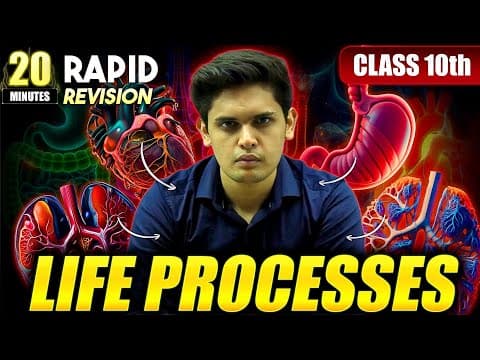
This blog post provides a detailed overview of life processes essential for living organisms, including nutrition, respiration, transportation, and excretion, tailored for Class 10 students. It covers key concepts, types of nutrition, the process of photosynthesis, respiration types, and the human digestive system, along with diagrams and examples for better understanding.
Life processes are essential functions that sustain living organisms. In this blog post, we will explore the four main life processes: nutrition, respiration, transportation, and excretion. This guide is designed for Class 10 students to help them revise these concepts quickly and effectively.
Life processes refer to the various functions that are necessary for maintaining life. These processes include:
Nutrition is the process of obtaining food and utilizing it for energy. There are two main types of nutrition:
Photosynthesis is a crucial process for autotrophic organisms. The equation for photosynthesis is:
Key steps in photosynthesis include:
Guard cells control the opening and closing of stomata, facilitating gas exchange in plants. They regulate water levels to maintain homeostasis.
Respiration is the biochemical process by which food is broken down in the presence of oxygen to release energy. It is important to distinguish between respiration and breathing:
The human respiratory system includes:
Transportation in organisms involves the movement of substances throughout the body. In humans, this is primarily facilitated by the circulatory system, which includes:
The heart is a vital organ that pumps blood throughout the body. It consists of four chambers:
The heart functions in a double circulation system, ensuring efficient oxygenation of blood and nutrient distribution.
Excretion is the process of removing waste products from the body. In humans, this occurs through the urinary system, which includes:
Nephrons are the functional units of the kidneys, responsible for filtering blood and forming urine through three main processes:
Plants also excrete waste products, primarily through:
This comprehensive overview of life processes provides a solid foundation for understanding the essential functions that sustain life in both plants and animals. By grasping these concepts, students can better prepare for their examinations and appreciate the complexity of living organisms.
The enzyme pepsin and trypsin are secreted in which part of the digestive system? Comment your answers below!